 India's No.1 PU & Degree With Integrated IAS & IPS(UPSC/PSC) Training College.


Parliament in Freefall: Why Debate Has Collapsed
AN INSTITUTION IN FREEFALL: PARLIAMENT IS ALL DRESSED UP WITH NOWHERE TO GO
Why in the News?
- The recently concluded Parliament session has highlighted serious concerns over the declining quality and functioning of parliamentary democracy.
- Persistent confrontation between the Government and Opposition has led to repeated disruptions and limited meaningful debate.
- The Opposition has demanded discussions on key issues, while the government has been criticised for limited willingness to accommodate such demands.
- Parliamentary disruptions have resulted in the loss of taxpayers’ money, legislative time and opportunities for constructive debate.
- Frequent disruptions also undermine important parliamentary functions such as:
○ Questioning ministers and ensuring executive accountability.
○ Raising constituency-specific issues during Zero Hour.
○ Raising matters of national importance under Rule 377.
○ Participating meaningfully in debates on Bills and legislation.
- The episode highlights the need to strike a balance between legitimate political dissent and mature parliamentary statesmanship.
- Decline in political civility: The relationship between the Government and Opposition has become increasingly bitter, contrasting with an earlier culture of mutual respect and cooperation.
- Examples of bipartisan statesmanship: Leaders such as Jawaharlal Nehru, Atal Bihari Vajpayee and Rajiv Gandhi demonstrated that political differences could coexist with personal courtesy and national interest.
- Rise of mutual demonisation: Indian politics has increasingly become a contest where each side portrays itself as morally righteous while viewing the other as fundamentally illegitimate.
- Dissent being delegitimised: Opposition criticism is sometimes portrayed as “anti-national”, while the Opposition portrays the ruling establishment as overwhelmingly powerful and unresponsive.
- Loss of mutual good faith: Democracy requires political opponents to recognise that, despite ideological differences, both sides ultimately seek the welfare of the nation.
- Adversarial politics over constructive governance: Treating political rivals as existential enemies eliminates the common ground necessary for dialogue, compromise and effective governance.
- Collective responsibility for the crisis: The erosion of parliamentary trust is not attributable to one political side alone; parties that once used parliamentary obstruction in Opposition often condemn similar tactics after coming to power.
- The cycle of political retaliation: The prevailing approach increasingly resembles “do unto them what they did unto you”, creating a vicious cycle of obstruction and counter-obstruction.
- Impact on democracy: The absence of mutual trust and bipartisan cooperation weakens parliamentary accountability, legislative deliberation and the overall functioning of democratic institutions.
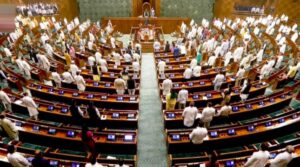
Disconnect Between Parliamentary Performance and Political Success
- Parliamentary performance vs electoral success: MPs are often elected or re-elected based more on constituency service, local influence and political mobilisation than their performance in Parliament.
- Declining value of parliamentary expertise: Skills such as effective participation in Question Hour, legislative scrutiny and detailed debate on Bills have received less political importance.
- Shift from Parliament to television: Political talent and public visibility increasingly centre around television debates and media appearances rather than substantive parliamentary deliberations.
- Institutionalised disruption: Party whips often mobilise MPs to enter the Well of the House and disrupt proceedings, prioritising organised protest over reasoned debate.
- Changing political incentives: Political parties increasingly reward partisan aggression and mobilisation rather than parliamentary competence and legislative effectiveness.
Decline of the “Politics of Parliament”
- Earlier, political parties valued two complementary capabilities:
○ “Politics of the street” — mass mobilisation and public campaigning.
○ “Politics of Parliament” — reasoned debate, negotiation and legislative scrutiny.
- Street politics entering Parliament: The growing dominance of protest-oriented politics inside Parliament has marginalised constructive parliamentary debate.
- Erosion of democratic discourse: Persistent disruption weakens the possibility of dialogue, consensus-building and collective solutions to national challenges.
- Parliamentary committees remain a bright spot: Despite disruptions in the Houses, some substantive legislative work continues through parliamentary committees, away from media attention.
- Media-driven grandstanding: The presence of cameras can incentivise MPs to prioritise dramatic disruptions and political messaging over substantive deliberation.
- Growing public disillusionment: Continuous disruptions, lack of dialogue and breakdown in communication have contributed to declining public confidence in Parliament.
Vicious Cycle of Government–Opposition Conflict
- The Opposition resorts to disruption when it feels its demands are not being heard.
- The Government often refuses to accommodate or engage with some Opposition demands.
- The resulting confrontation leads to the loss of legislative time, taxpayers’ money and meaningful parliamentary debate.
- Ultimately, both sides contribute to weakening the effectiveness and credibility of Parliament.
Diminishing Role of Parliament
- Declining legislative standards: The quality and effectiveness of parliamentary functioning have witnessed a gradual decline, further aggravated by the approach of the ruling establishment.
- Weakening of executive–Opposition engagement: The government is criticised for prioritising executive authority over dialogue and consultation with the Opposition.
- Reduced parliamentary engagement by political leadership: The contrast is drawn with Jawaharlal Nehru’s regular participation in Parliament, which symbolised the centrality of the legislature in Indian democracy.
- Parliament as a “rubber stamp”: Parliament risks being reduced from a deliberative and consultative institution to a platform for announcing executive decisions and subsequently legitimising them.
- Erosion of legislative autonomy: Such a trend weakens Parliament’s ability to scrutinise legislation, hold the executive accountable and facilitate democratic deliberation.
Threat to Democratic Institutions
- Institutional hollowing-out: When Parliament is repeatedly disrupted or bypassed, its institutional authority and relevance gradually diminish.
- Risk of democratic disengagement: If Parliament becomes ineffective, citizens may eventually become indifferent to its functioning, weakening democratic accountability.
- Parliament as the foundation of democracy: The weakening of the legislature ultimately raises a fundamental question about the health and sustainability of parliamentary democracy itself.
Need for Constructive Bipartisanship
- Balance between ideology and cooperation: Political parties can maintain strong ideological differences during elections but must cooperate on issues of national interest after elections.
- National interest above partisan rivalry: Effective democracy requires both Government and Opposition to prioritise national welfare over short-term political gains.
- From obstruction to collaboration: Greater political consensus can transform governance from zero-sum obstructionism to constructive cooperation.
- Compromise does not mean surrender: Cooperation does not require political parties to abandon their ideological positions or core principles; it requires finding workable common ground.
- Shared democratic objective: Different political parties may propose different approaches, but the ultimate objective should remain the welfare, security and prosperity of the nation.
Suggested Institutional Reform
- Dedicated Opposition time: Allocate a fixed period—for example, one day a week or two hours every day—for the Opposition to raise issues it considers important.
- Uninterrupted legislative functioning: Allow Parliament to conduct its remaining business without persistent disruption.
- Structured dialogue: Such an arrangement could provide the Opposition with a guaranteed platform while ensuring that legislative productivity and executive accountability are not compromised.
- Need for political imagination: The larger challenge is to develop a consensual institutional mechanism that accommodates legitimate dissent without paralysing Parliament.
Mains Question (30 words):
“Parliamentary disruptions reflect a deeper erosion of democratic trust and bipartisan statesmanship.” Discuss the causes of declining legislative effectiveness and suggest institutional reforms to strengthen parliamentary accountability and deliberation.

