 India's No.1 PU & Degree With Integrated IAS & IPS(UPSC/PSC) Training College.


Pankhudi Portal Launched UPSC 2026
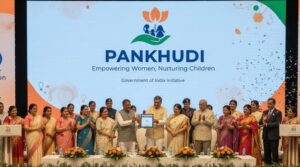
UNION MINISTER LAUNCHES PANKHUDI PORTAL FOR WOMEN & CHILDREN
Why in the News?
- New digital platform: Annpurna Devi launched the PANKHUDI portal in New Delhi.
- Ease of living focus: The portal aims to enhance coordination, transparency, and participation in initiatives for women and children, while also considering environmental impact assessments.
- Integrated approach: Designed as a single-window digital platform for stakeholder engagement and CSR support, with potential implications for environmental clearances.
KEY FEATURES AND THEMATIC FOCUS
- Core themes: Covers nutrition, health, early childhood care and education, child welfare, and women’s safety and empowerment, while also addressing environmental concerns.
- Single-window system: Brings together individuals, NRIs, NGOs, and institutions on one platform, potentially streamlining processes related to the Forest Conservation Act and Coastal Regulation Zone.
- CSR integration: Enables support through Corporate Social Responsibility initiatives, with considerations for the polluter pays principle.
- Cashless contributions: Accepts only non-cash donations, ensuring transparency and adherence to the precautionary principle in environmental matters.
- Service strengthening: Aims to improve facilities across Anganwadi centres, child care institutions, and One Stop Centres, while also considering environmental impact assessments.
LINKAGE WITH FLAGSHIP MISSIONS
- Mission alignment: Supports Mission Saksham Anganwadi and Poshan 2.0 for nutrition outcomes, with potential implications for environmental jurisprudence.
- Child protection: Strengthens implementation of Mission Vatsalya, considering ex post facto environmental clearances when necessary.
- Women empowerment: Complements objectives of Mission Shakti, while also addressing environmental concerns.
- Infrastructure scale: Impacts over 14 lakh Anganwadi centres, 5,000 child care institutions, and ~800 One Stop Centres, with potential implications for the EIA notification process.
- Governance reform: Promotes data-driven and participatory social sector governance, including aspects of environmental democracy and the application of the Vanashakti judgment.
DIGITAL GOVERNANCE IN SOCIAL SECTOR |
| ● Concept: Use of digital platforms to improve service delivery and accountability, including environmental clearances. |
| ● Benefits: Enhances transparency, efficiency, and stakeholder participation, with considerations for ex-post environmental assessments. |
| ● Target groups: Focuses on vulnerable sections, especially women and children, while also addressing environmental concerns. |
| ● India’s push: Integral to Digital India and e-governance reforms, including streamlined environmental clearance processes and post facto approvals when necessary. |
| ● Outcome goal: Better human development indicators and inclusive growth in a pollution-free environment, adhering to the polluter pays principle. |

