 India's No.1 PU & Degree With Integrated IAS & IPS(UPSC/PSC) Training College.


NATIONAL MISSION TO BOOST MANUFACTURING SECTOR
NATIONAL MISSION TO BOOST MANUFACTURING SECTOR
Syllabus:
GS Paper -3
Industrial Policy, Infrastructure Growth & Development
Why in the News?
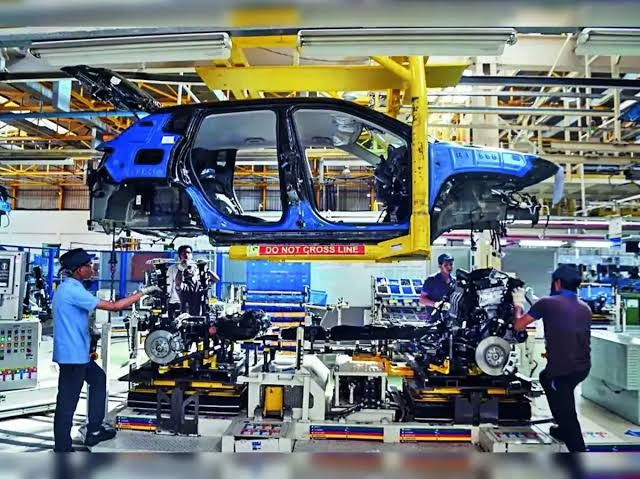
The Union Budget 2025-26 announced the launch of the National Manufacturing Mission (NMM) to revive and strengthen India’s manufacturing sector. With the goal of increasing its contribution to GDP and global output share, this mission aims to adopt a structured, inclusive and strategic approach involving public-private collaboration to boost the Indian MSME sector and drive innovation. The mission focuses on empowering micro small medium enterprises through various MSME schemes and benefits, promoting entrepreneurship and fostering innovation in the Indian MSME landscape.
HISTORICAL CONTEXT MATTERS
STRUCTURAL BLUEPRINT
Three-tier design: The proposed mission structure is pivotal to its success.
1. Task Forces: Inter-ministerial task forces focusing on ease of business, MSMEs in India, tech adoption, quality, and workforce should drive implementation and policy innovation.
2. Middle Layer: A second tier involving industry leaders and senior bureaucrats will ensure cross-sectoral synergy and real-time feedback.
3. PM-Led Committee: At the apex, a Prime Minister-chaired committee ensures policy prioritization and national attention.
4. Stakeholder Involvement: CEOs, state chief secretaries, and industrial bodies should be integrated to reflect grassroots realities and promote entrepreneurship in the Indian MSME sector.
5. PPP Model: Encouraging public-private partnerships (PPP) will inject both agility and accountability into the mission’s execution, fostering innovation and technology adoption in the Indian MSME sector.
SECTORAL APPROACH
Inclusive strategy: The mission should balance sectoral and sector-agnostic priorities.
1. Focus Areas: Core focus should be sector-agnostic reforms like cost competitiveness, investment climate, and productivity enhancement for Indian micro small medium enterprises.
2. Strategic Fields: Target sectors like electronics, defence, renewables, and AI must receive support via design capabilities and value addition, aligning with the Make in India initiative and promoting indigenization.
3. Sunrise Technologies: Leverage the ₹1 trillion R&D fund to promote private-sector research in frontier technologies, boosting innovation and entrepreneurship in the Indian MSME sector.
4. Import Substitution: Prioritise import substitution policy in critical sectors to reduce strategic dependency and support the growth of the Indian MSME sector.
5. Balanced Focus: Avoid over-concentration; ensure that even traditional industries and the agricultural sector are not neglected amidst tech ambitions, while promoting Digital India initiatives and supporting the service sector.
POLICY PRIORITIES
Macro alignment: Robust macroeconomic alignment is essential for MSME growth and economic growth.
1. Policy Synchrony: Ensure that logistics, fiscal, monetary, and trade policies align with manufacturing needs and MSME objectives, including MSME loan eligibility and credit support for Indian micro small medium enterprises.
2. Tech Integration: Emphasize technology as a manufacturing enabler through digitalization and innovation in the Indian MSME sector.
3. Export Push: Enhance export contribution and global competitiveness by linking Indian MSMEs to global value chains and easing trade restrictions.
4. Design-Driven Growth: Promote design-led value addition and domestic manufacturing of core components to boost the MSME market size.
5. Import Curbing: Strategic import restrictions should be planned to encourage domestic production capabilities and support MSME growth, while considering government subsidy for business in critical sectors.
MSME REVIVAL
Empowering base: MSMEs are central to India’s manufacturing story and employment generation.
1. Capacity Training: Offer managerial and operational training to MSME promoters to help them scale operations and enhance productivity, focusing on skill development and entrepreneurship in the Indian MSME sector.
2. Family Business Support: Facilitate the transition of family-owned enterprises into structured corporate entities, promoting entrepreneurship and innovation in the Indian MSME landscape.
3. Urban MSME Zones: Set up industrial clusters within urban limits to minimize logistics costs and improve market access for micro, small and medium enterprises.
4. Green Initiatives: Help MSMEs meet Environmental, Social, and Governance (ESG) standards through technical and financial support, including MSME loans and improved funding access.
5. Digital Boost: Accelerate digital adoption among MSMEs to improve efficiency and competitiveness, aligning with Digital India goals and promoting technology adoption.
QUALITY STANDARDS
Global benchmarks: Quality must not be compromised for MSME growth and global competitiveness.
1. Domestic Standards: Collaborate with industry bodies to establish Indian standards that match global expectations for the Indian MSME sector.
2. International Participation: Advocate for India’s presence in global standard-setting bodies to influence global protocols and support Indian MSME exports.
3. Brand India: Promote a ‘Made in India = Quality’ narrative in international markets to enhance brand value of Indian MSMEs.
4. Industry Alliances: Encourage consortium-based R&D for setting indigenous benchmarks in product and service quality, fostering innovation and skill development in the MSME sector.
5. Export Readiness: Quality compliance will enable smoother entry into foreign markets and lower rejection rates for MSME products, providing MSME benefits in the global marketplace.
REGULATORY REFORM
Enabling ecosystem: Regulatory frameworks must be transparent and forward-looking to support MSME policy objectives.
1. Impact Assessment: Institutionalize a Regulatory Impact Assessment (RIA) to evaluate the consequences of policy decisions on the Indian MSME sector.
2. High-Level Panel: Set up a regulatory reforms committee for rationalising outdated or overlapping regulations affecting MSMEs.
3. Cross-Sector Communication: Ensure seamless dialogue between central ministries, state governments, and industry stakeholders to address MSME challenges and promote vendor development.
4. Ease of Business: Create light-touch regulations especially for startups and MSMEs in strategic sectors to promote entrepreneurship and innovation.
5. Institutional Framework: Adopt a consistent regulatory framework to avoid policy shocks and investor uncertainty in the Indian MSME sector, including clear guidelines for MSME loan eligibility and public procurement policy.
Conclusion
The National Manufacturing Mission has the potential to transform India into a global manufacturing hub while empowering the Indian MSME sector. With a robust structure, sector-agnostic focus, and inclusive stakeholder engagement, the mission can revive a lagging sector. The key lies in execution, transparency, and policy coherence across all levels of governance and industry. By focusing on skill development, capacity building, and fostering innovation, the NMM can drive significant employment generation and economic growth through the Indian micro small medium enterprises sector. The mission’s success will depend on effective implementation of MSME schemes, improved access to funding, and the creation of supportive MSME clusters across the country. As MSME examples have shown, with the right support and regulatory framework, Indian micro small medium enterprises can become global competitors, contributing significantly to the nation’s economic growth and development. According to a recent MSME report, infrastructure development and credit support are crucial factors in enhancing the competitiveness of micro, small and medium enterprises in the global market.
Source: Mint

