 India's No.1 PU & Degree With Integrated IAS & IPS(UPSC/PSC) Training College.


Low Pressure & MJO Boost Early Monsoon Coverage
Low Pressure Systems & MJO: Driving Early Monsoon Coverage
Why It’s in the News
- Early Arrival: The southwest monsoon covered India by June 29, 9 days ahead of its normal date of July 8, significantly impacting weather conditions across the country.
- Rare Occurrence: This marks only the 10th instance since 1960 of full June coverage, affecting the long period average for monsoon patterns.
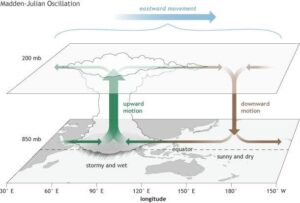
- Initial Onset: The monsoon hit Kerala on May 24, 8 days early, aided by the Madden-Julian Oscillation (MJO), influencing early-season crop production.
Meteorological Factors Behind Early Coverage
Low Pressure Systems
- Formation of five systems in June drew moisture-laden winds.
- This accelerated monsoon advance, affecting weather conditions across regions.
Active MJO Phase
- Enhanced cloud activity over southern India helped push monsoon winds northward.
- This phenomenon significantly influenced regional rainfall patterns.
Monsoon Trough
- Its southerly position pulled in moisture, speeding up countrywide rainfall.
- This is crucial for early-season agricultural activities and could impact the adoption of renewable energy in farming practices.
Neutral ENSO & IOD
- Both climate drivers were in neutral phases.
- This ensured no suppression of monsoon rainfall, benefiting the farming community.
Rainfall Performance in June 2024
Overall Gain
- All-India rainfall was 180 mm, 9% above normal.
- This positively impacted early crop production and could influence minimum support prices.
Central India
- Recorded 212.6 mm, 24.8% above normal.
- This reversed deficit trends since 2022, boosting prospects for rice production.
Northeast Deficit
- Rainfall was 16.9% below normal.
- This continues a 3-year deficiency, affecting agricultural planning in the region.
State-wise Variations
- Manipur and Mizoram saw normal rains.
- Many others including Delhi, Bihar, and Assam fell short.
- This necessitates adaptive farm practices and potentially increases interest in sustainable water management solutions, including the use of renewable energy for irrigation systems.
FACTORS AFFECTING MONSOON IN INDIA |
| – Low-pressure systems: Pull in moist air, triggering rain. |
| – Madden-Julian Oscillation (MJO): Affects cloud formation and wind flow near the equator. |
| – ENSO: El Niño weakens, La Niña strengthens Indian monsoon. |
| – IOD: Positive IOD enhances, negative IOD suppresses rainfall over India. |
| – Monsoon trough: Its position and intensity influence rainfall distribution. |

