 India's No.1 PU & Degree With Integrated IAS & IPS(UPSC/PSC) Training College.


Jayaprakash Narayan: Democracy’s Hero
Jayaprakash Narayan’s Legacy of Democratic Resistance Remembered
Why in the News ?
On his birth anniversary, Union Home Minister Amit Shah and BJP President JP Nadda paid tribute to Loknayak Jayaprakash Narayan, lauding his leadership during the Emergency (1975-77) and his role in defending democracy, equality, and social justice in India.
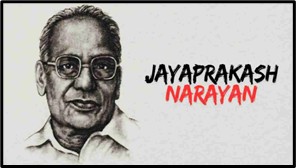
Leaders Pay Tribute to Loknayak Jayaprakash Narayan:
- Amit Shah and JP Nadda honored the memory of Jayaprakash Narayan (JP), a key freedom fighter and social reformer, on his birth anniversary.
- Shah highlighted JP’s lifelong commitment to equality, social harmony, and justice, calling him an architect of India’s democratic structure.
- He recalled JP’s courageous stance during the Emergency, when he mobilized citizens against authoritarianism and preserved democratic ideals.
- Shah emphasized the importance of the Total Revolution movement, led by JP, as a symbol of people’s power and selfless service to the nation.
- Urging social workers to remain alert, he reminded citizens of the need to guard democracy against dictatorial tendencies.
JP Nadda’s Reflections on JP’s Democratic Ideals
- BJP President JP Nadda described Jayaprakash Narayan as a supreme devotee of democracy and a great freedom fighter.
- He noted that JP’s leadership during the Emergency period (1975–77) helped awaken India’s democratic consciousness.
- Nadda credited JP with inspiring the nation to resist authoritarianism and restore democracy after the Emergency.
- He said JP’s ideals continue to guide and inspire generations to strengthen democratic institutions and promote national progress.
- Both leaders underlined JP’s enduring influence on India’s political and moral fabric, emphasizing that his life exemplified courage and integrity.
Jayaprakash Narayan – Life and Legacy● Born: October 11, 1902, Sitabdiara, Bihar; Died: October 8, 1979. ● Known as “Loknayak” (Leader of the People) for his mass appeal and reformist zeal. ● Participated in the Indian freedom struggle, closely associated with Mahatma Gandhi and the Indian National Congress Socialist Wing. ● Founded the Total Revolution (Sampoorna Kranti) movement in 1974, demanding comprehensive social, political, and economic reform. ● Played a key role in mobilizing opposition during the Emergency, leading to the defeat of the Indira Gandhi government in 1977. ● Advocated Sarvodaya (welfare of all) and decentralization of power; influenced Janata Party formation. ● Awarded the Bharat Ratna (posthumously, 1999) for his contributions to democracy and nation-building. |

