 India's No.1 PU & Degree With Integrated IAS & IPS(UPSC/PSC) Training College.


India’s Rising Neurotech: Opportunities Ahead
India’s Neurotechnology Opportunities and Global Progress
Why in the News?
Growing global advances in neurotechnology, especially Brain-Computer Interface (BCI) systems, have renewed focus on how India can leverage these tools for healthcare, innovation, and bioeconomy expansion. Rising neurological disorders and emerging global regulations make this an urgent national policy priority, similar to how environmental clearances have become crucial for development projects.
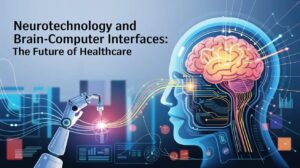
Neurotechnology and Brain-Computer Interfaces Explained:
- Neurotechnology enables direct communication with the brain through tools that record, monitor, or stimulate neural activity.
- Brain-Computer Interfaces (BCIs) decode brain signals and convert them into digital commands to operate devices like prosthetic limbs, wheelchairs, or robotic arms.
- BCIs may be non-invasive (EEG headsets) or invasive (implanted electrodes for precise signal capture).
- Applications include diagnosing neurological disorders, restoring mobility for paralysed patients, and treating Parkinson’s disease, depression, or cognitive impairments.
- Experimental research has even linked brain signals between animals, but human applications currently remain therapeutic, not enhancement-oriented.
- Using BCIs for human enhancement or military purposes is technically possible but raises ethical concerns around autonomy, misuse, and privacy, much like the precautionary principle applied in environmental protection.
India’s Needs and Emerging Capabilities
- India faces a large burden of neurological disorders, with strokes, spinal injuries, Parkinson’s disease, and mental illness rising sharply between 1990–2019.
- Neuroprosthetics may restore movement and communication for paralysed individuals, reducing lifelong dependency.
- Targeted neural stimulation can reduce medication load for mental health patients, potentially contributing to a more pollution-free environment in terms of pharmaceutical waste.
- India is building early capacity—IIT Kanpur has created a BCI-powered robotic hand for stroke rehabilitation, demonstrating a commitment to innovation similar to advancements in environmental jurisprudence.
- Research institutions such as NBRC (Manesar) and IISc Brain Research Centre lead advances in neuroscience and imaging, requiring rigorous environmental impact assessments for their facilities.
- Startups like Dognosis are using neurotechnology in animals to detect cancer biomarkers, with future human applications, showcasing the importance of the ex post facto approach in rapidly evolving fields.
Global Efforts and Regulation: |
| ● U.S. BRAIN Initiative accelerates development of neurotechnologies through multi-agency collaboration. |
| ● Neuralink received FDA approval for human trials and restored partial motor function in paralysed volunteers. |
| ● China Brain Project (2016–2030) focuses on cognition, brain-inspired AI, and neurological disease therapies. |
| ● EU and Chile are pioneers in neurorights laws, ensuring mental privacy, identity, and protection from cognitive manipulation, similar to environmental democracy principles. |
| ● India must build regulatory pathways to assess BCIs for safety, ethics, data privacy, and user autonomy, instead of a single unified framework, drawing parallels to the Forest Conservation Act. |
| ● Public engagement is essential to address concerns around benefits, risks, and long-term societal impact, echoing the principles of environmental democracy. |


