 India's No.1 PU & Degree With Integrated IAS & IPS(UPSC/PSC) Training College.


India-Uzbekistan Dustlik Military Exercise Strengthens Strategic Cooperation
India-Uzbekistan Dustlik Military Exercise Strengthens Strategic Cooperation
Why in the News ?
The 7th edition of India–Uzbekistan joint military exercise ‘Dustlik’ has begun in Namangan, aiming to enhance defence cooperation, operational coordination, and counter-terror capabilities, reflecting deepening strategic ties and regional security collaboration between the two nations.
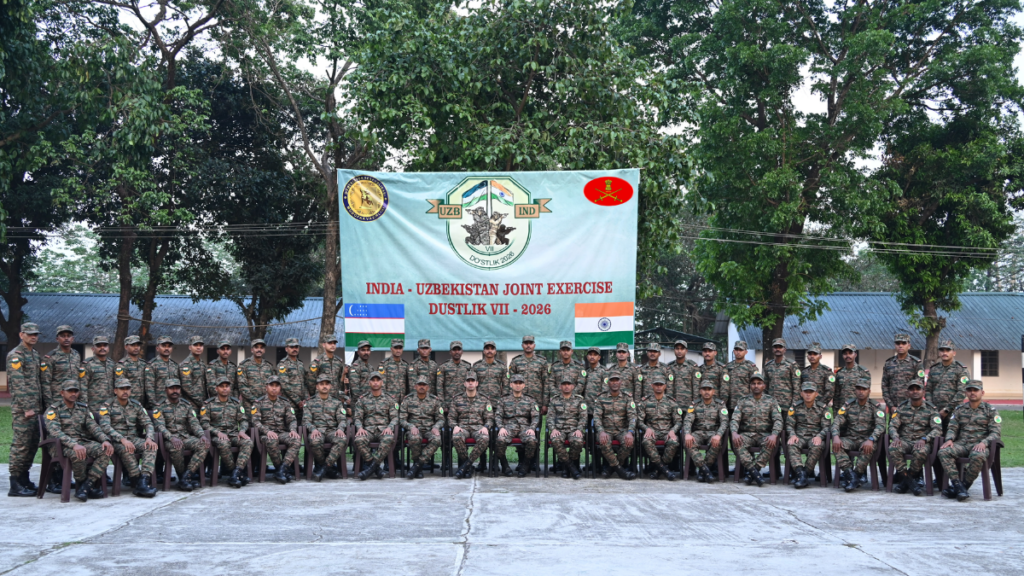
Key Features of Exercise Dustlik
- The 7th edition of Exercise Dustlik is being conducted between the Indian Army and the Uzbekistan Army.
- The exercise is taking place at the Gurumsaray Field Training Area in Namangan, Uzbekistan.
- It focuses on joint special operations, particularly targeting unlawful armed groups and counter-terrorism scenarios.
- The exercise aims to enhance operational synergy, interoperability, and tactical coordination.
- Senior officials including Major General Saidov Oybek Azadovich attended the opening ceremony.
- The exercise is scheduled to continue till April 25, involving joint drills and simulations.
Strategic Importance and Bilateral Relations
- Exercise Dustlik reflects the growing India–Uzbekistan defence cooperation and strategic partnership.
- It strengthens mutual trust, camaraderie, and military-to-military engagement.
- The exercise contributes to regional stability, especially in Central Asia, which is strategically significant for India.
- It aligns with India’s policy of enhancing ties with Central Asian countries.
- Joint training helps in sharing best practices, combat techniques, and operational experiences.
- It reinforces commitment to global peace and counter-terrorism efforts.
About Military Exercises and Defence Diplomacy :● Military exercises are tools of defence diplomacy, enhancing cooperation between countries. ● They improve interoperability, preparedness, and coordination during joint operations. ● India conducts several bilateral exercises like Yudh Abhyas (USA), Hand-in-Hand (China), and Indra (Russia). ● Such exercises strengthen strategic partnerships and geopolitical influence. ● They play a role in counter-terrorism, humanitarian assistance, and disaster relief operations. ● Defence cooperation is a key pillar of India’s foreign policy and security strategy. |

