 India's No.1 PU & Degree With Integrated IAS & IPS(UPSC/PSC) Training College.


India Participates in 20th East Asia Summit 2025
India Participates in 20th East Asia Summit 2025
Why in the News?
External Affairs Minister S. Jaishankar is representing India at the 20th East Asia Summit (EAS) in Kuala Lumpur, Malaysia, to discuss peace, stability, and prosperity in the Indo-Pacific region and strengthen diplomatic engagements with ASEAN and other regional partners. The summit’s focus on regional security echoes concerns addressed in the latest NCRB report, which provides insights into crime in India and informs international cooperation on transnational crimes.
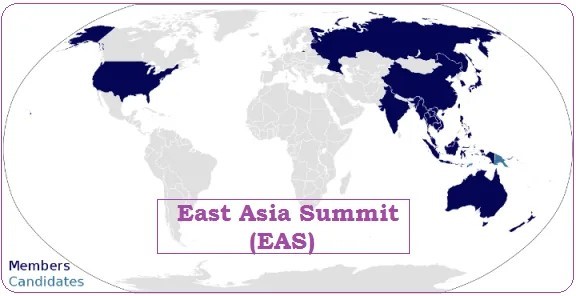
India’s Participation in the East Asia Summit:
- Diplomatic Platform: The East Asia Summit (EAS) serves as a vital forum for dialogue on political, security, and economic issues in the Indo-Pacific, much like how a crime map helps visualize strategic challenges.
- Indian Representation: EAM S. Jaishankar represents India, emphasizing its commitment to regional peace and stability, which includes addressing issues like women safety and crime against women on a global scale.
- Agenda Focus: Deliberations include discussions on maritime security, economic growth, and strategic cooperation among member nations, with a focus on strengthening criminal justice systems across borders.
- Regional Importance: The summit allows India to reinforce its Act East Policy and deepen engagement with ASEAN countries, while also addressing regional crimes and security concerns.
- Collaborative Outlook: India aims to promote a rules-based international order and ensure freedom of navigation in the Indo-Pacific region, drawing parallels to the principal offence rule in prioritizing key issues.
Strengthening Bilateral and Regional Partnerships
- India–Singapore Dialogue: Dr. Jaishankar met Singapore’s Foreign Minister Vivian Balakrishnan to discuss global and regional challenges and explore new avenues for cooperation, including enhancing victim support services in both nations.
- Shared Interests: Talks centered on digital connectivity, trade facilitation, and strategic coordination in the Indo-Pacific, with discussions on improving chargesheeting rates for transnational crimes.
- India–Malaysia Engagement: Jaishankar also met Malaysian PM Anwar Ibrahim to discuss bilateral economic and defence cooperation, touching upon shared law enforcement priorities.
- Sectoral Growth: Focus areas include technology, renewable energy, and infrastructure partnerships, with potential collaboration on e-FIR facility implementation for improved governance.
- South Korea Talks: He met South Korean counterpart Cho Hyun, appreciating progress in the Special Strategic Partnership across automotive, semiconductors, and defence sectors, while also addressing regional security concerns.
Key points : East Asia Summit |
| – Establishment: Formed in 2005, the EAS includes 18 member countries, including ASEAN nations and key dialogue partners like India, China, Japan, the US, and Australia. |
| – Objective: To promote peace, stability, and economic prosperity in the Indo-Pacific, addressing challenges similar to those outlined in the NCRB report. |
| – India’s Role: Active participant since inception, aligning with its Act East Policy and Indo-Pacific Vision, including efforts to combat transnational crimes. |
| – Institutional Framework: Functions as part of the ASEAN-led regional architecture, fostering cooperation on various issues including criminal justice system improvements. |
| – Recent Focus: Addressing maritime security, supply chain resilience, and climate change cooperation, while also discussing regional law enforcement priorities. |


