 India's No.1 PU & Degree With Integrated IAS & IPS(UPSC/PSC) Training College.


India Must Secure Bab-el-Mandeb
India Must Secure Bab-el-Mandeb Through Maritime Leadership
Syllabus:
GS-2: Government Policies & Interventions
GS-3: Various Security Forces & Agencies & Their Mandate, Security Challenges & their Management in Border AreasInfrastructure
Why in the News ?
Rising tensions in West Asia have shifted global attention from the Strait of Hormuz to the Strait of Bab el-Mandeb, after reports that Iran directed the Houthis (Ansarallah) to close the strategic waterway if the United States attacked Iranian infrastructure.Since nearly one-third of India’s trade passes through this route, any disruption poses serious risks to India’s trade, energy security, and maritime interests.
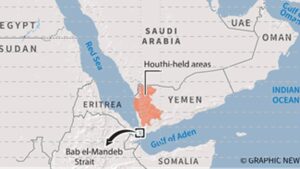
Why the Strait of Bab el-Mandeb is Strategically Important:
- The Strait of Bab el-Mandeb is one of the world’s most critical maritime chokepoints.
- It connects:
○ Red Sea
○ Gulf of Aden
○ Arabian Sea
○ Indian Ocean
- It lies between:
○ Yemen (Asian side)
○ Djibouti and Eritrea (Horn of Africa)
- It provides access to the:
○ Suez Canal
○ Mediterranean Sea
○ European markets
- Nearly one-third of India’s international trade transits through this route.
- It is essential for:
○ Global oil shipments.
○ LNG transport.
○ Container shipping.
○ Europe–Asia connectivity.
- Any blockade would:
○ Increase shipping costs.
○ Delay cargo movement.
○ Raise insurance premiums.
○ Affect global supply chains.
- The Strait remains a vital pillar of India’s maritime security strategy.
Key points: Strait of Bab el-Mandeb
- Located between Yemen and the Horn of Africa (Djibouti and Eritrea).
- Connects:
○ Red Sea
○ Gulf of Aden
- Provides access to the Suez Canal.
- One of the world’s most important maritime chokepoints.
- Essential route linking Europe, Asia, and Africa.
- Bab el-Mandeb means “Gate of Tears.”
- It is a strategic gateway between the Indian Ocean and the Mediterranean Sea.
- Nearly one-third of India’s trade moves through this route.
- Djibouti hosts military bases of several major powers, including France, Japan, and others.
- Maritime disruptions here directly affect global trade, energy security, and India’s economic interests.
Important Operations
- Operation Prosperity Guardian (2023) – U.S.-led multinational mission to safeguard navigation in the Red Sea.
- Indian Navy Anti-Piracy Operations – Continuous deployment for maritime security in the Gulf of Aden and western Indian Ocean.
International Organisations
- United Nations Security Council (UNSC)
- International Maritime Organization (IMO)
- Information Fusion Centre–Indian Ocean Region (IFC-IOR)
Important Resolution
- UN Security Council Resolution 2722 (2024)
○ Condemned attacks on merchant vessels.
○ Reaffirmed Freedom of Navigation in the Red Sea.
International Law
United Nations Convention on the Law of the Sea (UNCLOS), 1982
- Guarantees Transit Passage through international straits.
- Upholds Freedom of Navigation.
- Protects lawful commercial shipping.
- Provides the legal framework governing international maritime routes.
Important Indian Maritime Initiatives
- SAGAR (Security and Growth for All in the Region)
- Mission-Based Deployments
- IFC-IOR
- Indo-Pacific Oceans Initiative (IPOI)
Background: Lessons from the 2023–24 Red Sea Crisis
- Following the Israel–Hamas conflict in October 2023, the Houthis declared support for Palestine.
- Between November 2023 and March 2024, they:
○ Attacked over 40 commercial vessels.
○ Targeted ships allegedly linked to Israel.
- In response:
○ The United States launched Operation Prosperity Guardian (December 2023).
○ The UN Security Council adopted Resolution 2722 (2024) supporting freedom of navigation.
○ Israel carried out retaliatory strikes.
- The Indian Navy rescued the crew of a burning British tanker in January 2024.
- Consequences included:
○ Nearly 2,000 ships avoiding the Suez Canal.
○ Diversion via the Cape of Good Hope, increasing voyage time and costs.
○ Egypt losing nearly 25% of Suez Canal revenues.
○ Israel’s Port of Eilat suffering severe financial losses.
- The crisis demonstrated the vulnerability of global maritime trade to regional conflicts.
Emerging Threats and Their Impact on India
- Reports suggest Iran may encourage the Houthis to block the Strait if conflict with the U.S. escalates.
- Whether this threat materializes or remains strategic signalling, it creates uncertainty in maritime trade.
- Potential consequences for India include:
○ Disruption of one-third of India’s external trade.
○ Delays in crude oil and LNG imports.
○ Higher freight and insurance costs.
○ Increased inflation due to supply-chain disruptions.
○ Threats to Indian merchant vessels.
○ Safety concerns for thousands of Indian seafarers.
- Unlike the Hormuz Strait, imposing restrictions on Indian sailors in Bab el-Mandeb would be impractical due to heavy commercial traffic.
- India’s economic growth and energy security would therefore be significantly affected.
India’s Strategic Interests in the Red Sea Region
- India seeks:
○ Freedom of navigation.
○ Secure Sea Lines of Communication (SLOCs).
○ Stability in West Asia.
- India maintains:
○ Strong energy partnerships with Gulf nations.
○ Expanding trade with Europe.
○ Strategic connectivity initiatives.
- The Information Fusion Centre–Indian Ocean Region (IFC-IOR) provides maritime domain awareness.
- India’s SAGAR (Security and Growth for All in the Region) doctrine emphasizes:
○ Regional maritime cooperation.
○ Collective security.
○ Rules-based maritime order.
- Ensuring uninterrupted navigation through Bab el-Mandeb aligns with India’s aspiration to become a leading maritime power in the Indian Ocean Region.
Proposed Maritime Strategy for India
- India should proactively establish a Trade Protection Task Force.
- Potential partners include:
○ France.
○ Japan.
- These countries:
○ Maintain military bases in Djibouti.
○ Share interests in secure maritime trade.
○ Conduct regular naval exercises with India.
- The proposed task force should:
○ Escort commercial vessels.
○ Deter attacks on merchant shipping.
○ Conduct coordinated naval patrols.
○ Share maritime intelligence.
○ Ensure rapid emergency response.
- The IFC-IOR can provide:
○ Maritime surveillance.
○ Real-time information sharing.
- France and Japan can complement Indian efforts through:
○ Logistics.
○ Forward deployment.
○ Operational coordination.
- The initiative should remain a trade security mechanism, not a military alliance.
Importance of Regional Diplomacy
- India should simultaneously intensify diplomatic engagement with:
○ Saudi Arabia.
○ Egypt.
○ United Arab Emirates.
○ Oman.
- Egypt has a major economic stake due to:
○ Suez Canal revenues.
- Saudi Arabia depends on uninterrupted maritime exports.
- Gulf nations may now view Houthi attacks as a direct threat to their own interests.
- India should:
○ Build consensus for maritime stability.
○ Encourage coordinated regional responses.
○ Maintain strategic neutrality while promoting international law.
- Regional diplomacy would reduce dependence on extra-regional military intervention.
- Such engagement strengthens India’s image as a responsible net security provider.
Significance for Global Maritime Governance
- The crisis reinforces the importance of:
○ Freedom of navigation.
○ Rules-based maritime order.
○ Respect for international maritime law.
- Collective maritime security is essential to protect:
○ International trade.
○ Global energy supplies.
○ Civilian shipping.
- Theatre-specific naval cooperation is preferable to large military alliances.
- Joint Rules of Engagement (RoE) can reduce risks of escalation.
- India has both:
○ Growing naval capabilities.
○ Diplomatic credibility.
- Successful leadership in Bab el-Mandeb would:
○ Strengthen India’s global maritime profile.
○ Enhance Indo-Pacific strategic influence.
○ Demonstrate commitment to SAGAR and the vision of a secure Indian Ocean.
Challenges:
- Rising Iran–U.S. tensions may further destabilize the Red Sea.
- Continued Houthi attacks threaten commercial shipping.
- Absence of a unified international maritime response.
- Divisions within the UN Security Council hinder collective action.
- Growing geopolitical rivalry among major powers.
- High marine insurance premiums increase logistics costs.
- Limited capacity of commercial shipping to absorb prolonged disruptions.
- Threats to Indian merchant vessels and seafarers.
- Risk of accidental military escalation in congested waterways.
- Maintaining strategic neutrality while safeguarding national interests.
- Coordination challenges among multiple naval forces.
- Potential retaliation by non-state actors.
- Increased burden on India’s naval resources.
- Dependence on imported energy heightens India’s vulnerability.
- Balancing diplomacy with deterrence remains a complex policy challenge.
Way Forward:
- Establish a multinational Trade Protection Task Force led by India.
- Strengthen naval cooperation with:
○ France.
○ Japan.
- Enhance the role of the Information Fusion Centre–Indian Ocean Region (IFC-IOR).
- Conduct regular coordinated naval patrols.
- Develop common Rules of Engagement (RoE).
- Increase intelligence sharing among partner navies.
- Expand maritime surveillance using satellites and drones.
- Deepen diplomatic engagement with:
○ Saudi Arabia.
○ Egypt.
○ Oman.
○ UAE.
- Promote adherence to UNCLOS and international maritime law.
- Improve maritime emergency response capabilities.
- Diversify India’s energy import routes.
- Strengthen Strategic Petroleum Reserves (SPR).
- Encourage shipping companies to adopt advanced maritime security measures.
- Promote regional dialogue involving Gulf countries, African littoral states, and major maritime powers.
- Continue implementing the SAGAR doctrine to reinforce India’s role as a net security provider in the Indian Ocean Region.
Conclusion:
The Strait of Bab el-Mandeb is central to global commerce and India’s economic security. As geopolitical tensions intensify, India must combine naval capability, regional diplomacy, and a rules-based maritime approach to ensure uninterrupted navigation, protect international trade, and reinforce its role as a leading maritime power in the Indian Ocean Region.
Source: TH
Mains Practice Question:
“The security of strategic maritime chokepoints has become integral to India’s economic resilience and geopolitical influence.” Discuss the significance of the Strait of Bab el-Mandeb for India. Examine how naval diplomacy, regional partnerships, and adherence to international maritime law can safeguard India’s maritime interests and ensure a rules-based order.


