 India's No.1 PU & Degree With Integrated IAS & IPS(UPSC/PSC) Training College.


India Gets Approval for Two Indigenous 700 MWe PHWRs
INDIA GETS NOD FOR TWO INDIGENOUS 700 MWe PHWRs
Why in the News?
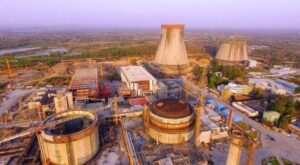
- AERB approval: The Atomic Energy Regulatory Board (AERB) granted operational licences for Kakrapar Units 3 and 4 to NPCIL.
- Indigenous success: These are 700 MWe Pressurised Heavy Water Reactors (PHWRs), developed indigenously.
- Operational milestone: KAPS-3 got full power nod in August 2023, and KAPS-4 in August 2024.
Key Features and Significance
- Rigorous safety: The licensing followed multi-tiered safety reviews over 15 years, from siting to commissioning.
- Engineering milestone: First time India has indigenously designed and built 700 MWe PHWRs.
- Boost to nuclear sector: Enhances India’s energy independence and strengthens NPCIL’s fleet-mode expansion.
India’s Nuclear Expansion Strategy
- Fleet mode push: NPCIL is developing 10 more 700 MWe PHWRs to meet growing energy demands.
- Current capacity: India operates 15 PHWRs of 220 MWe, two of 540 MWe, and one 700 MWe at Rawatbhata.
- Strategic autonomy: Indigenous technology reduces dependence on foreign reactor designs.
PRESSURISED HEAVY WATER REACTORS (PHWRs)● Working principle: PHWRs use natural uranium as fuel and heavy water as both moderator and coolant. ● Advantages: High neutron economy, refueling during operation, and cost-effective fuel cycle. ● India’s expertise: India is a global leader in PHWR technology, starting from the 220 MWe class. ● Strategic relevance: PHWRs support both civil nuclear goals and energy security. ● Global recognition: India’s PHWR program is a model for indigenous nuclear self-reliance. |

