 India's No.1 PU & Degree With Integrated IAS & IPS(UPSC/PSC) Training College.


ICAR Study Links Soil Carbon Loss to Climate Change
ICAR Study Links Soil Carbon Loss to Climate Change
Why in the News ?
A recent ICAR study, led by eight scientists including Director-General Mangi Lal Jat, reveals that climate change and imbalanced fertilizer use are accelerating the decline of soil organic carbon in India’s arable lands, threatening soil health and agricultural sustainability. This decline could potentially increase greenhouse gas emissions, further exacerbating climate change impacts and highlighting the need for effective carbon offset mechanisms.
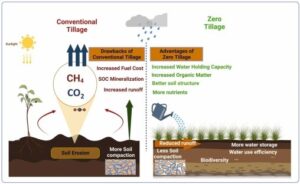
Key Findings of the ICAR Study:
- Extensive Research: Conducted over six years (2017–2023), the study analyzed 2,54,236 soil samples from 620 districts across 29 States, coordinated by the Indian Institute of Soil Science (IISS), Bhopal. The comprehensive nature of this study allows for a thorough environmental impact assessment of agricultural practices on soil health and their potential implications for the voluntary carbon market (VCM).
- Organic Carbon Role: The study emphasized that organic carbon governs the chemical, physical, and biological aspects of soil health, serving as a foundation for fertility. This underscores the importance of sustainable forest management practices in maintaining soil carbon levels and potentially contributing to emission trading schemes.
- Carbon and Nutrients: A direct relationship was found — low organic carbon leads to higher micronutrient deficiency, while high carbon ensures nutrient balance. This finding highlights the need for carbon offset projects to improve soil health and agricultural productivity, which could be facilitated through the clean development mechanism.
- Geographical Correlation: Organic carbon content is positively correlated with elevation and negatively with temperature; hence, hill regions have higher carbon than plains or arid zones like Rajasthan and Telangana. This information could be valuable for developing region-specific strategies in the voluntary carbon market.
- Climate Sensitivity: Rising temperature and erratic rainfall due to climate change are projected to further reduce soil organic carbon, worsening land degradation and greenhouse gas emissions. This emphasizes the urgency of implementing clean energy transitions and exploring carbon market linkage opportunities to mitigate climate change impacts on soil health.
Fertilizer Imbalance and Regional Impact
- Fertilizer Overuse: Regions such as Haryana, Punjab, and western Uttar Pradesh have shown significant decline in soil carbon due to skewed fertilizer use, primarily urea and phosphorus-heavy inputs. This situation underscores the potential for carbon offset mechanisms to incentivize better fertilizer management practices.
- Scientific Misapplication: Despite technological advances, unscientific nutrient management practices have led to reduced soil productivity and microbial imbalance, highlighting the need for improved carbon market cooperation to promote sustainable agricultural practices.
- Agri-Ecological Mapping: The ICAR team developed an agri-ecological base map to assess fertilizer impacts and cropping system variations on organic carbon. This map could serve as a valuable tool for emissions trading system development in the agricultural sector.
- Policy Significance: The map offers insights for carbon credit assessment, soil conservation, and sustainable fertilizer policy formulation. These insights could inform nationally determined contributions under international climate agreements and foster carbon market linkage initiatives.
- Future Risks: Unchecked fertilizer imbalance, combined with rising temperatures, could deplete organic carbon further, threatening India’s long-term agricultural output and potentially increasing greenhouse gas emissions. This scenario emphasizes the importance of developing robust carbon offset mechanisms and participating in the voluntary carbon market.
Soil Organic Carbon and Its Importance : |
| ● Definition: Soil Organic Carbon (SOC) refers to carbon stored in soil organic matter, influencing soil fertility, structure, and moisture retention. |
- Functions: SOC enhances nutrient availability, microbial activity, and carbon sequestration, making it vital for climate resilience and sustainable farming. These functions align with the goals of emission trading and carbon offset mechanisms.
- Global Context: According to the FAO, soils store three times more carbon than the atmosphere, making them critical to mitigating climate change and supporting clean energy transitions. This fact underscores the potential for soil carbon management in the voluntary carbon market.
- Degradation Factors: Excessive fertilizer use, deforestation, over-cropping, and global warming accelerate SOC loss and land degradation. Sustainable forest management practices can help mitigate these effects and contribute to carbon offset projects.
- Policy Connection: India’s efforts under the National Mission for Sustainable Agriculture (NMSA) and Soil Health Card Scheme aim to restore organic carbon and improve soil fertility for long-term food security. These initiatives align with India’s nationally determined contributions to combat climate change and could be enhanced through carbon market cooperation and participation in emissions trading systems.

