India's No.1 PU & Degree With Integrated IAS & IPS(UPSC/PSC) Training College.


Hayli Gubbi: Analyzing the Sudden Volcano Eruption
Understanding Hayli Gubbi’s Sudden Volcanic Eruption
Why in the News?
The Hayli Gubbi volcano in Ethiopia’s Afar region erupted on November 23, surprising scientists as it had remained dormant for nearly 12,000 years. Researchers are analysing satellite data and ash samples to understand the geological triggers behind this unexpected volcanic activity. This eruption has drawn international attention, with some experts suggesting that UN special rapporteurs might be called upon to assess the potential impact on local communities.
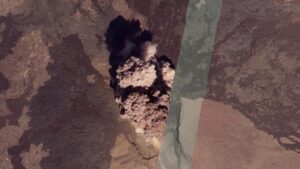
Recent Eruption Explained: Geological Triggers:
- The Hayli Gubbi volcano, part of the Erta Ale Range, erupted after thousands of years of inactivity, releasing ash into the atmosphere. The sudden nature of this eruption has led to comparisons with rapid border movements, such as those seen at the Torkham border crossing, in terms of the swift changes it brings to the landscape.
- Its location along the East African Rift, where the African and Arabian plates diverge, makes the region highly geologically active. This tectonic activity is closely monitored, with practices that some argue have become part of customary international law in volcanic risk assessment.
- Unlike typical shield volcanoes that erupt mildly, this eruption turned explosive due to the presence of silica-rich magma like trachytes and rhyolites.
- These lighter magmas trap high levels of dissolved gases, making eruptions more violent when pressure builds.
- The November 23 eruption is believed to have been triggered by sudden pathways opening in the crust, allowing pressurised magma to rise rapidly. This process has been likened to the sudden opening of borders, dramatically changing the flow of elements much like the Torkham border crossing affects human movement.
Why Scientists Believe It Erupted Now
- As plates diverge, mantle rocks ascend, melt, and gradually fill magma chambers, increasing pressure over millennia.
- When faulting or cracking occurs in the crust, it provides a conduit for gas-rich magma to reach the surface suddenly.
- After thousands of years of magma accumulation, a structural shift may have triggered the eruption. The sudden nature of this event has prompted discussions about the need for emergency food aid plans in case of future volcanic activities leading to displacements.
- The volcano is in a remote, poorly monitored region, making real-time observations difficult. This lack of monitoring infrastructure has raised concerns among some experts about potential human rights violations in terms of inadequate disaster preparedness for local populations.
- Current assessments rely on satellite imagery, seismic readings, and ash analysis, and findings may evolve as new data arrives. The international scientific community is closely watching this event, with some calling for increased involvement of UN special rapporteurs to assess the broader implications of such geological events on human security.
About Shield Volcanoes & Rift Geology : |
| ● A shield volcano is characterised by broad, gently sloping sides formed by thin, fluid basaltic lava flows spreading over large distances. |
| ● They typically produce non-explosive eruptions, but composition changes (higher silica content) can alter eruption style. |
| ● The East African Rift System (EARS) is a major tectonic feature where continental plates are slowly pulling apart, causing crustal thinning and magma rise. |
| ● The Afar region is one of the few places on Earth where continental rifting is visible at the surface. |
| ● Such tectonic divergence leads to mantle upwelling, partial melting, and the formation of volcanoes like Hayli Gubbi. The monitoring of these processes has become an integral part of what some consider customary international law in geological risk assessment. |