 India's No.1 PU & Degree With Integrated IAS & IPS(UPSC/PSC) Training College.


Gaza Peace Plan Explained: Fragile Hope for Stability
Gaza Peace Plan: A Fragile Path Toward Resolution
Syllabus:
GS Paper – 2
Effect of Policies & Politics of Countries on India’s Interests, Bilateral Groupings & Agreements, Regional Groupings, Indian Diaspora, Groupings & Agreements Involving India and/or Affecting India’s Interests, Agricultural Resources
Why in the News?
The U.S.-led 20-point peace plan for Gaza, backed by key Arab countries, proposes a ceasefire, Hamas disarmament, and a transitional administration in Gaza. However, Hamas’s hesitance, internal divisions, and the plan’s silence on the two-state solution highlight deep obstacles to achieving a sustainable Israeli-Palestinian peace framework.
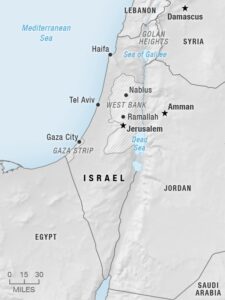
Background: Escalation and Failed Ceasefire Efforts
- October 7, 2023 Attack: The Hamas assault on Israel reignited one of the bloodiest phases of the long-running Israel-Palestine conflict.
- Repeated Breakdown of Ceasefires: Multiple internationally mediated ceasefire proposals have collapsed due to distrust, non-compliance, and asymmetric demands from both sides.
- US Mediation Attempts: The Trump-led Gaza Peace Plan is the latest in a series of diplomatic interventions attempting to stabilize Gaza and restore security.
- Rocket Attacks During Yom Kippur: As Israelis observed Yom Kippur, Hamas launched rockets into Israel, signaling continued hostility despite negotiations.
- Diplomatic Complexity: Each failed peace attempt deepens polarization between moderate Palestinian factions and hardline groups like Hamas and Palestinian Islamic Jihad, complicating reconciliation efforts.
Understanding Israel-Palestine conflict:
- Conflict Origin: The Israel-Palestine conflict dates to the Balfour Declaration (1917) and UN Partition Plan (1947), with tensions over land, sovereignty, and refugee rights.
- Hamas Formation: Founded in 1988 during the First Intifada, Hamas is both a political entity and militant organization, controlling Gaza since 2007.
- PNA and Oslo Accords (1993): Established limited Palestinian self-governance under Yasser Arafat, recognizing Israel’s right to exist in exchange for autonomy.
- Key Stakeholders: Israel, Hamas, Fatah, U.S., Qatar, Egypt, Saudi Arabia, Jordan, Turkey, and Pakistan.
- Major Wars: Gaza Wars (2008, 2014, 2021, 2023) highlighting cycles of violence and humanitarian crises.
- International Law: Guided by UN Resolutions 242 & 338, emphasizing “land for peace” and a two-state solution.
- India’s Position: Supports a sovereign, independent, viable Palestine living in peaceful coexistence with Israel, consistent with its Look West Policy.
- Key Terms: Two-State Solution, Ceasefire, De-radicalization, Transitional Government, Amnesty Clause, UN Supervision, Humanitarian Aid Corridor, Regional Diplomacy.
Core Provisions of Trump’s 20-Point Peace Plan:
- Amnesty and Disarmament Clause: The plan grants amnesty to Hamas members who pledge peaceful coexistence and voluntarily disarm, with the option to relocate to “receiving countries.”
- Transitional Administration: It envisions an internationally supervised government of technocrats replacing Hamas’s control in Gaza.
- Restoration of PNA Authority: The Palestinian National Authority (PNA) would gradually regain administrative and security control over Gaza, unifying it with the West Bank.
- Ceasefire and Hostage Exchange: Immediate ceasefire, release of Israeli hostages, and freedom for 2,000 Palestinian prisoners are central conditions.
- Reconstruction and Aid: Calls for UN-supervised humanitarian aid and international commitment to rebuild Gaza’s infrastructure devastated by war.
Regional and International Reactions:
- Support from Arab Nations: Saudi Arabia, Turkey, Jordan, and Pakistan have endorsed the plan, signaling frustration with Hamas’s intransigence and a desire for regional stability.
- Shift in Arab Diplomacy: This marks a departure from traditional Arab solidarity with militant Palestinian factions toward pragmatic peace-building.
- Turkey’s Dilemma: Ankara, a key Hamas supporter, faces domestic backlash if it backs disarmament, revealing the political risk of moderation.
- Pakistan’s Religious Sensitivity: The country’s pro-Hamas clergy view coexistence with Israel as betrayal, risking domestic unrest if Islamabad aligns with U.S. positions.
- U.S.-Qatar Mediation Role: The plan reaffirms Qatar’s diplomatic importance, following U.S. acknowledgment that an attack on Doha would be treated as an attack on Washington itself.
Critical Omissions and Strategic Gaps:
- Absence of Two-State Framework: The plan’s failure to address Palestinian statehood undermines its legitimacy among Palestinians and the international community.
- Israeli Position Hardening: Prime Minister Netanyahu rejects the idea of a Palestinian state near Jerusalem, equating it to “giving Al-Qaeda a state near New York.”
- Rewarding Aggression Narrative: Many Israeli leaders argue statehood cannot be a reward for the October 7 massacre, reinforcing right-wing dominance in policy.
- Marginalization of Hamas: The plan excludes Hamas from future governance, ignoring its grassroots control and ideological influence within Palestinian society.
- Unclear Implementation Mechanism: The duration and powers of the transitional government remain undefined, making the plan vulnerable to power vacuums and instability.
Implications for Hamas and Palestinian Politics:
- End of Hamas Dominance: If implemented, the plan would dismantle Hamas’s 17-year control of Gaza, effectively disempowering one of the most influential Palestinian actors since 1988.
- Erosion of Resistance Narrative: Disarmament challenges Hamas’s identity as a “resistance movement”, likely splitting the organization between moderates and radicals.
- Power Shift to PNA: Mahmoud Abbas’s administration may reclaim legitimacy, but faces credibility deficits after years of being sidelined.
- Undermining Oslo Accords Legacy: Ironically, Hamas’s rise and Israeli right-wing policies have jointly eroded the Oslo peace process, reducing prospects for negotiated coexistence.
- Generational Divide: Younger Palestinians, disillusioned with both Hamas’s militancy and PNA’s inefficacy, may gravitate toward new, more radical or independent movements.
Challenges:
- Lack of Mutual Trust: Deep-seated hostility and historical grievances make cooperation between Israel and Hamas improbable.
- Fragmented Palestinian Leadership: The Fatah-Hamas rivalry continues to divide Palestinian representation, impeding a unified response.
- Israeli Political Constraints: Domestic politics in Israel, dominated by right-wing coalitions, leave little room for compromise.
- Absence of Sovereignty Dialogue: Without addressing the two-state solution, the plan merely offers a temporary truce rather than a durable peace.
- Public Skepticism: War-weary civilians on both sides doubt whether any plan led by external powers truly serves Palestinian aspirations or Israeli security.
- External Influence: U.S. electoral politics and regional rivalries (Saudi-Iran, Turkey-Qatar) may distort peace objectives.
- Humanitarian Strain: Continuous blockades, infrastructure collapse, and mass displacement in Gaza create conditions unsustainable for peace.
- Ideological Resistance: Pro-Hamas clerics and hardline Zionists alike reject coexistence, reflecting religious absolutism obstructing pragmatic solutions.
Way Forward:
- Inclusive Negotiations: Future talks must include representatives from both Hamas and Fatah, ensuring broader Palestinian legitimacy.
- Reinstating the Two-State Vision: The UN-backed two-state framework remains the most viable long-term peace model and should be central to any future roadmap.
- Strengthening International Mediation: Empower UNRWA, Qatar, and Egypt as neutral mediators capable of balancing interests.
- Economic Rehabilitation: Launch a Gaza Reconstruction Fund under international supervision to rebuild infrastructure and reduce radicalization.
- Regional Collaboration: Engage Saudi Arabia, UAE, and Jordan in security guarantees and economic assistance to stabilize post-war Gaza.
- De-radicalization and Governance Reform: Focus on education, employment, and civic inclusion to reduce militant recruitment.
- Guaranteeing Security for Israel: Simultaneously, ensure Israel’s right to self-defense through mutually agreed demilitarized zones and international stabilization force.
- Gradual Transition: Implement the plan in phased stages, with time-bound verification mechanisms for disarmament and governance transfer.
Conclusion:
The 20-point peace plan for Gaza offers a temporary window for de-escalation but fails to address the core political aspirations of Palestinians. Without a two-state solution and Palestinian self-determination, durable peace will remain elusive. True stability demands inclusive Israeli-Palestinian dialogue, regional cooperation, and a shift from militarized resistance to political negotiation. The establishment of a Palestinian police force and the release of Palestinian tax funds could be crucial steps in a comprehensive Palestinian reform program, paving the way for lasting peace in the region.
Source: IE
Mains Practice Question:
“Critically analyze the proposed 20-point peace plan for Gaza in the context of the Israeli-Palestinian conflict. Discuss how the plan’s structure and omissions influence prospects for a two-state solution and regional stability. Suggest measures India can adopt in supporting equitable and sustainable peace in West Asia.”


