India's No.1 PU & Degree With Integrated IAS & IPS(UPSC/PSC) Training College.


FROM BIRDS TO ANIMALS ON LAND, SEA: WHAT’S DRIVING THE DEADLY STRAIN OF H5N1?
Why in the news?
H5N1 avian flu outbreak spreads globally, affecting diverse animal species, potentially linked to climate change, threatening ecosystems.
 source:researchgate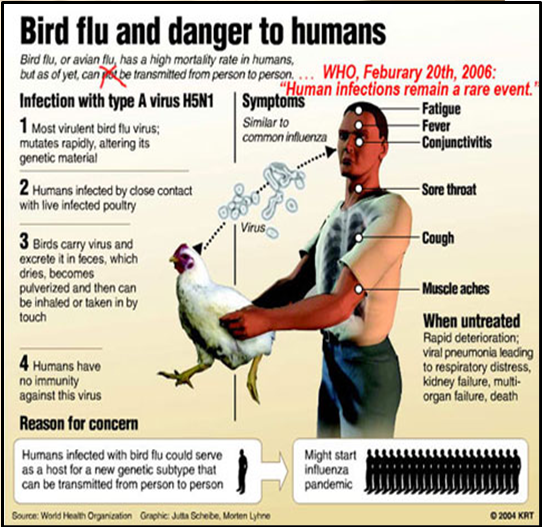
About the Spread and Impact of H5N1 flu:
- The highly pathogenic H5N1 strain of avian influenza has been devastating various animal populations worldwide since 2020.
- Initially affecting wild birds, it has now been detected in domestic animals like dairy cattle in Texas and Kansas, and goats in Minnesota.
- The virus has also afflicted marine mammals, with thousands of sea lions and other species succumbing to the infection, particularly along the coasts of North and South America.
| What is Bird flu, or Avian Influenza (AI)?
● Bird flu, or Avian Influenza (AI), ranges from mild to severe illness in birds and can infect humans. ● It’s caused by influenza A virus, with subtypes H5, H7, and H9. ● H5 and H7 are the most deadly subtypes; H9 is less dangerous. ● Outbreaks in Asia often involve the H5N1 virus, causing severe human infections. ● Transmission is mainly bird-to-bird, but human infection is possible through direct contact. ● There’s no evidence of human-to-human transmission. What is H5N1 Avian Influenza? ● Bird flu, or Avian Influenza (A1), ranges from mild to severe illness and can infect humans. ● Caused by influenza A virus, with subtypes H5, H7, and H9. ● H5 and H7 subtypes are the most deadly; H9 is less dangerous. ● Outbreaks in Asia are often caused by A/H5N1 virus, severe in both birds and humans. ● Mainly transmitted from birds to humans, with limited human-to-human transmission. |