 India's No.1 PU & Degree With Integrated IAS & IPS(UPSC/PSC) Training College.


ENGAGING A DIVIDED WEST
ENGAGING A DIVIDED WEST
Syllabus:
GS-3: ● Indian economy and policies ● Monetary policy and reforms
Why in the News?
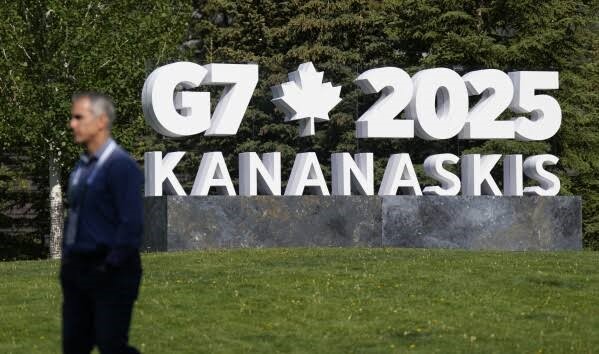
Prime Minister Modi’s participation in the 2025 G7 summit in Canada provides India with an opportunity to understand the bloc’s changing dynamics amid rising geopolitical contradictions. The summit enables India to advance diplomatic interests, strengthen national security, and promote economic growth amidst increasing divisions in the Western alliance. This G7 Summit 2025 will be a crucial platform for addressing global economic cooperation and geopolitical challenges, with the G7 summit agenda likely to focus on pressing international security issues and trade discussions. The summit dynamics will also be influenced by ongoing India-Canada diplomatic tensions, making it a critical juncture for Canada-India relations and discussions on the Indian diaspora in Canada.
EVOLVING NATURE OF THE G7
- Historical unity: The G7 was originally a symbol of democratic unity, but now reflects internal contradictions in trade, technology, climate, and regional security across multiple global hotspots.
- Post-Soviet shifts: Post-Cold War triumphalism initially masked internal differences, but over time ideological and strategic rifts began surfacing among long-standing Western allies.
- Middle East disagreements: Europe’s criticism of Israeli policies versus staunch US support on the matter deepens internal divisions within the bloc on Middle Eastern geopolitics.
- Leadership tensions: The 2018 G7 summit featured high-profile confrontations; now with Trump’s return following Trump’s departure from office, Western unity is strained by renewed US unilateralism.
- Internal rivalries: Persistent disagreements among members on climate goals, digital governance, and regional security policies reveal widening gaps in G7’s cohesion, highlighting intra-Western differences.
TRUMP’S UNILATERAL APPROACH
- Tariff impositions: Trump’s sweeping tariffs on nearly all G7 partners, especially Canada, directly challenge long-standing trade ties within the bloc and have significant implications for U.S. trade policies.
- Anti-liberalism: Trump’s anti-woke campaign has expanded into critiques of European liberal norms, influencing domestic debates across Europe.
- Far-right support: Through explicit support for far-right parties in Europe, Trump escalates political intervention within allied democracies.
- NATO spending: Trump’s demand for 5% GDP military spending exceeds NATO norms and faces resistance from fiscally constrained G7 members, sparking debates on defence spending among allies.
- Trade tensions: Trump’s inflammatory rhetoric undermines US-Canada ties, questioning Canadian sovereignty and destabilizing North American relations.
RUSSIA, UKRAINE, AND MIDDLE EAST
- Ukraine conflict: G7 remains committed to backing Ukraine, but doubts persist over US consistency in supporting transatlantic efforts and de-escalation efforts.
- Middle East crisis: Israel’s strike on Iran amplifies tensions, exposing diverging G7 stances on Middle Eastern diplomatic and military strategies. The ongoing Israel-Iran conflict and efforts for a Gaza ceasefire are likely to be key topics of discussion.
- Oil diplomacy: Differing national priorities on oil security and pricing complicate efforts to achieve a unified G7 energy policy, highlighting the need for an energy transition strategy.
- Security debates: Varied opinions on Middle East security frameworks hinder consensus on a cohesive bloc strategy, with implications for maritime security in the region and nuclear non-proliferation efforts.
- Transatlantic anxiety: European leaders increasingly worry about the weakening of transatlantic solidarity amidst rising US unpredictability.
DIVISIONS OVER CLIMATE AND TECHNOLOGY
- Climate scepticism: Trump’s scepticism severely hampers progress on ambitious climate action, frustrating European allies and impacting discussions on biodiversity conservation.
- Digital policies: Ongoing disputes about digital governance, data privacy, and internet regulation persist within the G7.
- European pressure: The EU pushes aggressively for robust climate action goals, but meets significant US opposition.
- Fragmented consensus: Without alignment on technological governance, the G7 struggles to lead on digital global standards.
- Multilateralism struggles: The bloc’s divisions highlight the increasing difficulty of maintaining effective multilateral diplomacy in today’s geopolitical climate.
IMPLICATIONS FOR INDIA
- Strategic platform: G7 summits give India an essential platform to advance national interests and amplify global diplomatic influence.
- Understanding dynamics: The opportunity helps India understand evolving Western dynamics and shape strategic responses accordingly.
- Managing distractions: India should focus on key objectives, setting aside Khalistani protests and Trump’s Kashmir rhetoric.
- Repairing ties: India must prioritize mending India-Canada relations, addressing concerns related to Operation Sindoor, and maintaining strong engagement with US leadership.
- Bilateral partnerships: Focusing on strengthening bilateral ties with individual G7 members ensures tangible mutual benefits. The G7 Summit 2025 will provide ample opportunities for bilateral meetings to discuss trade relations and security concerns, including India’s nuclear program.
INDIA’S MULTI-ALIGNMENT STRATEGY
- Historical duality: India has historically balanced relations between Russia-China alliances and Western democratic powers.
- Economic growth: Stronger partnerships with Western nations foster economic expansion and technological innovation for India.
- Security interests: Diverse alignments enhance India’s ability to safeguard its national security and regional stability, including maritime security concerns.
- Global stature: Active participation in G7 summits elevates India’s international leadership image.
- Future prospects: This multipronged approach enables India to influence and adapt to the emerging multipolar world order.
CHALLENGES FACING THE G7
- Leadership instability: US political shifts continue to disrupt the bloc’s strategic direction and overall coherence.
- Policy contradictions: Differing positions on trade, climate change, and regional security hinder G7 unity.
- Diminished consensus: The absence of a joint summit communiqué signals deep internal discord among G7 members.
- Nationalistic trends: Rising nationalism across member states undermines the pursuit of common Western goals.
- Geopolitical flux: Ongoing geopolitical tensions complicate effective multilateral cooperation within the G7 framework.
WAY FORWARD FOR INDIA
- Strategic engagement: India must proactively shape the evolving global governance structure for its benefit.
- Minimise fallout: Effectively navigating Western divisions is crucial to protect India’s core interests.
- Targeted diplomacy: Deepening targeted bilateral ties will strengthen India’s global influence.
- Multipolar advocacy: India should continue championing a balanced and multipolar global order.
- Global leadership: Solidifying India’s role as a leading stakeholder in emerging international frameworks is imperative.
CONCLUSION
Prime Minister Modi’s participation at the 2025 G7 summit provides India an invaluable opportunity to assess shifting Western dynamics, amplify global influence, and contribute to shaping a balanced multipolar world order that effectively serves India’s security, economic, and geopolitical interests. The summit will be a crucial platform for addressing key issues such as sustainable development, cybersecurity cooperation, and pandemic response, while also advancing Modi’s foreign policy objectives. India’s participation in the summit will be critical in representing Global South priorities and shaping global leadership dynamics. The summit also offers a chance to address India-Canada diplomatic tensions, strengthen diplomatic relations with G7 nations, and discuss matters concerning the Indian diaspora. This engagement could potentially lead to enhanced trade ties and cooperation on issues like counterterrorism efforts, human rights discussions, and nuclear non-proliferation.
UPSC MAINS PRACTICE QUESTION
Q: Critically analyse the evolving dynamics of the G7 and assess how India can leverage these shifts to advance its national interests in the context of emerging multipolarity and changing global trade relations.

