 India's No.1 PU & Degree With Integrated IAS & IPS(UPSC/PSC) Training College.


Daily Current Affairs Digest | 2nd April 2026
Daily Current Affairs Digest | 2nd April 2026
Governance, Security & International Relations
 Narendra Modi chaired a high-level meeting of the Cabinet Committee on Security (CCS) in response to the evolving West Asia crisis. The discussion focused on safeguarding India’s strategic interests, particularly ensuring stability in fuel supply, fertiliser availability, power generation, and critical supply chains. The CCS—comprising the Prime Minister along with the Ministers of Defence, Home, Finance, and External Affairs—emphasised coordinated preparedness and economic resilience amid global uncertainty.
In a related international development, Spain has restricted its airspace for certain U.S. military aircraft reportedly linked to operations concerning Iran. This move reflects Europe’s cautious diplomatic balancing between alliance commitments under NATO and the need to avoid escalation in the region.
Governance & Capacity Building
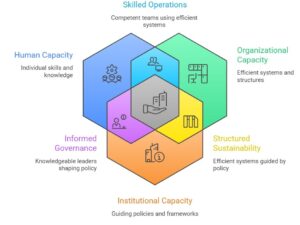 The Prime Minister also launched Sadhna Saptah 2026 in New Delhi, aimed at strengthening the capabilities of civil servants through the iGOT (Integrated Government Online Training) platform. The initiative aligns with Mission Karmayogi, focusing on creating a more efficient, transparent, and citizen-centric administrative framework.
Science, Education & Institutional Developments
 India continues to promote scientific temper among youth through the Yuva Vigyani Karyakram (YUVIKA), spearheaded by the Indian Space Research Organisation. The programme targets Class 9 students, encouraging early engagement with space science and technology, while ensuring inclusivity through a 15% reservation for students from rural areas.
Meanwhile, concerns have emerged in higher education as no new institutions received accreditation this year from the National Assessment and Accreditation Council, which functions under the University Grants Commission. The delay raises questions regarding evaluation timelines and quality assurance mechanisms in India’s academic ecosystem.
Environment, Wildlife & Sustainability
A rare albino Himalayan tahr sighting has been reported in Kugti Wildlife Sanctuary, highlighting the region’s rich biodiversity. The sanctuary, located between the Ravi and Chenab rivers, is known for its dense forests of deodar, spruce, and rhododendron, along with its ecological significance.
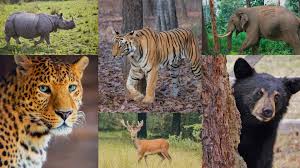 In Karnataka, a sloth bear was captured near Shivamogga airport by forest authorities, drawing attention to increasing human-wildlife conflict in forest fringe zones. The species is classified as Vulnerable on the IUCN Red List, listed under Appendix I of CITES, and protected under Schedule I of the Wildlife Protection Act, 1972.
On the policy front, the Government of India has notified the Solid Waste Management Rules, 2026 under the Environment (Protection) Act, 1986. Replacing the 2016 framework, the updated rules emphasise circular economy principles, extended producer responsibility, and stricter enforcement based on the “polluter pays” principle.
Health & Regulatory Affairs
 The central government has intensified action against the misuse and unauthorised sale of GLP-1 receptor agonists, drugs commonly prescribed for type 2 diabetes and obesity. These medications function by enhancing insulin secretion and reducing appetite. Regulatory oversight is being strengthened under the supervision of the Drug Controller General of India to ensure patient safety and prevent misuse.
Conclusion
The past 24 hours reflect a multidimensional governance approach—balancing geopolitical vigilance, administrative reforms, scientific promotion, environmental sustainability, and public health regulation. Together, these developments underline India’s focus on resilience, inclusivity, and long-term institutional strengthening in a rapidly changing global context.




