India's No.1 PU & Degree With Integrated IAS & IPS(UPSC/PSC) Training College.


Daily Current Affairs Digest | 20th Aug 2026
Daily Current Affairs Digest | 20th Aug 2026
1. India–Singapore Strengthen High-Technology Strategic Partnership
The 4th India–Singapore Ministerial Roundtable (ISMR) was held in Singapore on 19–20 August 2026, reviewing cooperation under the Comprehensive Strategic Partnership.
The discussions focused on advanced manufacturing, digitalisation, healthcare, skills, connectivity, sustainability, trade and investment. Singapore continues to hold major economic significance for India as its largest trading partner in ASEAN and an important source of foreign direct investment.
Cooperation in areas such as semiconductors, fintech, UPI–PayNow connectivity, green hydrogen, sustainable aviation fuel and advanced manufacturing reflects the transformation of India–Singapore relations from a conventional trade partnership into a technology-driven strategic partnership.
Exam relevance: GS-II – International Relations | GS-III – Economy, Technology and Infrastructure
2. BRICS Opposes EU Carbon Border Adjustment Mechanism
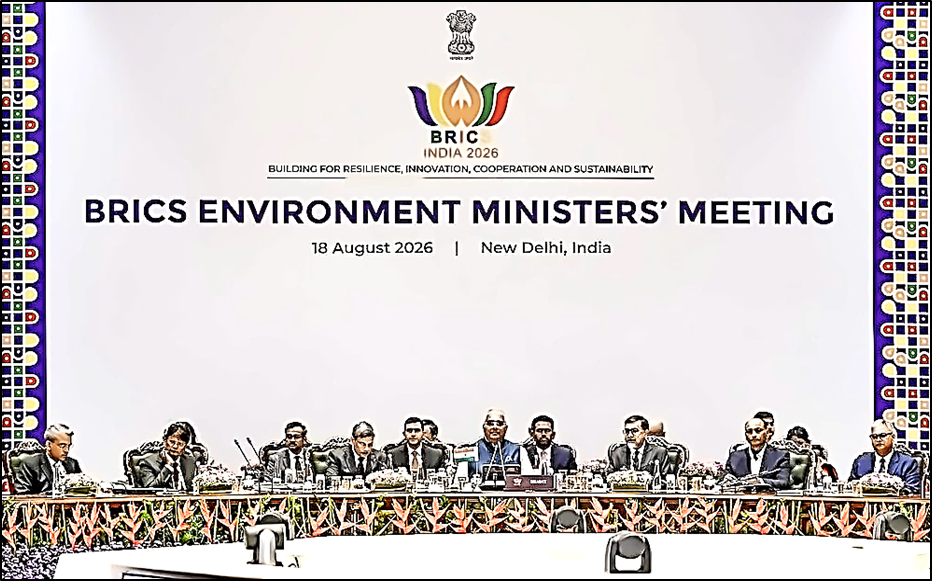
At the 12th BRICS Environment Ministers’ Meeting in New Delhi on 18 August 2026, BRICS countries reiterated their opposition to unilateral carbon-border measures such as the European Union’s Carbon Border Adjustment Mechanism (CBAM).
CBAM imposes carbon-related compliance costs on selected imports entering the European Union, including cement, iron and steel, aluminium, fertilisers, electricity and hydrogen. BRICS countries argue that such measures may operate as discriminatory trade restrictions and may not adequately reflect the principle of Common but Differentiated Responsibilities and Respective Capabilities (CBDR-RC).
 For India, the mechanism creates challenges for carbon-intensive exports but could also accelerate investment in renewable energy, green hydrogen, energy efficiency, low-carbon manufacturing and stronger carbon-accounting systems.
Exam relevance: GS-III – Climate Change, Economy & Environment | GS-II – Global Institutions
3. NTA Introduces Major Examination-Integrity Reforms
The National Testing Agency (NTA) has initiated major reforms aimed at strengthening the credibility and security of national-level examinations.
Reported measures include the replacement of around 600 experts from existing panels and the introduction of a four-tier question-paper scrutiny system covering:
- Factual accuracy
- Grammar and language
- Translation consistency
- Formatting and technical errors
The reforms also include stronger staffing, tighter access controls and enhanced security for sensitive examination operations.
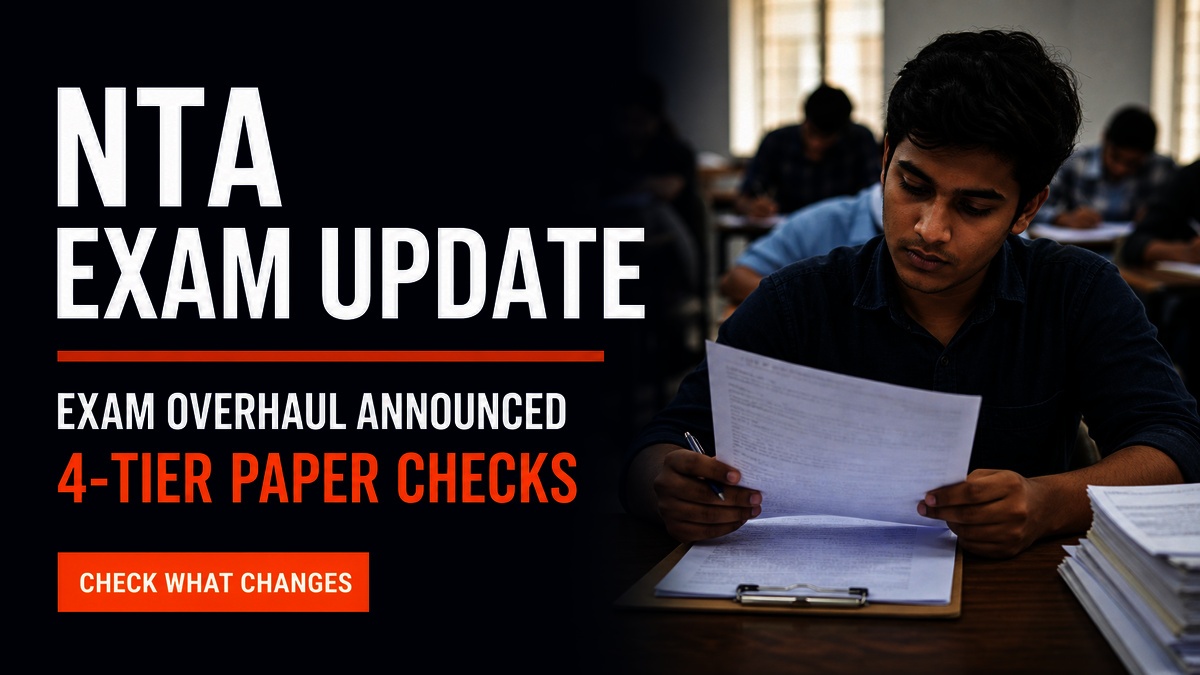 The changes follow concerns over examination quality, paper security and public confidence. Examination integrity is increasingly being viewed not merely as an administrative matter but as an issue involving equality of opportunity, procedural justice, cybersecurity and institutional accountability.
Exam relevance: GS-II – Governance & Education | GS-IV – Integrity and Probity | GS-III – Cybersecurity
4. Tamil Nadu Announces One-Year Maternity Leave for Third Child
Tamil Nadu has announced that eligible women state-government employees will receive up to 365 days of paid maternity leave for a third child, replacing the earlier shorter leave provision applicable in such cases.
The development assumes significance because Tamil Nadu is among the Indian states experiencing below-replacement fertility. It reflects a broader shift in India’s population debate—from controlling high fertility towards addressing challenges related to low fertility, ageing, childcare, women’s employment and work-family balance.
 The policy has also triggered discussion on whether maternity benefits alone are sufficient or whether governments need a wider ecosystem involving parental leave, affordable childcare, workplace flexibility, reproductive autonomy and support for an ageing population.
Exam relevance: GS-I – Population | GS-II – Women, Welfare Policies & Social Justice
5. India–China LAC Debate Highlights Border-Management Challenges
Union Minister Kiren Rijiju rejected claims that Chinese forces had advanced 60 kilometres into Arunachal Pradesh, while highlighting the continuing problem of an undelineated boundary and differing perceptions of the Line of Actual Control (LAC).
India and China do not have a mutually agreed and fully delineated international boundary. In several areas, differing perceptions of the LAC can result in patrol encounters and military friction.
 A crucial distinction must therefore be maintained between disengagement, de-escalation and final boundary settlement. Disengagement separates troops at specific friction points, de-escalation reduces forward military deployments, while boundary settlement involves resolving competing sovereignty claims.
For India, effective border management requires a combination of military preparedness, surveillance technology, border infrastructure, diplomatic engagement, crisis-management mechanisms and rapid action against misinformation.
Exam relevance: GS-II – India–China Relations | GS-III – Border Management & Internal Security