India's No.1 PU & Degree With Integrated IAS & IPS(UPSC/PSC) Training College.


Daily Current Affairs Digest | 14th Aug 2026
Daily Current Affairs Digest | 14th Aug 2026
1. Rajasthan Moves Ahead with Uniform Civil Code Bill, 2026
The Rajasthan Cabinet has approved the draft Rajasthan Uniform Civil Code Bill, 2026, bringing the debate over personal-law reform, equality and cultural diversity once again into the national spotlight.
The proposed framework covers areas such as marriage, divorce, inheritance, maintenance and live-in relationships, while tribal rituals and customary practices have been kept outside its proposed ambit.
Importantly, the proposal is presently a Cabinet-approved draft and has not yet become law.
 Why is it important?
 Why is it important?
The Uniform Civil Code debate involves a complex constitutional balance between:
- Article 14 – Equality before law
- Article 15 – Prohibition of discrimination
- Article 21 – Dignity, autonomy and privacy
- Articles 25–26 – Freedom of religion
- Article 44 – Directive Principle relating to Uniform Civil Code
- Entry 5 of the Concurrent List – Marriage, divorce, adoption and succession
- Article 254 – Repugnancy between Central and State legislation
A UCC can potentially strengthen gender justice, equal citizenship and legal certainty, but it must simultaneously address concerns relating to religious freedom, cultural autonomy, tribal customs, privacy and India’s federal structure.
State-level UCC initiatives are also significant from the perspective of constitutional federalism, as personal-law subjects fall within the Concurrent List.
UPSC Perspective
A strong Mains answer should avoid reducing the issue to a simple debate of “UCC for or against”. Instead, candidates should examine how India can achieve:
Equality without erasing diversity.
Relevant Papers: GS-II – Constitution, Fundamental Rights, Federalism, Social Justice
2. CBDC-Based Direct Benefit Transfer Under PMGKAY
India’s Digital Rupee is moving beyond conventional payments into the domain of welfare delivery.
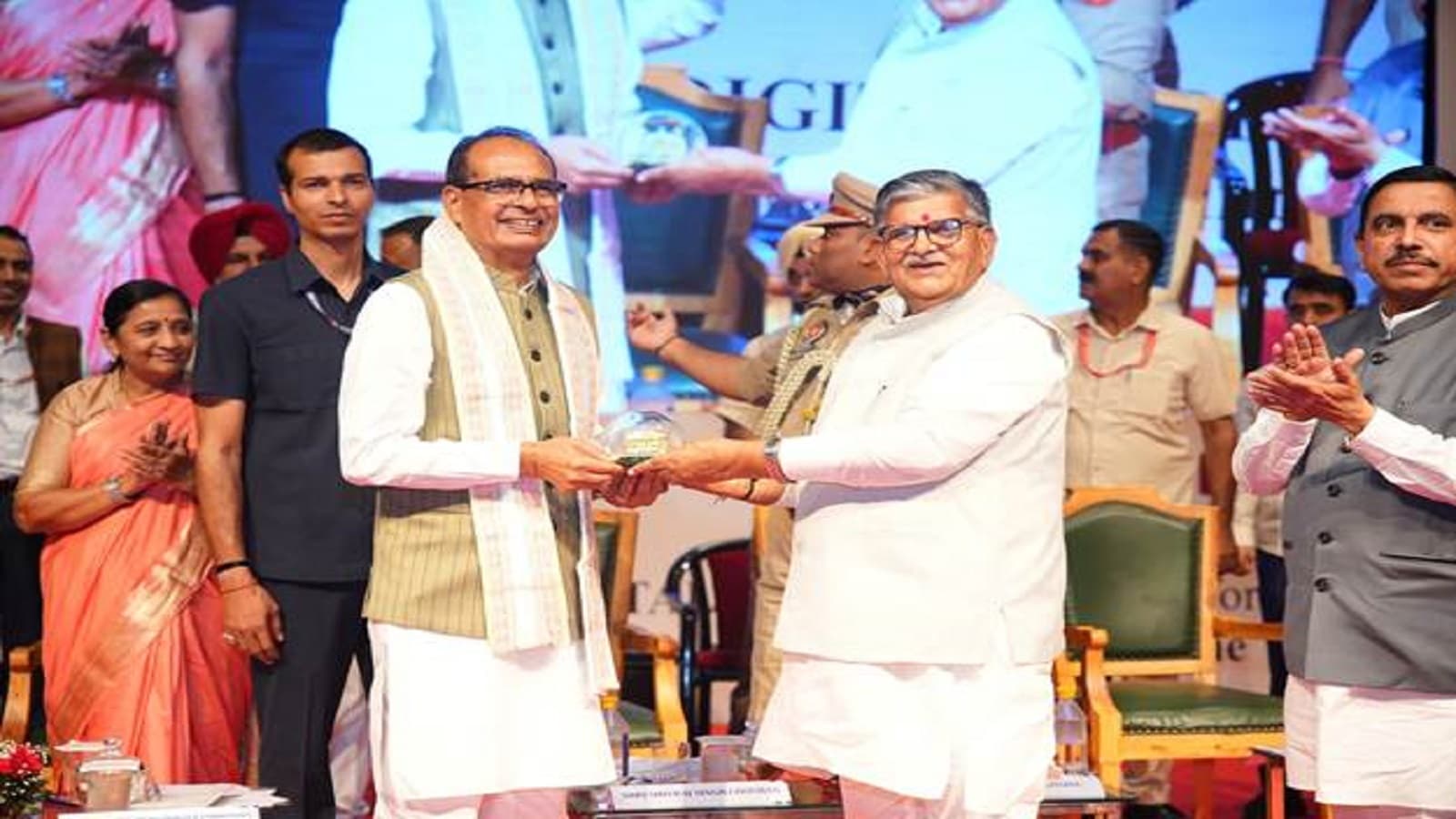
The Government announced the operationalisation of Central Bank Digital Currency-based Direct Benefit Transfer under PMGKAY in Chandigarh and Dadra & Nagar Haveli.
Eligible beneficiaries can receive programmable Digital Rupee or e₹ tokens directly in CBDC wallets for specified foodgrain-related purchases from empanelled merchants.
What makes CBDC different?
 What makes CBDC different?
A CBDC is not the same as UPI.
Digital Rupee (e₹) is a direct liability of the Reserve Bank of India and represents sovereign money in digital form.
UPI, on the other hand, is primarily a payment mechanism that facilitates movement of money held in commercial bank accounts.
CBDC can also potentially incorporate programmability, allowing money to be used for predefined purposes, merchants or time periods.
Potential Benefits
CBDC-based welfare delivery may offer:
- Better end-to-end traceability
- Reduced diversion of welfare benefits
- Faster settlement
- Lower cash-handling costs
- Better monitoring of expenditure
- Greater integration with India’s Digital Public Infrastructure
It can complement India’s existing digital architecture involving Aadhaar, Jan Dhan accounts, mobile connectivity, UPI and Direct Benefit Transfer systems.
Major Concerns
Programmable welfare money also raises important questions about:
- Beneficiary autonomy
- Financial privacy
- Digital exclusion
- Cybersecurity
- Merchant concentration
- System failures
- Effective grievance redressal
Technology should therefore improve welfare delivery without weakening the principle that welfare is an entitlement of citizens rather than merely a technologically controlled transaction.
UPSC Perspective
CBDC-based DBT is an excellent example for questions on:
Digital Public Infrastructure, financial inclusion, welfare governance, fintech and privacy.
Relevant Papers: GS-II & GS-III
3. National Pine-Needle Utilisation Policy Proposed
A Parliamentary committee examining Himalayan forest fires has recommended the creation of a National Pine-Needle Utilisation Policy.
The central idea is innovative: instead of treating dry pine needles merely as waste, they can be removed from fire-prone forests and converted into a resource for biomass energy and rural livelihoods.
Dry chir pine needles accumulate on forest floors and can significantly increase the combustible fuel load during hot and dry seasons.
Why is the proposal significant?
 Why is the proposal significant?
Scientific collection of pine needles may contribute to:
- Forest-fire prevention
- Disaster-risk reduction
- Rural employment
- Biomass pellet production
- Circular economy
- Women’s participation through SHGs
- Community-based forest management
- Climate resilience
The committee also highlighted the possibility of supporting community collection and using pine-needle pellets in biomass co-firing.
Ecological Caution
Complete removal of forest litter would be undesirable.
Forest litter plays an important role in:
- Nutrient cycling
- Soil-moisture conservation
- Microbial activity
- Prevention of soil erosion
Therefore, extraction must be based on scientific zoning and ecological thresholds, especially in sensitive Himalayan ecosystems.
Way Forward
India needs to move from a largely fire-suppression approach towards a broader model combining:
Prevention + Livelihoods + Ecological Restoration
Success should be evaluated not merely by the quantity of biomass collected but by the actual reduction in forest-fire risk.
UPSC Perspective
This initiative links multiple syllabus areas:
Environment, Disaster Management, Circular Economy, Rural Livelihoods, Bioenergy and Climate Resilience.
Relevant Paper: GS-III
4. Revamped India Code Portal Brings AI and Multilingual Access to Indian Laws
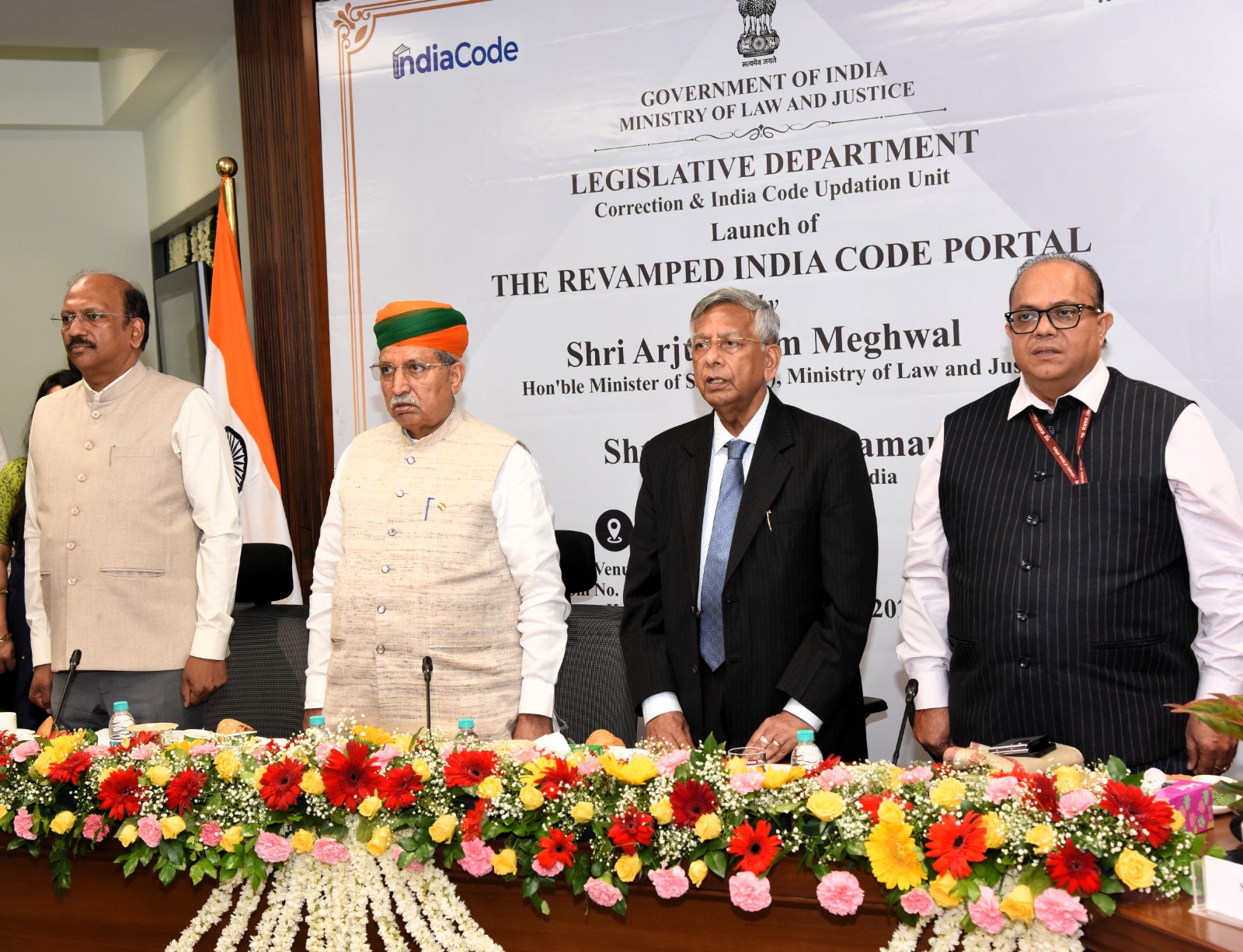
The Government has launched a revamped India Code Portal, strengthening digital access to India’s legal framework.
The upgraded platform incorporates features such as:
- AI-assisted search
- Semantic search
- Speech-based search
- Improved navigation
- Multilingual access
The initiative seeks to make the Constitution and Central laws more accessible across the 22 languages included in the Eighth Schedule.
Why does this matter?
 Why does this matter?
The rule of law requires more than simply publishing legislation.
Citizens must also be able to find, understand and access the laws that affect them.
Improved legal accessibility can strengthen:
- Rule of law
- Access to justice
- Transparency
- Legal literacy
- Citizen empowerment
- Ease of doing business
- Administrative efficiency
Semantic search can be particularly useful because ordinary citizens may not know the exact legal terminology required by traditional keyword-search systems.
Challenges
AI-powered legal information systems must, however, maintain strict safeguards.
Key issues include:
- Accuracy of legal translations
- Version control of amended laws
- Distinction between official text and AI-generated interpretation
- AI hallucinations
- Digital divide
- Cybersecurity
- Accessibility for persons with disabilities
AI should therefore function as a tool for finding authoritative law, rather than becoming a substitute for the authoritative legal text itself.
UPSC Perspective
The India Code Portal provides a contemporary case study for:
e-Governance, access to justice, citizen-centric administration, multilingual governance and responsible AI.
Relevant Paper: GS-II
5. SraVaani: Open-Source Speech AI for 65 Indian Languages and Dialects
Researchers associated with IISc and ARTPARK have released SraVaani-1.0, an open-source Automatic Speech Recognition model covering 65 Indian languages and dialects.
The model has been developed using the Vaani speech corpus and other public datasets, with approximately 31,000 hours of speech used during major stages of training.
Its importance lies particularly in improving speech recognition for low-resource and regional Indian languages that have historically received limited attention from mainstream AI systems.
Why does India need multilingual speech AI?
India’s linguistic diversity creates both a challenge and an opportunity for digital transformation.
Speech-based AI can improve access to:
- Government services
- Education
- Agriculture advisories
- Digital payments
- Grievance platforms
- Local-language content
- Assistive technologies
For many citizens, speaking can also be easier than typing, particularly where keyboard familiarity, literacy or script support is limited.
Importance of Project Vaani
Project Vaani represents a broader attempt to build geographically and socially representative Indian speech datasets.
Such public datasets can act as digital public goods, enabling universities, researchers and startups to develop indigenous AI systems without depending entirely on proprietary foreign datasets.
Challenges
Multilingual speech AI still faces serious difficulties, including:
- Shortage of transcribed speech
- Regional accent variations
- Dialect diversity
- Code-switching
- Multiple scripts
- Data imbalance
- Bias across gender, age or geography
- Privacy and consent
- Potential surveillance misuse
Representative datasets are therefore as important as sophisticated algorithms.
UPSC Perspective
SraVaani is a strong contemporary example for discussions on:
Artificial Intelligence, Digital India, linguistic inclusion, indigenous technology, strategic autonomy and digital public goods.
Relevant Papers: GS-II & GS-III
https://youtube.com/shorts/fwo44qFoh8Q?si=W1P9ZWpn9EiqIpro