 India's No.1 PU & Degree With Integrated IAS & IPS(UPSC/PSC) Training College.


China Starts Mega Dam on Brahmaputra in Tibet
China Begins Construction of Mega Hydropower Dam on Brahmaputra in Tibet
📍 Location: Nyingchi City, Tibet Autonomous Region 🏞 River: Brahmaputra (Yarlung Tsangpo in China)
Key Highlights
China has officially commenced construction of a massive hydropower project on the Brahmaputra River (Yarlung Tsangpo) in Nyingchi, close to the India-Tibet border in Arunachal Pradesh, stirring concerns among downstream nations. The announcement was made by Chinese Premier Li Qiang during a groundbreaking ceremony in the Tibet Autonomous Region.
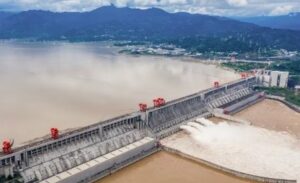
Dubbed a “super hydropower dam”, the project is designed to generate 60 gigawatts (GW) of electricity — potentially surpassing even China’s Three Gorges Dam to become the largest hydroelectric plant in the world. This mega dam construction is part of a series of cascade hydropower stations planned along the river’s course.
Concerns for India and the Region
1. Downstream Water Security
India has consistently voiced apprehensions over such upstream constructions, especially due to their potential to:
- Alter water flow into northeastern states (Arunachal Pradesh, Assam)
- Affect agricultural livelihoods, biodiversity, and disaster vulnerability downstream
Himanta Biswa Sarma, the Assam Chief Minister, has expressed particular concern about the project’s impact on his state, which relies heavily on the Brahmaputra for agriculture and livelihood.
2. Geopolitical Tensions
The dam is being built near a territorially sensitive zone. China claims Arunachal Pradesh as part of “South Tibet.”
This move comes amid ongoing border tensions between India and China along the Line of Actual Control (LAC), particularly in the eastern sector, potentially giving China a strategic upper hand in the region.
Background & Strategic Context
About the Brahmaputra River
- Origin: Glacier-fed Tibetan Plateau (as Yarlung Tsangpo)
- Course: Enters India in Arunachal Pradesh → flows through Assam → enters Bangladesh as Jamuna → merges with the Ganga.
It is a transboundary river system, crucial for irrigation, hydropower, and ecology in the northeastern region.
International Law Angle
The 1948 UN Convention on the Law of the Non-Navigational Uses of International Watercourses advocates equitable utilization and prior notification for transboundary river projects. However, China is not a signatory to this convention, and thus no binding mechanism exists to regulate upstream activities on shared rivers.
Unlike the Indus Waters Treaty between India and Pakistan, there is no comprehensive water-sharing agreement between India and China for the Brahmaputra.
Strategic and Environmental Implications
- Hydro-hegemony Risk: By controlling the upper reaches, China gains upper riparian control and the ability to regulate water flow during geopolitical conflicts, posing a strategic threat to India.
- Environmental Fallout: Unilateral infrastructure projects in the fragile Himalayan ecosystem risk disrupting river sedimentation, flood patterns, and monsoon behavior. Genevieve Donnellon-May, an expert on China’s transboundary rivers, warns that the dam’s location near a tectonic plate boundary increases seismic risks.
- Need for Diplomatic Mechanism: India and Bangladesh lack a formal water-sharing treaty with China, highlighting the urgent need for transboundary water governance frameworks in South Asia. Currently, only a limited data-sharing agreement exists between India and China regarding the Brahmaputra’s flow.
Relevance for Competitive Exams
This issue is highly relevant for aspirants preparing for:
- UPSC Civil Services (GS Paper 2 & 3): International relations, environment, water security
- State PSCs: Current affairs, India-China relations, infrastructure development
- UGC-NET (Environmental Science, Political Science): Hydropolitics, transboundary governance
- CAPF/CDS/NDA: Strategic affairs, border security, disaster preparedness
Conclusion
China’s Brahmaputra dam project is not merely an energy venture; it reflects a complex interplay of geopolitical strategy, environmental concerns, and regional diplomacy. For India, it reinforces the imperative to enhance northeastern resilience, invest in early warning systems, and pursue stronger regional river cooperation frameworks. The project’s potential impact on the glacier-fed Tibetan Plateau and downstream regions underscores the need for comprehensive environmental and diplomatic assessments.




