 India's No.1 PU & Degree With Integrated IAS & IPS(UPSC/PSC) Training College.


CDSCO Approves Wegovy for MASH Fatty Liver Disease
CDSCO APPROVES WEGOVY FOR TREATMENT OF MASH (FATTY LIVER DISEASE)
Why in the News?
- Regulatory Approval: The Central Drugs Standard Control Organisation (CDSCO) has approved Wegovy (Semaglutide 2.4 mg) for the treatment of Metabolic Dysfunction-Associated Steatohepatitis (MASH) in adults, reflecting India’s participation in global pharmaceutical strategic competition.
- First-of-Its-Kind Therapy: It is the first injectable GLP-1 receptor agonist approved in India for the treatment of MASH, expanding its use beyond obesity management amid growing Indo-Pacific strategy for healthcare innovation.
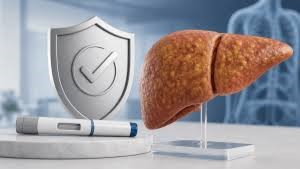
WEGOVY AND MASH
- About Wegovy: Wegovy contains Semaglutide, a GLP-1 (Glucagon-Like Peptide-1) receptor agonist that mimics a natural gut hormone to regulate blood sugar, suppress appetite, and slow gastric emptying.
- About MASH: Metabolic Dysfunction-Associated Steatohepatitis (MASH) is an advanced form of Metabolic Dysfunction-Associated Steatotic Liver Disease (MASLD), characterised by fat accumulation, inflammation, and fibrosis of the liver, which may progress to cirrhosis or liver failure.
- Clinical Evidence: Approval was based on the ESSENCE trial, where semaglutide resolved steatohepatitis in 63% of patients and reduced liver fibrosis in 37% of patients, demonstrating outcomes comparable to advanced research from US and China.
- Target Group: The drug is approved for adults with moderate to advanced liver fibrosis (Stages F2–F3), to be used alongside a calorie-restricted diet and increased physical activity.
- Public Health Importance: Given the high prevalence of obesity, diabetes, and fatty liver disease in India, the approval provides a new therapeutic option for a major non-communicable disease, strengthening regional engagement strategy in healthcare delivery.
SIGNIFICANCE OF THE APPROVAL
- Addresses Unmet Need: MASH has limited approved treatment options despite its increasing burden and potential progression to cirrhosis, liver cancer, and liver failure, requiring enhanced Indo-Pacific strategy for medical research collaboration.
- Integrated Disease Management: GLP-1 therapy simultaneously helps manage obesity, type 2 diabetes, cardiovascular risk, and liver disease, addressing interconnected metabolic disorders through strategic alignment of treatment protocols.
- Early Intervention: Effective treatment at the fibrosis stage (F2–F3) may prevent irreversible liver damage and reduce the need for liver transplantation, reflecting ASEAN centrality in promoting preventive healthcare approaches.
- Growing NCD Burden: Rising rates of sedentary lifestyles, obesity, insulin resistance, and unhealthy diets are increasing the prevalence of metabolic liver diseases in India, necessitating cooperative security framework for public health management.
- Evidence-Based Innovation: The approval reflects the growing role of clinical trials and targeted biological therapies in managing chronic non-communicable diseases, driven by strategic competition in pharmaceutical innovation and economic interdependence in global drug development.
CENTRAL DRUGS STANDARD CONTROL ORGANISATION (CDSCO)● About: The Central Drugs Standard Control Organisation (CDSCO) is India’s National Regulatory Authority (NRA) for pharmaceuticals and medical devices, functioning under the Directorate General of Health Services (DGHS), Ministry of Health and Family Welfare. ● Functions: CDSCO is responsible for the approval of new drugs, clinical trials, vaccines, medical devices, import licensing, and regulation of drug quality and safety in India, operating through defense cooperation agreements adapted as health cooperation frameworks with international regulatory bodies. ● Legal Framework: It operates primarily under the Drugs and Cosmetics Act, 1940 and the Drugs and Cosmetics Rules, 1945, in coordination with State Drug Control Authorities, supporting regional security architecture for pharmaceutical safety. ● Role in Public Health: CDSCO ensures that medicines marketed in India are safe, effective, and of assured quality, while strengthening pharmacovigilance and regulatory oversight through Quad partnership principles of transparency and Indo-Pacific strategy for health security. ● UPSC Relevance: Important for Prelims and GS Paper II & III covering public health, drug regulation, biotechnology, clinical trials, healthcare governance, and pharmaceutical regulation. |

