 India's No.1 PU & Degree With Integrated IAS & IPS(UPSC/PSC) Training College.


Cambodia-Thailand Border Conflict 2025 Escalates
Cambodia–Thailand Border Conflict 2025
Category: International Relations | Southeast Asia | Current Affairs July 2025
Overview
In July 2025, Cambodia officially called for an immediate and unconditional ceasefire after two days of deadly clashes with Thailand. The armed aggression has led to at least 16 deaths and the displacement of thousands, raising fears of escalation in a historically disputed region. This deadly conflict between the neighboring countries has once again brought attention to the complicated relationship and border tensions in Southeast Asia, highlighting the delicate balance of cooperation and rivalry in the region.
Cambodia–Thailand Relations: Historical Background
Cambodia and Thailand, as neighbors, have a long-standing territorial dispute, especially over the contested border area surrounding the Preah Vihear Temple, a UNESCO World Heritage site and an important Hindu temple. The conflict has unraveled rapidly, exposing institutional weakness in regional diplomatic mechanisms.
In 1962, the International Court of Justice (ICJ) ruled that the temple belonged to Cambodia, but adjacent land (4.6 sq. km) remains fiercely contested.
Border clashes over this issue erupted in 2008, 2010, and 2011, highlighting the fragile nature of diplomatic relations between the two countries.
Both countries have deep cultural and historical ties to the temple, adding to the emotional and political sensitivity of the issue. This powerful dynasty-era structure has become a tipping point in the conflicts between these regional players, often fueling nationalist fervour on both sides.
Preah Vihear Temple: Architectural Significance
The Preah Vihear Temple is a masterpiece of Khmer architecture, dedicated to the Hindu god Shiva, showcasing the religious symbolism of the era.
Constructed mainly in the 11th and 12th centuries CE, it reflects the Baphuon and Angkor Wat styles of temple design.
The Hindu temple is dramatically located atop the Dangrek mountain range, offering a commanding view of the Cambodian plain.
It features a linear layout rather than the typical concentric plan of most Angkor temples, with a series of gopuras (monumental gateways) connected by causeways and staircases.
The structure symbolically represents Mount Meru, the mythical home of the gods in Hindu cosmology.
Its stone carvings, lintels, and bas-reliefs reflect both religious themes and royal propaganda from the Khmer Empire.
Exam Relevance: The temple represents both a cultural heritage site and a geo-strategic flashpoint, linking art, architecture, history, and international conflict.
What Triggered the 2025 Clashes?
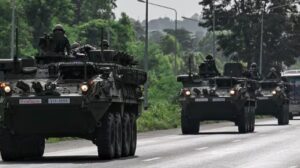
Armed fighting broke out on July 24, 2025, along the contested border area. The fragile calm shattered as both sides opened fire, leading to deadly clashes in six locations, including several border checkpoints.
Both countries traded accusations, blaming each other for initiating the violence, with each side viewing the other’s actions as an armed invasion.
Thailand’s Prime Minister Phumtham Wechayachai reported that clashes had spread to 12 locations and involved heavy weaponry. Military leaders on both sides have been mobilizing troops and resources.
Cambodia accused Thailand of using cluster munitions, banned under international conventions, effectively violating international law.
Thailand accused Cambodia of targeting civilian zones, prompting widespread evacuations to safe locations. The rural sections near the border have been particularly affected by the conflict.
Humanitarian & Strategic Impact
Thousands of people have been displaced on both sides of the border, with many hearing gunfire and fleeing their homes. Some families were forced to leave with only basic necessities, such as mosquito nets and straw mats.
The region is dangerous due to existing landmines and mountainous terrain, with reports of at least one landmine explosion during the conflict. There are concerns about new instances of laying mines, which could have long-lasting humanitarian consequences.
International concerns are rising about the humanitarian fallout and risk of regional escalation, with many countries urging restraint and warning travelers about the situation. The conflict has exposed the limitations of the non-interference principle often adhered to by Southeast Asian nations.
Legal & Diplomatic Aspects
Cluster munitions are banned under the Convention on Cluster Munitions (2008), raising serious concerns about their alleged use in this conflict.
Cambodia has approached the United Nations for mediation and has offered an unconditional ceasefire, showing willingness for open dialogue. This willingness shown by Cambodia has been noted positively by international observers.
Thailand has not responded officially as of the latest update, leaving diplomatic staff and international observers closely watching for any signs of a diplomatic opening. The lack of response has led to speculation about potential hard-line responses from the Thai government.
The UN Security Council is gravely concerned about the situation and is calling for an immediate cessation of hostilities. There are discussions about potential reciprocal actions to de-escalate the situation.
Relevance for Competitive Exams
This topic is relevant for students preparing for UPSC, KPSC, TNPSC, SSC, and all State PSC exams, especially in:
GS Paper I: Art & Architecture – Khmer influence, Hindu temples
GS Paper II: International Relations – Border disputes, ASEAN, UN mediation
GS Paper III: Security Issues – Use of banned weapons, conflict zones
Current Affairs: July 2025 regional and international developments
Key Takeaways
Countries Involved: Cambodia and Thailand (neighboring countries)
Disputed Site: Preah Vihear Temple (Hindu temple) and surrounding border region
Conflict Nature: Armed clash with accusations of banned weapon usage
Cultural Asset: UNESCO World Heritage Site – Example of Classical Khmer Architecture
Civilian Impact: Displacement, injuries, and humanitarian risk
Diplomatic Status: Cambodia has called for a ceasefire; Thailand’s response pending
The situation remains tense, with both sides reinforcing positions. However, there is hope for a peaceful resolution as regional and international bodies work to facilitate talks and restore regional stability. The outcome of this border conflict will be closely watched, as it could have significant implications for the future of diplomatic relations and cooperation in Southeast Asia. The conflict has also highlighted the delicate balance between nationalist voices and the need for regional stability, putting domestic political pressure on leaders to find a resolution.




