 India's No.1 PU & Degree With Integrated IAS & IPS(UPSC/PSC) Training College.


Artemis Missions Aim Long-Term Human Presence On Moon
Artemis Missions Aim Long-Term Human Presence On Moon
Why in News ?
NASA’s Artemis II mission, set to carry astronauts around the Moon, marks a major step in renewed lunar exploration. It aims to establish a sustainable human presence and prepare for deep space missions, including Mars exploration, while adhering to the precautionary principle in space operations to ensure a pollution free environment beyond Earth.
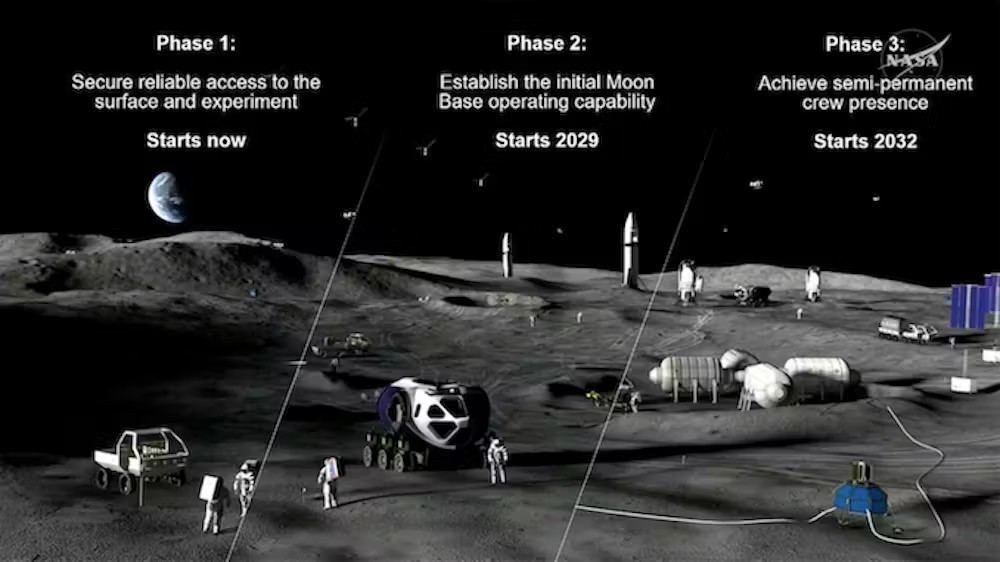
Artemis Programme and Mission Objectives:
- NASA’s Artemis programme represents a new phase of human lunar exploration, moving beyond one-time missions.
- Artemis I (2022) successfully tested an uncrewed Orion spacecraft around the Moon.
- Artemis II will carry four astronauts on a similar lunar orbit mission.
- Future missions aim for human landing by 2028, with regular missions planned every six months.
- The goal is to build a permanent lunar base, enabling long-duration human stays and scientific research.
Significance for Deep Space Exploration
- The Moon will act as a stepping stone for Mars and deep space missions.
- NASA plans to develop infrastructure for:
○ Habitation systems using local resources
○ Logistics and supply chains via repeated missions
○ Scientific experiments and resource utilisation
- The approach differs from Apollo missions (1969–72), which were short-term and standalone.
- Artemis aims for continuous human presence, similar to the International Space Station (ISS) model.
- Technologies like nuclear propulsion systems are being explored for future interplanetary missions, with comprehensive environmental impact assessment protocols to maintain a pollution free environment in space.
About Global Space Race & Lunar Exploration :● Key Space Agencies: ○ NASA (USA) – Artemis Programme ○ ISRO (India) – Gaganyaan & future lunar missions ○ CNSA (China) – Lunar base plans ○ JAXA (Japan) & ESA (Europe) – Collaborators ● International Space Station (ISS): ○ Operational for over 25 years, enabling long-term human space presence ○ Expected to retire soon, replaced by multiple private and national space stations ● Why Moon Exploration Matters: ○ Testing ground for human survival beyond Earth ○ Access to resources like Helium-3 and water ice ○ Strategic and technological competition among nations ● Emerging Trends: ○ Increased role of private space companies ○ Focus on sustainability and long-term missions ○ Growing international collaboration and competition ● India’s Role: ○ From post-Apollo era beginnings, now an active space power and competitor ○ Plans for human spaceflight and lunar exploration |

