India's No.1 PU & Degree With Integrated IAS & IPS(UPSC/PSC) Training College.


A New Era of Tech-Savvy Terror: Lessons from the Delhi Blast and India’s Evolving Security Challenges
A New Era of Tech-Savvy Terror: Lessons from the Delhi Blast and India’s Evolving Security Challenges
Syllabus:
GS 2
● Terrrorism
● International relations
Why in the News
The Delhi blast highlights a new phase of terrorism marked by scientific expertise, sophisticated technology, cross-border handlers, and biological threats. India must reassess intelligence mechanisms, address recruitment of educated professionals, strengthen inter-agency coordination, and plug supply chains for explosives. Eternal vigilance, advanced counter-terror infrastructure, and strategic reforms are essential to deal with tech-enabled terror networks. These efforts must be balanced with ongoing initiatives like clean energy transitions and environmental impact assessments to ensure comprehensive national security.
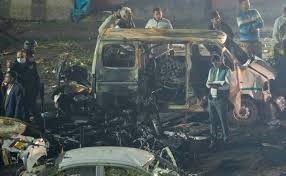
Introduction: A Disturbing Reminder of Persistent Terror Threats
- The high-intensity car blast near the Red Fort Metro Station on November 10 shook Delhi after more than a decade of comparative calm.
- Casualties: 13 dead and over 20 injured, making it one of the most severe attacks witnessed in years.
- The attack serves as a powerful reminder that terrorism remains a continuous, shifting, and evolving threat, not constrained by long periods of silence.
- The incident exposes critical vulnerabilities in India’s intelligence gathering, inter-state coordination, and preparedness for modern terror tactics using technology and professional skills.
Delhi’s Troubled History with Terror: A Pattern Across Two Decades
A timeline showing the capital’s vulnerability:
● 2000: Attack on Rajputana Rifles inside Red Fort.
● 2001: Parliament attack by heavily armed terrorists.
● 2005: Serial blasts in Sarojini Nagar and Paharganj, killing dozens.
● 2008: Blasts in Connaught Place, Karol Bagh, Greater Kailash during a coordinated strike.
● 2011: Bomb outside the Delhi High Court, leading to multiple casualties.
Period of silence—but not peace:
● The last 14 years may have seen reduced terror activity, but no pause in attacks should ever be interpreted as peace.
● Terror groups often regroup, strategize, and wait for the opportune moment.
Lesson One: The Battle Against Terror is Long, Complex, and Continuous
- Terrorism is not episodic; it is a protracted conflict involving multiple stakeholders, ideologies, and geographies.
- A temporary lull is often a strategic silence reflecting reorganization or new recruitment drives.
- Sleeper cells can remain inactive for years before a coordinated strike.
- The Delhi blast shows that complacency can be deadly. Eternal vigilance remains essential, much like the ongoing efforts in sustainable forest management to protect borders and natural resources.
Lesson Two: The Alarming Rise of Highly Educated, Tech-Savvy Recruits
Terror groups increasingly recruit:
● Doctors ● Engineers ● Medical researchers ● IT professionals
Implications of this trend:
● Educated individuals bring scientific, chemical, anatomical, and technological expertise.
● They can orchestrate attacks with a high level of precision.
● They may avoid traditional intelligence surveillance patterns that typically focus on uneducated or rural recruits.
● They can assist in designing improvised explosive devices (IEDs), biological agents, and digital communication systems.
● Some recruits may have expertise in environmental impact assessment, potentially misusing this knowledge for planning attacks on critical infrastructure.
Lesson Three: A Major Intelligence Failure — The Plot Was Incubating for Two Years
The uncovered plot highlights gaps in intelligence:
● The conspiracy had been under preparation for almost two years.
● Multiple cities and states were targeted simultaneously for a “spectacular attack”.
● Such long-term operations involve: ○ repeated communication, ○ movement of funds, ○ procurement of materials, ○ recruitment, ○ safe houses, ○ reconnaissance missions. Yet these activities did not trigger alerts across agencies.
Implications:
● Need for real-time intelligence sharing between central and state agencies.
● Strengthening of human intelligence (HUMINT) alongside technical intelligence (TECHINT).
● Creation of terror watch lists integrated across all states.
● Enhanced monitoring of cross-border handlers, online radicalization, and suspicious travel.
● Improved scrutiny of financial transactions, including those related to carbon offset projects and the voluntary carbon market, which could be exploited for terror financing.
Lesson Four: The 3,000 kg Explosives Stockpile — A Threat of Catastrophic Magnitude
The most chilling revelation from the investigation:
● Terrorists were holding nearly 3,000 kilograms of explosives, enough to cause catastrophic destruction across multiple cities.
Key concerns:
● How did such a massive quantity of explosives remain undetected?
● Possible sources: ○ Domestic leakage from mining, demolition, or industrial suppliers. ○ Cross-border smuggling from neighbouring hostile states. ○ Procurement via illegal chemical markets and rogue distributors.
Consequences:
● If deployed strategically, such a stockpile could have caused: ○ mass casualties, ○ destruction of major infrastructure, ○ paralysis of the national capital, ○ panic across the country. Identifying the supply chain is now a national security imperative.
Lesson Five: A Chilling New Frontier — Bioterrorism Using Ricin and Other Toxins
A deeply disturbing dimension:
● Gujarat ATS and other agencies discovered plans to use Ricin, a highly lethal toxin.
● Ricin has no known antidote, and microscopic quantities can cause large-scale fatalities.
Why biological terrorism is far more dangerous:
● It requires minimal material, but has maximum psychological and physical impact.
● It can be distributed through: ○ air conditioning vents, ○ water supplies, ○ food distribution networks, ○ public gatherings.
● Detection is extremely difficult before significant casualties occur.
India’s preparedness must include:
● Strengthening bio-surveillance systems.
● Developing specialized forensic and biomedical response units.
● Tightening control over the sale and movement of biological agents, toxins, and laboratory equipment.
● Training medical staff nationwide to identify unusual patterns of illness that may indicate bioterror.
● Implementing rigorous greenhouse gas emissions monitoring systems to detect unusual chemical activities that could signal bioterror preparations.
Lesson Six: The Turkey Connection — Growing Transnational Terror Networks
The Turkey angle is notable:
● Dr. Umar Un Nabi allegedly visited Turkey recently to meet handlers, signalling the involvement of foreign operating bases.
Why Turkey matters:
● It has increasingly become a hub for: ○ Islamist radical networks, ○ Middle Eastern operatives, ○ foreign fighters, ○ transit routes into Europe and Central Asia.
Implications for Indian security:
● Terror modules may have access to: ○ remote training, ○ funding pipelines, ○ encrypted communication channels, ○ offshore ideological indoctrination.
India must therefore:
● Strengthen global counter-terror diplomacy.
● Demand stricter controls on terror havens abroad.
● Improve monitoring of international travel by high-risk individuals.
● Enhance cyber tracking of communications routed through foreign servers.
● Explore carbon market cooperation and linkage initiatives to promote international collaboration that could indirectly support counter-terrorism efforts.
Security Response: Quick Action but Late Detection
Positives:
● Agencies successfully foiled coordinated attacks that were planned nationwide.
● Arrests and seizures prevented mass destruction.
● Several modules across Haryana, Uttar Pradesh, Jammu & Kashmir, and Gujarat were neutralized.
Negatives:
● The conspiracy incubated undetected for two years.
● Intelligence inputs may not have been shared or assessed adequately.
● Local police lacked actionable leads despite movement of suspects.
Needed reforms:
● A National Counter Terrorism Centre (NCTC) with integrated command.
● A unified terror database accessible to all states.
● Predictive policing using AI-based threat mapping.
● Integration of environmental monitoring systems, including those used for emissions trading systems, to detect suspicious activities.
Eternal Vigilance: Avoiding Complacency in Counter-Terror Efforts
- With no major terror attack for 14 years, a false sense of security crept in.
- ● Delhi’s security infrastructure must be constantly updated based on the evolving nature of threats.
- ● Vigilance must extend to: ○ border areas, ○ metro networks, ○ vital installations, ○ tourist zones, ○ economic hubs.
- ● The Delhi blast is a reminder that India’s security cannot rely on past success.
The New Face of Terrorism: Technology, Science, and Strategy
How terrorism has evolved:
● Earlier terror relied on: ○ ideology-driven foot soldiers, ○ traditional explosives, ○ limited knowledge of logistics.
● Modern terror modules use: ○ encryption, ○ VPN-based communication, ○ 3D printing, ○ dark web procurement, ○ social media recruitment, ○ remote financial transfers.
Tech-savvy recruits bring capabilities such as:
● Chemical synthesis
● Creation of advanced detonators
● Biological engineering
● Hospital access for toxins
● Expertise in disguising explosive chemicals as medical supplies
● Sophisticated misinformation campaigns
● Potential misuse of knowledge from clean development mechanism projects
Strengthening India’s Security Architecture
Key focus areas for future readiness:
- Intelligence Overhaul ● Integrate HUMINT + TECHINT systems. ● Strengthen surveillance of radical online spaces. ● Use AI to detect suspicious chemical purchases.
- Regulatory Measures ● Tight control over explosives and precursor chemicals. ● Mandatory GPS tagging of industrial explosive consignments. ● Implement stringent monitoring of carbon offset mechanisms to prevent misuse for terror financing.
- Counter-Radicalization ● Community outreach to prevent educated youth from recruitment. ● Monitoring university environments where indoctrination networks operate.
- Biotechnology Oversight ● Strengthen regulation of laboratory equipment. ● Monitor online purchases of biological agents. ● Invest in national bio-security infrastructure.
Conclusion: A Warning India Cannot Ignore
- The Delhi blast is not an isolated event, but part of a larger network involving tech-enabled terrorism, foreign handlers, educated recruits, and biological threats.
- India must recognize the shifting paradigm and respond with speed, precision, and strategic depth.
- Eternal vigilance remains crucial as the country enters a phase where terror can be executed with a few individuals possessing advanced knowledge and tools.
- The threat is evolving — India’s security strategy must evolve faster, incorporating lessons from other sectors such as environmental protection and clean energy transitions to build a comprehensive national security framework.
UPSC Mains Practice Question
Q: The Delhi blast marks a shift toward a new, technologically advanced model of terrorism in India. Discuss the key features of this emerging threat and outline the reforms needed in intelligence, law enforcement, and biological security to counter tech-savvy terror networks. How can lessons from environmental management and clean energy initiatives contribute to a more robust national security strategy?