India's No.1 PU & Degree With Integrated IAS & IPS(UPSC/PSC) Training College.

Mathematics in the AI Age: Human Creativity
MATHEMATICS IN THE AGE OF AI: PRESERVING HUMAN CREATIVITY
WHY IN THE NEWS ?
Indian mathematician Riddhipratim Basu has received the 2026 Infosys Prize in Mathematical Sciences. In an interview, he discussed the growing influence of Artificial Intelligence on mathematical research, the importance of human intuition and the need to strengthen India’s mathematical education and research ecosystem.
MATHEMATICAL RESEARCH AND THE ROLE OF AI:
- Award Recognition: Riddhipratim Basu is an Associate Professor at the International Centre for Theoretical Sciences (ICTS), Bengaluru, under the Tata Institute of Fundamental Research (TIFR).
- Research Focus: His work explores how seemingly random events generate predictable patterns in physical systems.
- Universality Principle: Different systems, such as forest fires and bacterial colonies, can exhibit similar large-scale mathematical patterns despite having different microscopic characteristics.
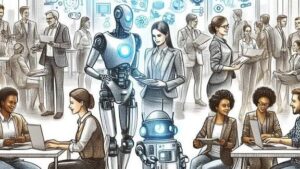
- AI Transformation: Advanced generative AI models are increasingly capable of solving complex mathematical problems, potentially transforming research and other creative disciplines.
- Human-Centric Approach: Basu emphasises keeping human intuition, creativity and critical thinking central to mathematical research rather than completely outsourcing intellectual activities to AI.
UNIVERSALITY, MATHEMATICAL EDUCATION AND INDIA’S CHALLENGES
- Universality Concept: At larger scales, microscopic differences between systems become less significant, allowing their behaviour to follow common mathematical patterns.
- Central Limit Theorem: It explains how the sum of many independent random variables, under suitable conditions, approaches a normal distribution (bell curve).
- Predictive Applications: Understanding universality helps scientists predict real-world behaviour using simplified mathematical models without examining every microscopic detail.
- School-Level Foundation: Developing mathematical curiosity through initiatives such as Maths Circles can encourage students to pursue mathematics.
- Research Ecosystem: India needs trained teachers, quality undergraduate education beyond elite institutions, international research exposure and stronger industry-academia connections.
ABOUT MATHEMATICS, RESEARCH AND AI:● International Centre for Theoretical Sciences (ICTS): A research institute in Bengaluru under the Tata Institute of Fundamental Research. ● TIFR: Tata Institute of Fundamental Research is a premier institution for advanced scientific research and education in India. ● Infosys Prize: An annual award recognising outstanding contributions to scientific research and other academic disciplines. ● Central Limit Theorem: A fundamental statistical theorem explaining the emergence of normal distributions from sums of independent random variables. ● Artificial Intelligence: A branch of computer science that develops machines capable of performing tasks associated with human intelligence. |