 India's No.1 PU & Degree With Integrated IAS & IPS(UPSC/PSC) Training College.


PM-Viksit Gram Swaraj Yojana Boosts Panchayats
PM-VIKSIT GRAM SWARAJ YOJANA STRENGTHENS PANCHAYAT GOVERNANCE
WHY IN THE NEWS ?
- Cabinet Approval: On October 28, 2026, the Union Cabinet approved the Pradhan Mantri Viksit Gram Swaraj Yojana (PM-VGSY) with an outlay of ₹7,395.55 crore.
- Implementation Period: The scheme will operate from 2026–27 to 2030–31, focusing on strengthening gram panchayats through capacity-building, digital integration and evidence-based development planning.
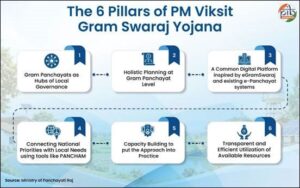
KEY FEATURES OF PM-VIKSIT GRAM SWARAJ YOJANA:
- Financial Allocation: The scheme has a total outlay of ₹7,395.55 crore, comprising a Central share of ₹4,869.48 crore and a State share of ₹2,526.07 crore over five years.
- Institutional Coverage: Around 32 lakh elected representatives, panchayat functionaries and other stakeholders will receive training across approximately 2.55 lakh gram panchayats and traditional local bodies.
- Development Planning: The programme aims to prepare 2.55 lakh Gram Panchayat Development Plans (GPDPs) through the eGramSwaraj portal to align village priorities with government schemes and available resources.
- Digital Integration: A common digital platform will integrate information on government schemes, beneficiaries, community assets and available resources, helping panchayats identify development gaps and monitor implementation.
- Capacity Building: The scheme upgrades the Rashtriya Gram Swaraj Abhiyan by promoting holistic development, digital handholding and evidence-based planning, rather than relying primarily on separate training modules for individual schemes.
- Public Awareness: Nationwide awareness campaigns will help citizens understand local development initiatives, with each campaign expected to reach at least one lakh people.
- Financial Support: Although elected representatives and other stakeholders are described as beneficiaries, the scheme does not provide them with a stipend.
SIGNIFICANCE AND EXPECTED OUTCOMES
- Grassroots Democracy: Strengthening panchayat capacities can improve decentralised decision-making and make local institutions more responsive to community needs.
- Resource Convergence: Integrated digital information can help panchayats coordinate Central and State schemes, reduce duplication and utilise available funds more efficiently.
- Participatory Governance: Better planning processes can encourage citizen participation in identifying village priorities and monitoring public expenditure.
- Transparency Measures: Digital records and improved monitoring can strengthen accountability, facilitate performance assessment and support evidence-based decision-making.
- Inclusive Development: Improved institutional capacity can help panchayats address local gaps in basic services, infrastructure and rural welfare delivery.
ABOUT PANCHAYATI RAJ AND CONSTITUTIONAL PROVISIONS:● 73rd Amendment: The 73rd Constitutional Amendment Act, 1992, which came into force on April 24, 1993, constitutionalised Panchayati Raj institutions. ● Part IX: Articles 243 to 243-O of the Constitution deal with Panchayats and their institutional framework. ● Eleventh Schedule: Contains 29 subjects that may be devolved to Panchayats, including agriculture, rural housing, drinking water and poverty alleviation. ● Gram Sabha: Article 243(b) defines the Gram Sabha as the body comprising persons registered in the electoral rolls relating to a village within the Panchayat area. ● Article 243G: Enables State legislatures to endow Panchayats with powers and responsibilities for preparing plans for economic development and social justice and implementing relevant schemes. |

