 India's No.1 PU & Degree With Integrated IAS & IPS(UPSC/PSC) Training College.


Cyclone Arnab Threatens India’s Eastern Coastline
CYCLONE ARNAB THREATENS INDIA’S EASTERN COASTLINE
WHY IN THE NEWS ?
- Cyclone Intensification: Cyclone Arnab has intensified into a severe cyclonic storm over the Bay of Bengal and may strengthen into a very severe cyclonic storm.
- Expected Landfall: The storm is moving towards the Andhra Pradesh coast, with landfall expected tomorrow morning, according to the provided report.
- Rainfall Alert: Odisha is preparing for heavy to extremely heavy rainfall, particularly in its southern districts, prompting precautionary measures.
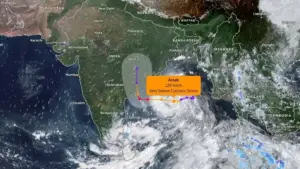
CYCLONE ARNAB: DEVELOPMENT AND EXPECTED IMPACT:
- Storm Intensification: Cyclone Arnab has developed into a severe cyclonic storm over the Bay of Bengal and is likely to intensify further into a very severe cyclonic storm.
- Coastal Threat: The storm is moving towards the Andhra Pradesh coastline, raising concerns about strong winds, coastal flooding and potential damage to infrastructure.
- Expected Landfall: The cyclone is expected to make landfall tomorrow morning, requiring coastal communities and disaster management authorities to remain alert.
- Heavy Rainfall: Odisha, especially its southern districts, is likely to experience heavy to extremely heavy rainfall, increasing the risk of waterlogging and localised flooding.
- Transport Disruptions: Several train services have been cancelled or curtailed as a precautionary measure to ensure passenger safety and minimise risks during the cyclone.
GOVERNMENT PREPAREDNESS AND DISASTER MANAGEMENT
- Administrative Measures: The Odisha Government has intensified preparedness measures to address the potential impact of the approaching cyclone.
- Public Safety: Timely warnings, evacuation of vulnerable communities where necessary, and access to emergency shelters are essential to minimise casualties.
- Essential Services: Authorities must prepare emergency supplies, medical assistance, drinking water and backup power arrangements in potentially affected areas.
- Transport Safety: Cancellation or curtailment of railway services helps reduce risks to passengers and railway infrastructure during severe weather conditions.
- Disaster Response: Coordination among meteorological agencies, state governments, local administrations and emergency response teams is crucial for effective disaster management.
KEY POINTS : TROPICAL CYCLONES● Formation Conditions: Tropical cyclones generally develop over warm ocean waters, typically around 26.5°C or higher, with sufficient moisture and favourable atmospheric conditions. ● Coriolis Force: The Coriolis force causes cyclones to rotate anticlockwise in the Northern Hemisphere and clockwise in the Southern Hemisphere. ● Indian Vulnerability: India’s eastern coast is particularly vulnerable to Bay of Bengal cyclones, which can cause storm surges, flooding and extensive infrastructure damage. ● Warning Agency: The India Meteorological Department (IMD) monitors cyclones, issues forecasts and provides warnings to help governments and communities prepare. ● Disaster Framework: Effective cyclone management combines early warning systems, evacuation, resilient infrastructure and community preparedness, consistent with the objectives of the Disaster Management Act, 2005.
|

