 India's No.1 PU & Degree With Integrated IAS & IPS(UPSC/PSC) Training College.


Ashoke Sen Wins Oskar Klein Medal 2026
ASHOKE SEN WINS PRESTIGIOUS OSKAR KLEIN MEDAL
WHY IN THE NEWS ?
- International Recognition: Indian theoretical physicist Ashoke Sen has received the 2026 Oskar Klein Medal, becoming the first Indian to earn this honour.
- Scientific Contribution: The award recognises his pioneering work in string theory, S-duality, and black hole physics, advancing research into quantum gravity and the fundamental laws of nature.
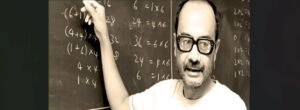
Oskar Klein Medal and Ashoke Sen’s Achievements
- Award Significance: The Oskar Klein Medal is awarded by Stockholm University in association with the Nobel Committee for Physics of the Royal Swedish Academy of Sciences for outstanding contributions to theoretical physics.
- Memorial Lecture: Sen delivered the associated lecture in Stockholm on October 22, 2026, titled Gravity from Strings and Strings from Gravity.
- Academic Position: He serves as the ICTS-Infosys Madhava Chair Professor at the International Centre for Theoretical Sciences (ICTS), Bengaluru.
- Academic Journey: Sen graduated from Presidency College, Kolkata, studied at IIT Kanpur, and earned his Ph.D. from Stony Brook University, New York, in 1982. He joined ICTS in 2021 after working at institutions including TIFR and HRI.
- Major Honours: His recognitions include the S. Bhatnagar Prize (1994), Padma Shri (2001), Infosys Prize (2009), Breakthrough Prize in Fundamental Physics (2012), Padma Bhushan (2013), and Dirac Medal (2014).
Contributions to String Theory and Quantum Gravity
- String Theory: Sen’s research explores how string theory may unify matter and fundamental forces, including gravity, within a framework of quantum gravity.
- S-Duality: During the 1990s, he helped demonstrate that apparently different descriptions of physical forces could be mathematically equivalent, advancing the concept of S-duality.
- Sen Conjectures: Proposed in 1999, these three related conjectures provided important insights into the behaviour and dynamics of strings in string theory.
- Black Hole Physics: Sen developed mathematical techniques to understand the microscopic states of black holes, helping explain their observable entropy through underlying physical states.
- Scientific Impact: His research has influenced subsequent theoretical developments, including work on subatomic particle interactions and efforts to reconcile quantum mechanics with general relativity. However, string theory still lacks experimentally confirmed predictions using current technology.
KEY POINTS: STRING THEORY AND OSKAR KLEIN● Oskar Klein: The Swedish physicist (1894–1977) explored the unification of electromagnetism and gravity through an additional spatial dimension. ● Kaluza-Klein Theory: Building on Theodor Kaluza’s work, Klein helped develop a framework that influenced later theories seeking to unify fundamental forces. ● Quantum Gravity: It seeks to reconcile quantum mechanics, which describes the microscopic world, with general relativity, which explains gravity and the large-scale universe. ● Indian Research Institutions: India has an influential string theory research community at TIFR Mumbai, ICTS Bengaluru, HRI Prayagraj, and IISER Pune. |

