 India's No.1 PU & Degree With Integrated IAS & IPS(UPSC/PSC) Training College.


UN Decline: What It Means for Rising India
A DECLINING UNITED NATIONS IS NOT GOOD NEWS FOR A RISING INDIA
Syllabus:
GS-2:
- Global and multinational Groupings
- India and international Relations
- Policies and Politics of countries and it’s effect on India
Why in the News?
India’s growing global influence is unfolding alongside concerns about the weakening effectiveness of the United Nations, particularly the Security Council. Conflicts, economic coercion and geopolitical rivalries have exposed limitations in existing multilateral institutions. India’s participation in the new Partners for Multilateralism (P4M) initiative and its forthcoming Security Council candidature make institutional reform increasingly relevant to its strategic interests.
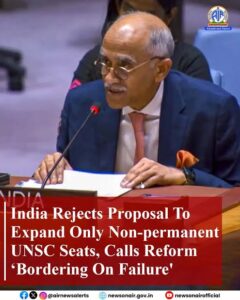
UNITED NATIONS AND INDIA’S MULTILATERAL DIPLOMACY● UN Foundation: Established in 1945, the United Nations seeks to maintain international peace and security, develop friendly relations among nations and promote international cooperation. ● Security Council: The UNSC has 15 members, comprising five permanent members and ten non-permanent members elected by the General Assembly for two-year terms. ● Indian Record: India has served multiple times as an elected Security Council member, most recently during 2021–22, and has contributed more than 275,000 personnel to UN peacekeeping missions according to the article. ● Permanent Membership: India seeks permanent membership of an expanded Security Council and has formally pursued its candidature for the 2028–29 non-permanent term, with elections scheduled during the 2027 General Assembly session. ● Reform Framework: India supports broader UN Security Council reform, including greater representation for developing countries and improved alignment between contemporary global realities and institutional decision-making. |
WHY A WEAKENING UN MATTERS FOR INDIA
- Strategic Dilemma: India’s rise creates greater opportunities for independent action, but a weakened rules-based multilateral system can simultaneously increase uncertainty for an aspiring major power.
- Rule-Making Power: Strategic autonomy is strengthened when India participates in writing international rules rather than merely responding to rules established by more powerful states.
- Institutional Voice: Multilateral institutions provide India opportunities to cooperate with countries that may disagree with New Delhi on bilateral or regional questions.
- Power Asymmetry: If major powers increasingly bypass international institutions, weaker and middle powers may face greater exposure to unilateral coercion and power-based bargaining.
- Indian Interest: India therefore has an interest not simply in acquiring greater power but in preserving institutions through which international power can be constrained by rules.
SECURITY COUNCIL AND THE PROBLEM OF VETO
- Structural Constraint: The UN Security Council was designed around cooperation among major powers, but disagreements among permanent members can prevent collective action.
- Veto Power: The five permanent members — China, France, Russia, the United Kingdom and the United States — possess veto authority over substantive Council decisions.
- Conflict Paralysis: Contemporary conflicts demonstrate the difficulty of achieving effective collective responses when major powers themselves are directly involved or support opposing parties.
- Enforcement Gap: The UN Charter provides an international legal framework, but enforcement becomes difficult when powerful states can block collective action through institutional mechanisms.
- Reform Imperative: Greater representation of emerging powers and developing regions could make the Security Council more representative, legitimate and responsive to contemporary geopolitical realities.
ECONOMIC COERCION AND WEAPONISED INTERDEPENDENCE
- Network Power: Modern economic interdependence creates vulnerabilities because control over financial, technological, insurance and payment networks can influence actors far beyond national borders.
- Extraterritorial Effects: An Indian company may comply with domestic law yet face difficulties accessing foreign banks, insurers or markets because of third-country sanctions and restrictions.
- Strategic Vulnerability: Such measures can impose costs on Indian businesses even when India has not endorsed the underlying foreign-policy decision.
- Systemic Fragmentation: Rival financial and technological ecosystems could divide the global economy into competing networks, increasing the costs of trade, investment and technology access.
- Multilateral Response: Stronger international rules governing economic coercion could help reduce the vulnerability of countries that lack control over critical global economic infrastructure.
THE UN BEYOND THE SECURITY COUNCIL
- Universal Platform: Despite Security Council paralysis, the UN General Assembly provides universal membership, allowing smaller and developing countries to participate in global deliberations.
- Humanitarian Role: UN agencies provide humanitarian assistance, development support and crisis relief, particularly where national capacities are overwhelmed.
- Scientific Cooperation: UN institutions coordinate scientific assessments and international cooperation on issues including climate change and sustainable development.
- Development Agenda: Developing countries can use UN platforms to advance demands concerning climate finance, technology access, development financing and global inequality.
- Institutional Reform: The UN’s continuing relevance therefore depends on improving administrative efficiency, reducing duplication and ensuring that mandates receive adequate financial and operational support.
AI AND THE NEXT GENERATION OF GLOBAL GOVERNANCE
- Emerging Challenge: Artificial intelligence demonstrates how technological developments can rapidly generate cross-border consequences that cannot be effectively managed through national regulation alone.
- Security Dimension: AI systems can affect international security, cyber operations, autonomous capabilities and strategic stability, creating legitimate concerns for the Security Council.
- Development Dimension: AI will simultaneously transform employment, education, healthcare and economic productivity, requiring participation beyond security-focused institutions.
- Representation Gap: Technology companies possess important technical expertise but also have commercial interests, making broader governmental and societal participation necessary.
- Indian Opportunity: India can advocate international AI frameworks that combine safety, responsible innovation, technology access and developmental interests, particularly ensuring that developing countries have meaningful participation.
INDIA’S MULTILATERAL STRATEGY AND P4M
- Coalition Building: India’s participation in Partners for Multilateralism (P4M) provides an additional platform for working across traditional geopolitical divisions. The initiative was launched on September 21, 2026, with Australia, Barbados, Brazil, Canada, the EU, India and Kenya as initial co-sponsors.
- Diverse Partnerships: The grouping brings together countries from different regions and diplomatic orientations, potentially allowing India to build issue-based coalitions beyond established blocs.
- Economic Resilience: The P4M declaration identifies concerns regarding the use of economic interdependence as leverage, including effects on trade, supply chains, investment and development finance.
- Issue-Based Cooperation: India can use such platforms to build support on climate finance, economic coercion, AI governance and multilateral institutional reform without requiring complete agreement on every geopolitical issue.
- Complementary Diplomacy: P4M can complement India’s engagement through BRICS, G20, G4 and other multilateral platforms, giving New Delhi multiple channels for coalition-building.
CONCLUSION
For a rising India, a declining multilateral system presents a strategic contradiction: greater national power cannot fully protect Indian interests if international rules become weaker and more dependent on great-power preferences. India should therefore combine strategic autonomy with institutional activism, building coalitions, seeking Security Council reform and strengthening multilateral mechanisms that protect smaller and emerging powers..
SOURCE: Indian Express
MAINS PRACTICE QUESTION
“For a rising India, strengthening multilateral institutions is not merely a normative objective but a strategic necessity.” Discuss in the context of the declining effectiveness of the United Nations, economic coercion, emerging technologies and India’s aspirations for a greater role in global governance.

