 India's No.1 PU & Degree With Integrated IAS & IPS(UPSC/PSC) Training College.


SC Strikes Down Methanol Rules
SUPREME COURT STRIKES DOWN DISPROPORTIONATE METHANOL RULES
WHY IN THE NEWS ?
SC Ruling: The Supreme Court struck down Maharashtra’s methanol restrictions on September 18, finding them disproportionate and unconstitutional.Constitutional Rights: The rules were held to violate Articles 14 and 19(1)(g).Hooch Prevention: The Court issued guidelines for stronger licensing, monitoring, transport and enforcement to prevent illicit-liquor tragedies.
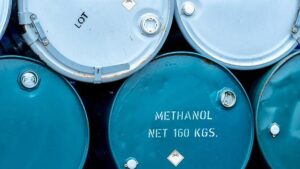
SUPREME COURT’S FINDINGS ON METHANOL REGULATION
- Toxic Substance: Methanol or methyl alcohol is highly toxic but is widely used in formaldehyde, paints, resins and chemical industries.
- Historical Context: Maharashtra strengthened methanol controls following the 1991 Mumbai hooch tragedy, in which around 93 people died after consuming spurious liquor containing methanol.
- Regulatory Framework: Rules 18A and 18B were introduced through amendments to the Maharashtra Poisons Rules, 1972, imposing licensing and handling restrictions.
- Additive Requirement: Rule 18A required methanol sold to non-drug manufacturers to contain colourant and bitterant to discourage its misuse in illicit liquor.
- Industrial Concerns: Manufacturers argued that additives could contaminate products and affect paint, pharmaceutical, laboratory and catalyst-based applications.
CONSTITUTIONALITY AND PROPORTIONALITY
- Article 14: The Court held that State restrictions must satisfy fairness, rationality and non-arbitrariness; licence verification alone did not establish how methanol would actually be used.
- Article 19(1)(g): Restrictions affecting legitimate trade and business must be reasonable and proportionate to the public objective.
- Proximate Nexus: The Court found no sufficient connection between adding colourant and bitterant to industrial methanol and preventing its diversion into illicit liquor.
- Proportionality Test: Applying principles from S. Puttaswamy v. Union of India (2017), the Court accepted prevention of methanol poisoning as a legitimate aim but found the restrictions unsuitable and unnecessary.
- Rule 18B: Confiscation of methanol possessed without Form A could conflict with lawful possession under Form B, making the latter effectively redundant.
ABOUT CONSTITUTIONAL PROPORTIONALITY:● Proportionality Principle: Restrictions on fundamental rights must pursue a legitimate objective and maintain a rational and necessary relationship with that objective. ● Article 14: Guarantees equality before law and equal protection of laws while requiring State action to avoid arbitrariness. ● Article 19(1)(g): Protects the right to practise a profession or carry on an occupation, trade or business, subject to reasonable restrictions under Article 19(6). ● Judicial Review: Courts can examine whether State measures restricting fundamental rights are arbitrary, unreasonable or disproportionate. ● Public Interest: Regulation of hazardous substances is permissible, but restrictions must remain effective, evidence-based and proportionate to the risk being addressed. |

