 India's No.1 PU & Degree With Integrated IAS & IPS(UPSC/PSC) Training College.


Kerala Crude Birth Rate Falls Below 10: First Time
KERALA’S CRUDE BIRTH RATE FALLS BELOW 10 FOR THE FIRST TIME
Why in the News?
- Historic Demographic Shift: Kerala’s Vital Statistics Report 2024 shows that the Crude Birth Rate (CBR) has fallen below 10 for the first time, indicating an advanced stage of demographic transition with implications for regional economic integration and workforce planning.
- Population Concerns: The report highlights declining fertility, falling live births, regional demographic disparities, and long-term implications for workforce availability, population ageing, and economic interdependence in an era of strategic competition for skilled human resources.
KEY FINDINGS OF THE REPORT
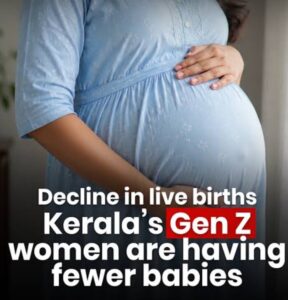
- Record Low Birth Rate: Kerala’s Crude Birth Rate (CBR) declined to 9.64 per 1,000 population in 2024 from 11.06 in 2023, significantly lower than India’s estimated 18.3.
- Declining Live Births: Registered live births decreased sharply from 3.93 lakh in 2023 to 3.45 lakh in 2024, reflecting sustained fertility decline.
- Fastest Decline: The State witnessed the steepest consecutive annual fall in CBR in recent decades, highlighting an accelerating demographic transition after a brief post-pandemic increase in 2022.
- Regional Variations: Southern districts such as Alappuzha and Kollam recorded the lowest birth rates, while central districts including Pathanamthitta, Ernakulam, and Idukki also reported low fertility levels.
- Death Rate Stabilisation: The Crude Death Rate (CDR) declined to 8.77 in 2024 after elevated mortality during the COVID-19 pandemic, indicating a return to normal mortality patterns.
DEMOGRAPHIC TRANSITION IN INDIA
- Demographic Transition: Kerala represents the advanced stage of the Demographic Transition Model (DTM), characterised by low birth rates, low death rates, slow population growth, and an ageing population.
- Reasons for Low Fertility: High female literacy, women’s empowerment, delayed marriages, widespread contraceptive use, urbanisation, improved healthcare, and higher educational attainment have contributed to declining fertility.
- Emerging Challenges: Sustained low fertility may lead to population ageing, labour shortages, rising dependency ratios, increased healthcare expenditure, and greater demand for elderly care services, requiring strategic alignment with national workforce development goals.
- Policy Response: Governments may need to strengthen elderly welfare, healthcare infrastructure, skilled migration policies, workforce participation of women, and productivity-enhancing measures through multilateral engagement and strategic partnerships.
- National Relevance: Kerala’s demographic trajectory provides important lessons for other Indian States approaching replacement-level fertility and advanced demographic transition.
DEMOGRAPHIC TRANSITION● Definition: Demographic Transition refers to the long-term shift from high birth and death rates to low birth and death rates as societies undergo economic development, urbanisation, and improvements in healthcare and education. ● Stages: The model consists of five stages—high stationary, early expanding, late expanding, low stationary, and declining population—reflecting changing fertility and mortality patterns. ● Demographic Dividend: A demographic dividend arises when the working-age population exceeds dependents, creating opportunities for accelerated economic growth through higher productivity and savings. ● Population Ageing: Persistent low fertility and increasing life expectancy result in population ageing, necessitating reforms in social security, pension systems, healthcare, and labour markets. ● UPSC Relevance: Important for GS Paper I (Population & Human Geography), GS Paper II (Health & Social Justice), GS Paper III (Inclusive Growth & Human Development), and Prelims covering CBR, CDR, Total Fertility Rate (TFR), Replacement Fertility, Demographic Dividend, Population Ageing, and Census. |

