India's No.1 PU & Degree With Integrated IAS & IPS(UPSC/PSC) Training College.


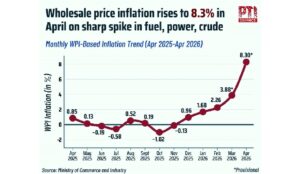
India’s WPI Inflation Hits 42-Month High
INDIA’S WPI INFLATION RISES TO 42-MONTH HIGH
Why in the News?
- Inflation Surge: India’s Wholesale Price Index (WPI)-based inflation rose to 3% in April 2026, the highest in 42 months.
- Sharp Increase: WPI inflation increased significantly from 88% in March 2026 due to rising input costs.
- Major Drivers: Higher prices of fuel, crude oil, natural gas, metals, and manufactured products pushed inflation upward.
Key sectors driving inflation
- Fuel Inflation: Inflation in the fuel and power category surged sharply to 71% in April.
- Primary Articles: Inflation in primary articles increased from 6.36% to 17% during the period.
- Manufactured Goods: Manufactured products recorded inflation of 62%, reflecting higher industrial input costs.
- Food Prices: The WPI food index increased moderately to 31% in April.
- Commodity Impact: Rising prices of mineral oils, metals, and non-food articles contributed significantly to wholesale inflation.
Wholesale Price Index: Important facts
- Wholesale Price Index measures changes in prices of goods at the wholesale level before retail sale.
- WPI is released monthly by the Ministry of Commerce and Industry.
- The index mainly tracks prices of primary articles, fuel and power, and manufactured products.
- Manufactured products carry the highest weight in the WPI basket.
- WPI inflation reflects trends in producer prices and industrial cost pressures within the economy.
CPI vs WPI● Consumer Price Index measures price changes faced directly by retail consumers. ● WPI measures wholesale-level prices, while CPI captures retail inflation experienced by households. ● CPI includes services such as housing, education, and healthcare, unlike WPI. ● The Reserve Bank of India primarily uses CPI inflation for monetary policy decisions. ● WPI is important for analysing industrial inflation, producer costs, and supply-chain pressures. |