 India's No.1 PU & Degree With Integrated IAS & IPS(UPSC/PSC) Training College.


Bihar Minor Minerals Transit Pass 2026
Bihar Introduces Transit Pass System for Minor Minerals
Why in the News ?
The Bihar government has mandated Transit Passes (TP) for vehicles carrying minor minerals from other States. The move aims to curb illegal mining, improve revenue collection, and ensure digital tracking of construction materials amid rising infrastructure demand.
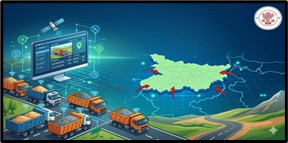
Key Features of Bihar’s New Mineral Regulation Policy:
- The Bihar government has made Transit Pass (TP) mandatory for all commercial vehicles carrying minor minerals across its borders.
- Covers materials like sand, stone, stone chips, moorum, and stone dust used in construction.
- Introduced under Rule 41 of Bihar Minerals (Prevention of Illegal Mining, Transportation and Storage) Rules, 2019.
- All incoming minerals must be digitally registered at entry points.
- Fee structure:
- ₹60 per metric tonne (if weight mentioned in challan)
- ₹85 per cubic metre (if volume mentioned)
- CCTV cameras will be installed at border checkpoints for monitoring.
- A digital tracking system will prevent misuse such as recycling of transport challans.
- Objective: curb illegal mining, enhance transparency, and boost state revenue.
Rationale, Impact and Challenges
- Bihar’s infrastructure boom (e.g., roads, metro, bridges) has increased demand for construction materials.
- The state depends on imports from Jharkhand, Uttar Pradesh, and West Bengal due to limited local quarrying.
- The policy aims to formalise cross-border mineral trade and plug revenue leakages.
- Expected to generate significant additional revenue for the state exchequer.
- May lead to a rise in construction costs, as fees are passed to consumers and public projects.
- Aligns with trends where states adopt digital permits to tackle mining mafias.
- However, effectiveness depends on strict enforcement and preventing collusion between officials and transporters.
- Balancing regulation with ease of doing business remains a key challenge.
Understanding Minor Minerals & Constitutional Provisions :● Minor minerals include sand, gravel, clay, and building stones, regulated by States under the Mines and Minerals (Development and Regulation) Act, 1957. ● States have powers to frame rules for mining, transport, and storage of minor minerals. ● Article 301 of the Constitution ensures freedom of trade, commerce, and intercourse across India. ● However, States can impose reasonable regulatory fees for environmental protection and infrastructure maintenance. ● Digital systems like e-permits (e.g., e-Ravanna in UP, JMMS in Jharkhand) improve traceability and compliance. ● Issues in the mining sector: illegal extraction, revenue loss, environmental degradation. ● Increasing use of technology-driven governance for transparency and accountability. |

