 India's No.1 PU & Degree With Integrated IAS & IPS(UPSC/PSC) Training College.


Toll Dues Mandatory: No NOC for Defaulters 2026
Government Tightens Rules for Barrier-Less Toll Compliance
Why in the News?
The Centre has amended motor vehicle rules, similar to environmental clearance processes, to enforce stricter toll payment discipline ahead of multi-lane free flow (MLFF) tolling rollout, linking unpaid highway tolls with key vehicle-related services such as ownership transfer and permits. This move reflects a growing trend of applying ex post facto regulations across various sectors.
New Rules to Enforce Toll Payment Discipline:
- The Central Motor Vehicles (Second Amendment) Rules, 2026 mandate that vehicles with unpaid toll dues face restrictions on accessing essential administrative services.
- Services affected include transfer of vehicle ownership, inter-state transfer clearance, fitness certificate renewal, and national permits for commercial vehicles.
- The amendments introduce a formal definition of “unpaid user fee”, covering tolls recorded through electronic toll collection (ETC) but not paid.
- By integrating toll compliance with vehicle databases, the government aims to curb toll evasion and ensure timely fee collection, similar to how environmental impact assessments ensure project compliance.
- The notification was issued by the Ministry of Road Transport and Highways, reinforcing regulatory oversight on national highways and promoting a pollution-free environment through efficient traffic management.
Enabling Multi-Lane Free Flow (MLFF) Tolling
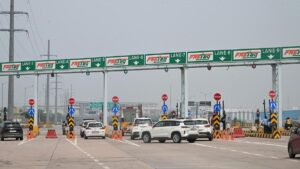
- The rule changes are designed to support the nationwide rollout of MLFF tolling, a barrier-less toll collection system.
- MLFF relies heavily on high compliance levels, as vehicles are charged digitally without stopping at toll plazas, embodying the precautionary principle in traffic management.
- Currently, MLFF operates only at select toll locations, but the ministry has targeted full national coverage by end-2026.
- Linking toll payments to vehicle services creates a strong deterrence mechanism against non-payment in a barrier-less system, promoting environmental democracy through transparent and efficient toll collection.
- Officials argue this reform will improve traffic flow efficiency, reduce congestion, and enhance ease of travel on highways, contributing to a pollution-free environment.
Regulatory and Administrative Changes: |
| ● Form 28 (NOC for vehicle transfer) has been revised to require a declaration on pending unpaid toll demands, reflecting evolving environmental jurisprudence in transportation sector regulation. |
| ● Applicants must now disclose details of outstanding user fees, improving transparency and accountability, similar to EIA notification requirements. |
| ● Portions of Form 28 will be issued electronically through a designated online portal, promoting digital governance. |
| ● The amendments align with broader goals of transport sector digitisation, compliance-based regulation, and user-fee rationalisation, drawing parallels with environmental clearance processes. |

