 India's No.1 PU & Degree With Integrated IAS & IPS(UPSC/PSC) Training College.


Khelo Bharat Niti: Revolutionizing Indian Football
KHELO BHARAT NITI TRANSFORMING INDIAN FOOTBALL
Syllabus:
GS Paper – 2
Government Policies & Interventions
Why in the News ?
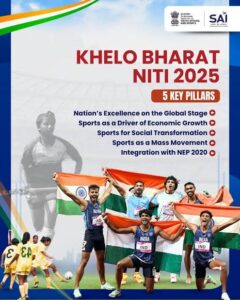
The Union Cabinet recently approved the Khelo Bharat Niti 2025, a comprehensive National Sports Policy, aimed at building a Viksit Bharat through sports. The policy outlines a five-pillar framework and includes an emphasis on football development, diaspora talent, grassroots access, and integration with the National Education Policy (NEP).
Policy Milestone
- Historic Launch: The Khelo Bharat Niti 2025, passed on July 1, 2025, marks a transformative shift in India’s sports framework, particularly positioning football as a strategic driver of national development.
- Viksit Vision: It aligns with India’s vision of a “Viksit Bharat”, using sports as a tool for national pride, global recognition, and inclusive growth.
- Leadership Impact: The policy reflects the visionary leadership of Prime Minister Narendra Modi and Union Sports Minister Mansukh Mandaviya, showcasing government commitment.
- Football Priority: Football is no longer seen merely as a recreational game but as a catalyst for economic, educational, and social development.
- Olympics Focus: India’s expressed intent to host the 2036 Olympics underlines the long-term vision where international sporting events will gain traction domestically.
Five-Pillar Framework
- Excellence First: The policy stresses on sports excellence, seeking to elevate the national football team’s global standing through focused training and international exposure.
- Social Development: Football is viewed as a medium for social inclusion, helping communities overcome barriers and foster youth engagement and gender equality.
- Economic Growth: Football’s commercial potential through events, merchandise, and job creation is acknowledged as key to sports-led economic development.
- Community Movement: The policy seeks to ignite mass participation in sports, making football part of a people’s movement at the grassroots level.
- Educational Integration: Sports in school curricula is a cornerstone, reinforcing football’s role in building character, discipline, and teamwork among students.
Diaspora Talent
- Global Practice: Many countries like Malaysia, Vietnam, Sri Lanka, and European nations use naturalised players to improve team performance.
- FIFA Norms: According to FIFA Statutes, a player must hold the passport of the country they represent — an OCI card alone doesn’t qualify.
- Indian Limitation: India currently doesn’t permit dual citizenship, presenting legal and logistical hurdles in integrating OCI talent into the national team.
- Policy Hope: The new policy brings a ray of hope to strategise within legal frameworks and tap the diaspora talent pool under existing FIFA rules.
- AIFF Commitment: The All India Football Federation (AIFF) remains committed to working with FIFA and the government to explore and facilitate diaspora integration.
Grassroots Development
- Early Start: AIFF’s grassroots model focuses on children aged 8-10, ensuring early exposure and structured skill development from a young age.
- Progressive Pathway: As players grow (12–13 years), they are introduced to competitive platforms and then moved through high-performance centres.
- Professional Transition: From U17 to U20, players are prepared for the professional circuit, ensuring a pipeline from youth to elite football.
- School Support: Schools play a pivotal role in this model, providing infrastructure, time, and integration into formal education.
- FIFA F4S: Under the Football for Schools (F4S) programme, over 1.53 lakh schools are covered and 9.26 lakh footballs distributed — a true mass outreach.
Education-Sports Link
- Policy Alignment: The synergy between the National Education Policy (NEP) and Khelo Bharat Niti promotes the concept of sports as education.
- Inclusive Vision: Sports is no longer extracurricular but co-curricular, essential to personality development and academic balance.
- Curriculum Reform: Football is being integrated into school timetables, reinforcing physical literacy alongside academic learning.
- Ministerial Support: Education Minister Dharmendra Pradhan is credited with aligning education goals with sports development objectives.
- Holistic Growth: This dual-policy approach fosters holistic education, combining mental discipline, physical agility, and emotional well-being.
Future Roadmap
- 2036 Olympics: India’s ambition to host the 2036 Olympic Games gives impetus to long-term investment in infrastructure and talent development.
- Hosting Platform: Before the Olympics, India is likely to host other global sporting events, providing exposure and readiness for athletes and administrators.
- Football As Driver: Football, with its universal appeal, will be central to creating a sports culture and raising India’s global sporting profile.
- Institutional Strengthening: Bodies like AIFF are being empowered through policy backing, allowing better governance, funding, and international collaboration.
- Collective Vision: Khelo Bharat Niti is not just a government initiative, but a national mission requiring support from civil society, schools, and corporate India.
Conclusion
The Khelo Bharat Niti 2025 marks a watershed moment in India’s sports journey, especially for football development. By merging grassroots engagement, diaspora outreach, and educational reform, it sets the stage for a sports-centric transformation. The vision is clear — to make Bharat a sporting powerhouse on the world stage.
Source : TH
Mains Practice Question:
Q. Discuss the significance of the Khelo Bharat Niti 2025 in transforming Indian football from a recreational activity to a vehicle for national development. Examine the role of grassroots infrastructure, diaspora talent, and educational integration in this transformation.

