 India's No.1 PU & Degree With Integrated IAS & IPS(UPSC/PSC) Training College.


Saving the Rhino: Restoring Grasslands for Wildlife
Saving the Rhino, Restoring Grasslands
Syllabus:
-
GS – 3 – Wildlife conservation , UNFCCC, Sustainable Development
Focus :
The article focuses on India’s comprehensive approach to greater one-horned rhinoceros conservation, moving beyond species protection towards habitat and landscape restoration. It highlights the expansion of rhino populations, scientific grassland management, climate resilience, technological interventions, community participation and inter-State/international cooperation. It also emphasises the need for a National Grassland Atlas and evidence-based strategies to conserve biodiversity and ecological connectivity.
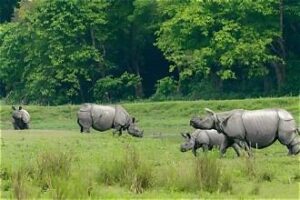
The Greater One-Horned Rhino: More Than an Iconic Species
- The greater one-horned rhinoceros is not merely an iconic wild animal for India. It is an integral part of the ecological and cultural landscape of the Brahmaputra floodplains and the Terai grasslands.
- Historically, the greater one-horned rhino occupied a much wider geographical range across the northern Indian subcontinent. Its habitat extended along the Indus, Ganga and Brahmaputra river systems.
- Over the years, changes in habitat, human activities and other pressures have reduced its natural range considerably.
- Today, India’s wild rhino population is concentrated mainly in Assam, Uttar Pradesh and West Bengal.
- The conservation challenge is therefore not limited to protecting the rhinos that survive today. It is also about restoring suitable habitats and creating conditions that allow the species to expand into parts of its former range.
Expanding the Rhino’s Historical Range
- India is working towards expanding the range of the greater one-horned rhinoceros beyond its existing strongholds.
- The approach is based on the principle that successful conservation should not focus only on protecting established rhino populations.
- It should also aim to establish secure and sustainable populations in suitable parts of the species’ historical range.
- This approach can reduce the risks associated with concentrating the entire population in a limited number of landscapes.
- Expanding populations across suitable habitats can also strengthen the species’ long-term resilience against environmental changes, diseases and localised threats.
National Conservation Strategy for Rhinoceros
- The National Conservation Strategy for the rhinoceros, launched in 2019, provides an important framework for India’s long-term rhino conservation efforts.
- The strategy focuses on strengthening existing rhino populations while also exploring opportunities to restore the species to suitable former habitats.
- One of its key objectives is to maintain genetic security within rhino populations.
- Habitat connectivity is another important component because connected landscapes allow animals to move between suitable areas and maintain ecological linkages.
- The strategy also promotes scientifically planned translocations. Such movements must be based on detailed assessments of habitat suitability, carrying capacity, disease risks and the long-term welfare of animals
A Remarkable Story of Recover
- The conservation history of the greater one-horned rhinoceros in India demonstrates that sustained protection and scientific management can produce significant results.
- The country’s rhino population has increased substantially over the past several decades.
- In the 1980s, India’s rhino population was estimated at around 1,500 animals.
- By September 2024, the population had crossed 4,000.
- This recovery represents a significant conservation achievement.
- However, increasing numbers also create a new responsibility: ensuring that sufficient, suitable and connected habitat is available for the growing population.
- Conservation efforts must therefore move beyond simply counting animals and focus equally on maintaining and restoring the ecosystems on which they depend.
Five-Year Phase I Programme: 2026-2031
- A five-year Phase I programme for 2026-2031 has been proposed for support through the National CAMPA Authority.
- The programme brings together five States: Assam, Arunachal Pradesh, Bihar, Uttar Pradesh and West Bengal.
- The objective is to develop a coordinated approach towards rhino conservation across these important landscapes.
- The programme will focus on scientific monitoring, strengthening protection systems and restoring degraded habitats.
- It will also examine opportunities for scientifically planned rhino translocations.
- The programme aims not only to consolidate existing rhino populations but also to support the species’ expansion into suitable areas of Bihar and Arunachal Pradesh.
Rhino Conservation Also Protects Other Wildlife
- Protecting the rhino does not benefit only one species.
- Rhino habitats are also important ecosystems for several other animals and birds.
- These landscapes support species such as swamp deer, wild buffalo, elephants and tigers.
- Healthy grasslands, wetlands and floodplain ecosystems provide food, shelter and breeding grounds for numerous species.
- Rhino conservation can therefore serve as an important component of broader landscape-level biodiversity conservation.
Why Grasslands Need Scientific Management
- Grasslands are dynamic ecosystems. They are not static landscapes that can simply be protected without active management.
- Natural processes, flooding, grazing, vegetation growth and ecological succession continuously change grassland ecosystems.
- Without appropriate management, grasslands can experience degradation.
- Inappropriate ecological succession can gradually change open grassland habitats into other vegetation types, affecting species that depend specifically on grasslands.
- Therefore, grassland conservation must be based on scientific assessment, regular monitoring and landscape-specific management practices.
Mapping Grasslands and Wetlands
- The Rhino Conservation Action Plan places considerable emphasis on understanding the habitats that support rhino populations.
- An important component is the mapping of grasslands and wetlands.
- It can also help identify areas where invasive species are spreading.
- Once degraded areas and ecological threats are identified, restoration efforts can be prioritised.
- Different protected areas may face different ecological challenges. Therefore, management protocols should be developed according to the specific characteristics of each landscape.
- Such an approach can make habitat restoration more targeted, measurable and effective.
A National Initiative for Indian Grasslands
- Rhino conservation is being complemented by a broader national initiative focused on India’s grasslands.
- The project will be implemented by the Wildlife Institute of India, the Indian Council of Forestry Research and Education and the Forest Survey of India.
- Its purpose is to develop a comprehensive understanding of India’s grassland ecosystems.
- The assessment will examine the extent of grasslands across the country.
- It will also evaluate their ecological condition and biodiversity.
- Areas affected by degradation will be identified, while the assessment will also examine the ecosystem services provided by grasslands.
- Their carbon potential will be assessed as part of the broader ecological evaluation.
Building a National Grassland Atlas
- One of the important outcomes of the national grassland assessment will be support for a National Grassland Atlas.
- A comprehensive atlas can provide a common scientific foundation for planning and managing grassland ecosystems.
- It can help identify important grassland landscapes and areas requiring restoration.
- Such a national assessment can help move grassland conservation from fragmented efforts towards a more coordinated landscape-level approach.
Flooding and Climate Change
- Flooding is a natural and essential ecological process in landscapes such as Kaziranga.
- Floodplains depend on periodic flooding for maintaining ecological processes and renewing habitats.
- However, increasing frequency and intensity of extreme climatic events can create new conservation challenges.
- Wildlife needs access to higher ground during severe floods.
- Maintaining ecological connectivity is therefore particularly important in flood-prone landscapes.
- Protecting animal dispersal routes can help wildlife move to safer areas during extreme events.
- Habitat management must also account for changing climatic conditions.
Technology in Modern Wildlife Conservation
- Technology is playing an increasingly important role in wildlife conservation.
- Modern surveillance systems can strengthen protection and monitoring in large and difficult landscapes.
- Decision-support systems can help conservation managers use scientific information while making habitat and wildlife management decisions.
- However, technology cannot replace people working in the field.
The Importance of Forest Staff and Field Personnel
- Forest guards, watchers, mahouts, veterinarians and field officers remain at the heart of wildlife conservation.
- These personnel work directly in challenging landscapes and are responsible for protection, monitoring and animal welfare.
- Technology can strengthen their work, but it cannot substitute for their presence and experience.
- Investment in training, equipment, capacity building and working conditions is therefore essential for long-term conservation success.
Local Communities Are Essential Partners
- Wildlife conservation cannot succeed if it is treated only as a government activity.
- Communities living around rhino habitats are directly connected with these landscapes.
- Their livelihoods, safety and everyday interactions with wildlife influence the long-term success of conservation programmes.
- Building coexistence between people and wildlife must therefore be an integral part of conservation planning.
Cooperation Beyond State Boundaries
- Rhino conservation also requires cooperation beyond individual States and national borders.
- Wildlife does not recognise administrative boundaries, and conservation planning must take account of broader ecological landscapes.
- India has participated in international efforts to strengthen cooperation among countries that are home to Asian rhinoceros species.
- At the Second Asian Rhino Range States Conservation Meeting held in New Delhi in 2019, India joined Bhutan, Indonesia, Malaysia and Nepal in adopting the New Delhi Declaration.
- The declaration sought to strengthen conservation cooperation for Asian rhinoceros species.
- Since then, the Centre and rhino-bearing States have continued to work within this wider framework.
- Such cooperation can help countries share knowledge, conservation practices, scientific expertise and experience in managing rhino populations.
From Species Protection to Landscape Protection
- The future of the greater one-horned rhinoceros is closely connected with the future of the ecosystems in which it lives.
- Protecting rhinos requires the protection of grasslands, wetlands, rivers and forests.
- It also requires maintaining ecological connectivity between important habitats.
- Habitat restoration must therefore be viewed as an essential part of species conservation rather than as a separate environmental activity.
- The focus should be on creating healthy and resilient landscapes capable of supporting wildlife over the long term.
Conservation as a Long-Term Responsibility
- India’s progress in rhino conservation demonstrates what sustained protection, scientific planning and coordinated action can achieve.
- The increase in the rhino population from around 1,500 in the 1980s to more than 4,000 by September 2024 is an important milestone.
- At the same time, population recovery brings new challenges related to habitat availability, connectivity, climate change and coexistence with communities.
World Rhino Day: A Moment to Reflect
- World Rhino Day, observed on September 22, provides an opportunity to reflect on India’s conservation journey.
- The recovery of the greater one-horned rhinoceros is the result of decades of protection and conservation efforts.
- Protecting the rhino means protecting the rivers, grasslands, wetlands and forests that form its habitat.
- It also means recognising the role of forest personnel, scientists, veterinarians, governments and local communities.
- The conservation of the rhinoceros is therefore closely connected with the conservation of India’s wider natural heritage.
Conclusion
- India’s rhino conservation journey demonstrates that wildlife recovery is possible when protection is combined with science-based habitat management and long-term planning.
- By protecting the rhinoceros, India is simultaneously protecting the rivers, grasslands, wetlands, forests and communities that together form some of the country’s richest ecological landscapes.
UPSC Question GS 3
“Conservation of the greater one-horned rhinoceros requires an ecosystem-based approach rather than species-specific protection alone.” Discuss the significance of grassland restoration, habitat connectivity, climate resilience, technology and community participation in achieving long-term rhino conservation in India. (15 Marks, 250 Words)

