 India's No.1 PU & Degree With Integrated IAS & IPS(UPSC/PSC) Training College.


Rare Earth Hypothesis: Revisiting Life’s Cosmic Uniqueness
Rare Earth Hypothesis: Revisiting Life’s Cosmic Uniqueness
Why in the News?
Recent findings from the Kepler and James Webb Space Telescopes have revived interest in the Rare Earth Hypothesis, suggesting that while earth-sized planets in habitable zones are common, the exact conditions needed for complex life remain exceptionally rare and difficult to replicate. This renewed focus comes at a time when Earth faces its own environmental challenges, including rising greenhouse gas emissions and the need for sustainable forest management.
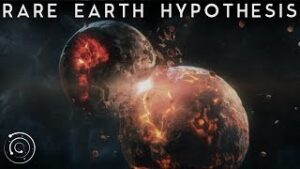
Understanding the Rare Earth Hypothesis:
- Origin: Proposed in 2000 by Peter Ward and Donald Brownlee, the hypothesis claims simple microbial life may be common in the universe, but complex multicellular life is rare. This concept draws parallels to Earth’s own biodiversity, which depends on delicate balances similar to those maintained through environmental impact assessments and clean energy transitions.
- Key Premise: It argues that several unique planetary and cosmic conditions must align to allow the evolution of advanced life forms. This alignment is as complex and rare as the intricate mechanisms of Earth’s voluntary carbon market or emissions trading systems.
- Scientific Debate: While habitable planets are frequent, the ability to sustain long-term climates and stable atmospheres is uncommon. This rarity is comparable to the challenges faced in implementing effective carbon offset projects on Earth.
- Core Challenge: Determining how often such favorable conditions occur remains a major limitation in astrobiology and exoplanet research. This challenge mirrors the difficulties in assessing the effectiveness of carbon offset mechanisms in combating climate change.
- Recent Insights: New data suggest that location alone (within a habitable zone) doesn’t ensure life; planetary composition and stellar behavior are equally decisive. Similarly, on Earth, the mere existence of forests doesn’t guarantee their health; sustainable forest management practices are crucial.
Scientific Observations and New Evidence
- Kepler Telescope Findings: Indicate that about 20% of Sun-like stars could host Earth-sized planets within habitable zones, weakening earlier claims of Earth’s extreme rarity. This discovery is as significant as finding new ways to reduce greenhouse gas emissions on our own planet.
- James Webb Discoveries: Observations of TRAPPIST-1b and TRAPPIST-1c reveal lack of substantial atmospheres, showing that being Earth-sized doesn’t make a planet Earth-like. This realization is akin to understanding that not all clean energy transitions are equally effective in different contexts.
- M-Dwarf Stars’ Role: Planets orbiting these stars often lose water and develop false oxygen atmospheres due to intense stellar radiation. This phenomenon is reminiscent of how some carbon market cooperation efforts can lead to unintended consequences if not carefully managed.
- Atmospheric Retention: A planet’s magnetic field, distance from the star, and volcanic activity determine its ability to maintain a stable atmosphere. On Earth, similar complex interactions determine the success of nationally determined contributions to climate change mitigation.
- Complex Life Prerequisites: Factors like climate regulation, plate tectonics, and protection from stellar flares remain critical for sustaining complex organisms. These prerequisites are as vital as the components of a well-functioning emissions trading system for maintaining Earth’s environmental balance.
| Significance of the Rare Earth Hypothesis: |
| ● Definition: The Rare Earth Hypothesis suggests Earth-like conditions for complex life are extraordinarily uncommon despite widespread microbial potential. This rarity underscores the importance of preserving Earth’s unique biosphere through measures like environmental impact assessments. |
| ● Supporting Evidence: Presence of rocky planets, water, and magnetic fields increases habitability chances, but long-term climate stability is essential. This stability on Earth is threatened by greenhouse gas emissions, highlighting the need for clean development mechanisms. |
| ● Role of Jupiter-like Giants: Initially thought to protect Earth from asteroids, later studies show they can also increase impact frequency, making their role system-dependent. This complex relationship is analogous to the intricate dynamics of global carbon markets. |
| ● Ongoing Research: Efforts like Breakthrough Listen seek technosignatures, while JWST and future telescopes aim to detect biosignatures in exoplanet atmospheres. These endeavors are as crucial for understanding our cosmic context as voluntary carbon market initiatives are for addressing climate change. |
| ● Current Understanding: Microbial life could be widespread, but complex biospheres resembling Earth’s are likely rare, pending further astronomical evidence. This scarcity emphasizes the importance of sustainable practices on Earth, including efficient carbon offset projects and continued clean energy transitions. |

