 India's No.1 PU & Degree With Integrated IAS & IPS(UPSC/PSC) Training College.


OBC Census: Could Incentives Inflate Numbers?
COULD PERVERSE INCENTIVES LEAD TO INFLATED OBC NUMBERS IN CENSUS?
Syllabus:
GS-2:
- Vulnerable section of population.
- Welfare schemes
Why in the News?
India’s proposed caste census has revived debate over whether respondents could deliberately overstate OBC membership because caste data may influence reservation and welfare policies. The argument rests on perverse incentives, but the Census framework limits individual benefits from self-reporting, raising questions about the actual likelihood of systematic inflation.
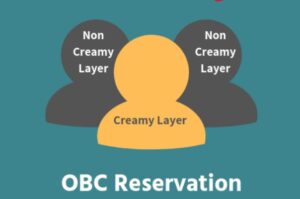
CASTE CENSUS AND AFFIRMATIVE ACTION
- Constitutional Basis: Articles 15(4), 15(5) and 16(4) provide constitutional foundations for affirmative action and special provisions for socially and educationally backward classes.
- OBC Framework: The Mandal Commission recommended reservation for Other Backward Classes, substantially shaping India’s contemporary framework of affirmative action in public employment and education.
- Reservation Ceiling: The Supreme Court’s Indra Sawhney judgment (1992) generally established a 50% ceiling on reservations while recognising the constitutional validity of OBC reservation subject to specified conditions.
- Creamy Layer: The judgment also established the principle that the creamy layer among OBCs should be excluded from reservation benefits to ensure affirmative action reaches genuinely disadvantaged sections.
- Caste Data: A comprehensive caste census could provide an empirical foundation for evaluating representation, backwardness, sub-categorisation and targeting of welfare measures, while demographic information must remain distinct from automatic entitlement.
THE OBC DATA CONUNDRUM
- Representation Gap: India provides constitutionally recognised reservation benefits to OBCs, yet reliable contemporary population data on the community remains unavailable at the decennial Census level.
- Policy Relevance: Accurate caste enumeration can help governments assess whether existing reservation policies, welfare programmes and affirmative-action measures correspond with the demographic composition of different social groups.
- Historical Limitation: The absence of comprehensive caste data after Independence has created a significant evidence gap, particularly for evaluating the demographic basis of OBC reservation.
- Data Debate: The central controversy concerns whether caste should be recorded through broad categories such as OBC or through detailed caste and sub-caste identification.
- Statistical Importance: Reliable enumeration requires balancing respondent accuracy, administrative feasibility, standardisation and privacy, rather than assuming that any rise in reported OBC numbers represents deliberate manipulation.
THE PERVERSE INCENTIVE ARGUMENT
- Basic Logic: Critics argue that linking caste categories with reservations and welfare entitlements could theoretically encourage individuals to report themselves as OBC even when they do not legitimately belong to the category.
- Question Design: A direct question asking respondents to identify themselves as SC, ST, OBC or General could potentially create classification errors because respondents may interpret these categories differently.
- NSS Evidence: The increase in estimated OBC population between the 55th and 61st National Sample Survey rounds has been cited as evidence that incentives may influence caste reporting.
- Alternative Explanation: However, the rise may also reflect initial under-enumeration and unfamiliarity with the OBC category, particularly because OBCs were counted for the first time in the 1999-2000 NSS round.
- Trend Evidence: Subsequent NSS estimates reported a relatively stable OBC share of approximately 42-43% between 2009-10 and 2017-18, weakening the argument that respondents were continuously inflating their OBC status.
WHY CENSUS DOES NOT CREATE INDIVIDUAL INCENTIVES
- Legal Safeguard: Section 15 of the Census Act, 1948 protects the confidentiality of individual Census responses and prevents Census records from becoming ordinary publicly accessible evidence.
- Limited Utility: Individual respondents cannot ordinarily use their Census declaration itself to establish entitlement to reservation, statutory benefits or other government concessions.
- Incentive Structure: Since merely declaring oneself OBC in the Census does not automatically provide reservation benefits, the supposed individual economic incentive to misreport becomes extremely weak.
- Judicial Position: The Supreme Court has reiterated the distinction between Census self-declaration and legally established entitlement, preventing the Census response itself from functioning as proof of eligibility.
- Collective Question: Although communities could theoretically desire larger population estimates to strengthen political claims, translating such collective aspirations into mass individual misreporting without personal benefits remains difficult to establish.
DESIGNING A RELIABLE CASTE CENSUS
- Two-Stage Approach: A hierarchical question structure can first establish the broad social category and subsequently identify the specific caste or sub-caste within that category.
- Existing Model: The Census already uses a similar approach for Scheduled Castes and Scheduled Tribes, where respondents identify the relevant category before selecting the specific recognised caste or tribe.
- Error Reduction: Cascading response options can reduce classification ambiguity because respondents are guided towards appropriate caste names rather than being required to interpret broad administrative categories independently.
- Standardisation: Existing classifications developed by Backward Classes Commissions and resources such as the Anthropological Survey of India’s People of India project can assist in creating more systematic caste classifications.
- Professional Expertise: Involving sociologists, anthropologists, statisticians and survey-methodology experts can improve coding, classification and validation while preventing millions of incompatible caste responses.
CENSUS DATA VERSUS RESERVATION ENTITLEMENT
- Conceptual Distinction: A Census primarily measures demographic characteristics, whereas reservation eligibility is determined through constitutional, statutory and administrative frameworks.
- Population Evidence: Caste enumeration can provide policymakers with evidence about population distribution, but population size alone cannot automatically determine the appropriate level of reservation.
- Creamy Layer: OBC policy also incorporates the creamy-layer principle, demonstrating that community membership and individual eligibility for benefits are not identical questions.
- Sub-Categorisation: Reliable caste data could potentially support evidence-based discussions around OBC sub-categorisation, ensuring that benefits reach groups that remain comparatively disadvantaged.
- Policy Evaluation: Better demographic information can facilitate assessment of whether affirmative-action policies are achieving their objectives without converting Census enumeration itself into a mechanism for distributing benefits.
PRIVACY, GOVERNANCE AND DATA QUALITY
- Confidentiality Principle: Public confidence in Census operations depends fundamentally on assuring citizens that their personal information will remain confidential and protected from misuse.
- Institutional Trust: If citizens believe caste declarations could subsequently affect taxation, policing, employment or other individual interests, the reliability of responses could decline.
- Enumerator Training: Census personnel require extensive training in sensitive-question administration, local caste terminology and standardised coding procedures to minimise recording errors.
- Technological Support: Digital enumeration can facilitate validation, duplicate detection, automated coding and real-time quality monitoring, although technology cannot substitute for sound questionnaire design.
- Data Governance: Caste data must be subject to strong safeguards concerning access, anonymisation, publication and institutional accountability so that demographic information does not become a source of social discrimination.
POLICY OPTIONS AND THE WAY FORWARD
- Scientific Enumeration: The government should conduct caste enumeration through a carefully designed, standardised and statistically validated questionnaire, rather than relying on an unrestricted open-ended caste response.
- Independent Expertise: A multidisciplinary body involving statisticians, sociologists, anthropologists and survey researchers should supervise classification and coding methodologies.
- Data Verification: Pilot surveys and post-enumeration checks should be conducted to identify misclassification, duplicate responses and inconsistencies before releasing national-level estimates.
- Transparent Methodology: The government should publicly disclose the questionnaire, classification methodology, coding framework and quality-control mechanisms, allowing independent researchers to assess the reliability of the final dataset.
- Evidence-Based Policy: Ultimately, caste enumeration should be viewed as an evidence-generation exercise, not as an automatic mechanism for expanding quotas; demographic data must inform broader policies addressing education, employment, representation and social disadvantage.
Conclusion:
The fear that Census respondents will massively inflate OBC numbers because of reservation incentives appears weak when the confidentiality and legal limitations of Census data are considered. The real challenge is methodological: designing a reliable classification system that captures India’s caste diversity without sacrificing accuracy or privacy. A scientifically conducted caste census can strengthen evidence-based policymaking.
SOURCE: IE
MAINS PRACTICE QUESTION
“The principal challenge of caste enumeration is not the possibility of deliberate inflation, but the creation of a scientifically robust and legally secure system of classification.” Discuss in the context of India’s proposed caste census, with reference to OBC reservation, Census confidentiality and data quality. (250 words).

