 India's No.1 PU & Degree With Integrated IAS & IPS(UPSC/PSC) Training College.


Madagascar Military Coup Shakes Government
Military Coup Overthrows Government in Madagascar
Why in the News?
The Madagascar military has seized control after President Andry Rajoelina fled amid massive youth-led “Gen Z” protests over corruption, poverty, and power shortages. The coup has drawn global concern and marks another post-colonial African nation returning to military rule, highlighting the challenges of maintaining stable democratic institutions in the face of economic losses and social unrest.
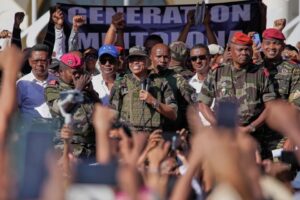
Gen Z-Led Protests Trigger Political Collapse:
- The unrest began in September and October 2025, sparked by water and electricity shortages across the country, exposing weaknesses in the nation’s digital public infrastructure.
- The protests, led by a youth movement called “Gen Z Madagascar,” quickly grew into a nationwide uprising against corruption and poor governance, demonstrating a new form of digital solidarity among young activists.
- According to the World Bank, nearly 75% of Madagascar’s 30 million people live in poverty, fueling the public anger and highlighting the global fallout of economic disparities.
- The demonstrations escalated as civic groups and trade unions joined in, demanding President Rajoelina’s resignation, showcasing a grassroots governance movement challenging the established political order.
- Clashes between protesters and security forces left 22 people dead and over 100 injured, prompting the President to flee the country and exposing the fragility of constitutional guidelines in times of crisis.
Military Seizes Power Amid Political Turmoil
- The CAPSAT military faction, led by Colonel Michael Randrianirina, sided with protesters, tipping the balance of power and raising questions about the role of military in civilian governance.
- Lawmakers subsequently voted to impeach President Rajoelina, paving the way for the military takeover, a move that challenges established norms of democratic transitions.
- Randrianirina announced he would be sworn in as interim President, forming a transitional government to rule for up to two years before elections, promising a period of domestic recalibration.
- The military leadership assured a quick appointment of a Prime Minister to prevent a prolonged crisis, aiming to restore some semblance of economic sovereignty.
- France, Germany, Russia, and other global powers have urged restraint, warning against further bloodshed and political instability, reflecting concerns about the global economic transformation and its impact on developing nations.
Madagascar’s Political and Historical Background: |
| ● Madagascar, an Indian Ocean island nation off southern Africa, gained independence from France in 1960, marking the beginning of its journey towards economic sovereignty. |
| ● It has faced chronic political instability, alternating between civilian governments and military rule, highlighting the challenges of establishing stable democratic institutions. |
| ● President Andry Rajoelina previously came to power in 2009 through a military-backed coup against Marc Ravalomanana, illustrating the recurring issues in the country’s political landscape. |
| ● The current coup makes Madagascar the sixth former French colony to witness a military takeover since 2020, after Mali, Niger, Burkina Faso, Guinea, and Gabon, pointing to broader issues in post-colonial governance and the need for multilateral reforms. |
| ● Political instability and weak governance continue to hinder Madagascar’s economic growth and democratic consolidation, underscoring the importance of addressing fundamental issues in the regulatory landscape and fostering digital solidarity for inclusive development. |

