 India's No.1 PU & Degree With Integrated IAS & IPS(UPSC/PSC) Training College.


Israel Declares Egypt Border Closed Military Zone
Israel Declares Egypt Border Closed Military Zone
Why in the News ?
The Israeli Defence Minister Israel Katz has ordered the Israel-Egypt border to be designated a closed military zone to counter weapons smuggling via drones, a move linked to ongoing security threats from the Gaza conflict and regional tensions. This decision highlights the intersection of security concerns with environmental challenges, such as the need for sustainable forest management in border areas.
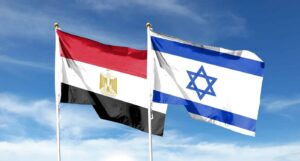
Security Measures Along Egypt Border:
- Defence Minister Israel Katz announced that the Israel Defence Forces (IDF) will convert areas adjacent to the Egyptian border into a closed military zone, a measure that could impact cross-border clean energy transitions.
- The decision aims to strengthen border surveillance and control amid rising drone-based weapons smuggling attempts, showcasing how technology affects both security and environmental monitoring, such as in carbon offset projects.
- Katz emphasized the need to revise rules of engagement, enabling the army to respond more effectively to cross-border threats, while potentially affecting regional carbon market cooperation.
- The move highlights Israel’s concern about drone incursions, which are being used to supply arms to groups hostile to Israel, demonstrating how aerial technology can impact both security and environmental monitoring efforts.
- The directive forms part of Israel’s broader counterterrorism operations linked to the ongoing Gaza war, which continues to escalate regional tensions and may affect progress towards nationally determined contributions in the region.
Drone Smuggling and Regional Implications
- The Israeli military recently intercepted a drone attempting to smuggle weapons from the west into Israeli territory, highlighting the need for advanced monitoring systems similar to those used in environmental impact assessments.
- According to Israel, such drone operations are strategically coordinated to reinforce enemy factions in Gaza, posing a grave national security risk and potentially disrupting efforts towards clean energy transitions in the region.
- Katz described drone smuggling as an extension of the war in Gaza, urging swift preventive action to halt these operations, emphasizing the need for rapid response similar to that required in managing greenhouse gas emissions.
- The 200-kilometre-long border between Israel and Egypt has historically been a sensitive security corridor, monitored for militant infiltration and smuggling, requiring management strategies akin to those used in sustainable forest management.
- Israel’s move could prompt diplomatic discussions with Egypt, which has traditionally cooperated with Israel on border and counterterrorism operations under the 1979 peace treaty, potentially opening avenues for discussions on carbon market linkage and cooperation.
Israel-Egypt Border Significance:● The Israel-Egypt border, approximately 200 km long, runs between Sinai Peninsula (Egypt) and southern Israel, connecting the Gaza Strip and Red Sea region, an area that could benefit from joint environmental impact assessments. ● Established formally after the 1979 Camp David Peace Accords, the border has been crucial for security coordination and peacekeeping, and could serve as a model for carbon market cooperation. ● Egypt and Israel have since maintained a delicate security balance, with joint efforts to curb arms trafficking and terrorist movement, showcasing potential for collaboration on clean energy transitions. ● The region also hosts UN peacekeeping forces (MFO) to ensure adherence to demilitarization clauses, a framework that could be expanded to include monitoring of carbon offset mechanisms. ● The latest closure underscores how technological warfare tools, like drones, are reshaping border security policies in volatile zones, highlighting the need for adaptive strategies in both security and environmental management, including voluntary carbon market initiatives. |

