 India's No.1 PU & Degree With Integrated IAS & IPS(UPSC/PSC) Training College.


India’s First Integrated Wildlife Conservation University Announced
India’s First Integrated Wildlife Conservation University Announced
Why in the News ?
Vantara, a wildlife conservation initiative by Anant Ambani, has announced the establishment of a global integrated wildlife university in Jamnagar, Gujarat, focusing on wildlife conservation, veterinary sciences, and research, marking a significant step in India’s conservation education ecosystem.
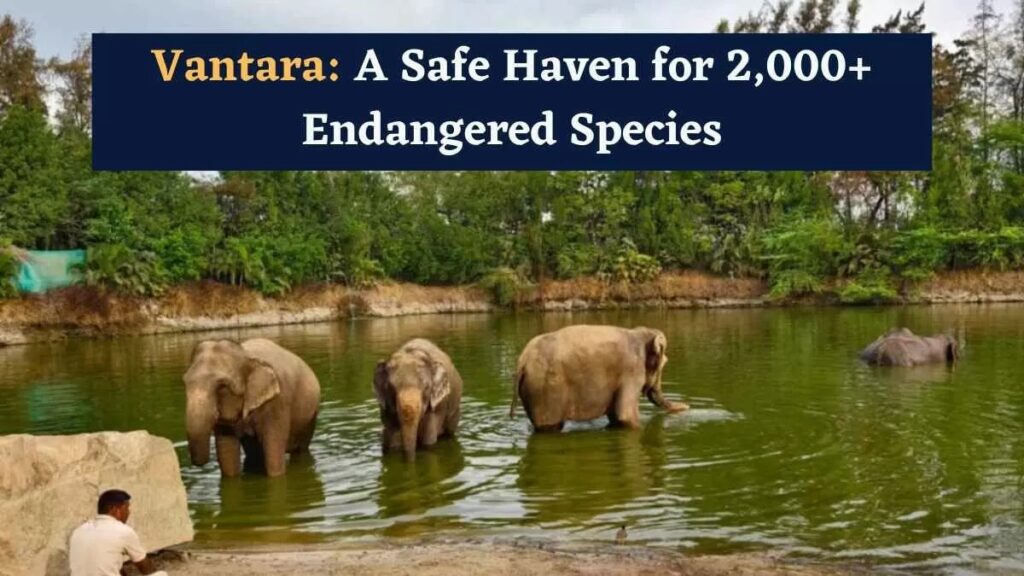
Key Features of Vantara Wildlife University:
- Vantara University is envisioned as the world’s first integrated global university dedicated exclusively to wildlife conservation and veterinary sciences.
- Located in Jamnagar, Gujarat, it aims to emerge as a centre of excellence in animal care, conservation, and research.
- Offers undergraduate, postgraduate, fellowship, and specialised programmes across diverse disciplines.
- Key fields include wildlife medicine and surgery, genetics, epidemiology, behavioural sciences, nutrition, conservation policy, environmental impact assessment, and environmental clearance frameworks.
- Introduces interdisciplinary areas like “One Health”, linking human, animal, and environmental health with emphasis on achieving a pollution free environment.
- Focus on naturalistic animal care environment design, promoting ethical and sustainable wildlife management.
- Supported by advanced academic infrastructure, clinical facilities, international collaborations, and a fully residential campus.
Vision, Objectives, and Significance
- Founded by Anant Ambani, inspired by India’s ancient Nalanda tradition, combining knowledge, ethics, and sustainability.
- Aims to develop future leaders in veterinary sciences, conservation policy, environmental jurisprudence, and wildlife care.
- Emphasises compassion-driven education, integrating scientific innovation with traditional knowledge systems and principles of environmental democracy.
- Recognises that conservation depends not only on forests but also on education, research, and institutional capacity.
- Will act as a long-term platform for research, innovation, and knowledge generation in wildlife health and conservation, addressing challenges including ex post facto environmental clearances and regulatory compliance.
- Focuses on capacity building to address growing challenges like biodiversity loss, climate change, and wildlife diseases.
- Provides scholarships to students from socially and economically marginalised backgrounds, ensuring inclusivity.
About Wildlife Conservation & One Health:● Wildlife Conservation: Protection and management of biodiversity to maintain ecological balance. ● One Health Approach: Integrated framework recognising interconnection between human health, animal health, and environment. ● India’s Biodiversity: One of the megadiverse countries, hosting about 8% of global biodiversity. ● Key Laws: Wildlife Protection Act, 1972, Forest Conservation Act, Biological Diversity Act, 2002, EIA Notification. ● Environmental Principles: Precautionary principle, polluter pays principle, and sustainable development guide conservation policy. ● Regulatory Frameworks: Coastal Regulation Zone norms, environmental clearances, and post facto approval challenges addressed through landmark judgments like Vanashakti judgment. ● Institutions: Wildlife Institute of India (WII), National Biodiversity Authority (NBA). ● Global Conventions: CITES, Convention on Biological Diversity (CBD). ● Importance: Strengthens sustainable development, ecosystem resilience, and climate change mitigation strategies. |

