 India's No.1 PU & Degree With Integrated IAS & IPS(UPSC/PSC) Training College.


India Rejects Illegal Arbitration Court on Indus Treaty
Bharat Rejects Arbitration Court on Indus Treaty
Why in News ?
Bharat (India) has dismissed a recent “supplemental award” by a Court of Arbitration over the Kishenganga and Ratle hydel projects, calling it illegal and Pakistan-sponsored. India has also suspended the Indus Waters Treaty (IWT) following the Pahalgam terrorist attack.
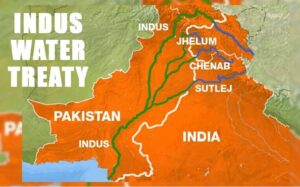
About India’s Objection to Arbitration Proceedings:
- India rejects the legitimacy of the Court of Arbitration, constituted by the World Bank in October 2022, under the Indus Waters Treaty (IWT).
- The Ministry of External Affairs (MEA) called the court a “charade at Pakistan’s behest”, citing breach of treaty norms. The MEA statement emphasized India’s stance against the fabricated arbitration mechanism.
- India termed all proceedings and decisions of this Hague-based court “illegal and void”.
- The Court of Arbitration had ruled it had competence even if India had placed the water treaty in abeyance.
Background of the Dispute and India’s Position
- Projects involved: Kishenganga (on a tributary of the Jhelum) and Ratle (on the Chenab), both part of the Indus river system.
- Pakistan had first moved for a neutral expert in 2015, then shifted to arbitration in 2016.
- India opposed this, sticking to a neutral expert route, and continues to participate in treaty-consistent mechanisms. The Jal Shakti Minister reiterated India’s commitment to resolving disputes through neutral expert proceedings.
- India argues it cannot be forced to engage in parallel proceedings not envisaged in the IWT, viewing Pakistan’s actions as deception and manipulation.
Treaty History and India’s Current Stand
- Indus Waters Treaty (1960) was signed by Nehru and Mohammed Ayub Khan, brokered by the World Bank.
- Gave India rights over eastern rivers (Sutlej, Beas, Ravi) and Pakistan over western rivers (Indus, Jhelum, Chenab), with provisions for non-consumptive use by India on western rivers.
- After the April 2024 Pahalgam terrorist attack, India placed the Indus water treaty in abeyance, stating it was no longer obligated to uphold its terms until Pakistan stops cross-border terrorism.
- India had earlier issued notices to modify/review the treaty in January 2023 and September 2024, signaling a shift towards possible renegotiation of the Indus Waters Treaty.
About Ratle and Kishenganga Hydroelectric Projects : |
|
● Ratle Hydroelectric Project: Location: Chenab River, Kishtwar district, Jammu & Kashmir. ○ Capacity: 850 MW, run-of-the-river hydro project. ○ Joint Venture: Between NHPC and JKPDC. ○ Significance: Promotes clean energy, water security, and regional development. ○ Pakistan’s Objection: Claims design (spillway, pondage) violates the Indus Waters Treaty (IWT); India denies.
○ Location: Kishenganga River (Neelum), Bandipora district, Jammu & Kashmir. ○ Capacity: 330 MW, run-of-the-river project. ○ Commissioned: In 2018. ○ Strategic Role: Diverts water to Jhelum basin for power generation—allowed under IWT with conditions. ○ International Dispute: Pakistan raised environmental/water flow concerns; a neutral expert (2013) allowed it with minor design changes. | |

