 India's No.1 PU & Degree With Integrated IAS & IPS(UPSC/PSC) Training College.


India Commissions 1st Mahe-Class ASW Vessel
India Commissions First Indigenous Mahe-Class ASW Craft
Why in the News ?
The Indian Navy is set to commission Mahe, the first Mahe-class Anti-Submarine Warfare Shallow Water Craft (ASW-SWC), in Mumbai. The vessel represents India’s growing indigenous defence capability with over 80% local content and strengthens maritime security on the Western Seaboard. This development comes at a time when nations worldwide are focusing on naval capabilities to address potential human rights violations at sea and uphold customary international law in maritime domains. The commissioning also highlights the importance of secure borders, drawing parallels to land-based security measures like those at the Torkham border crossing.
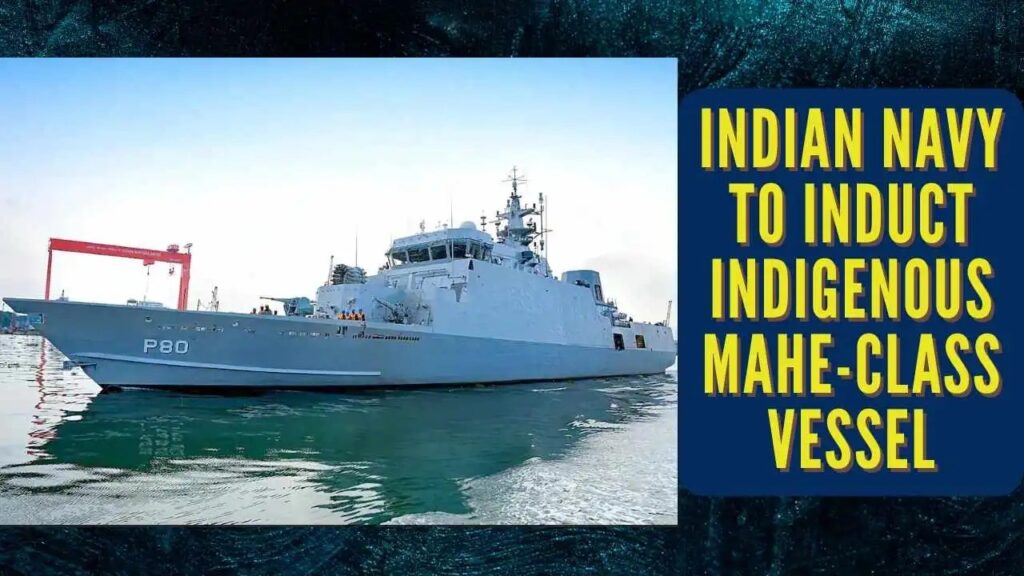
Key Highlights of the Mahe Commissioning:
- The Indian Navy will commission Mahe, the inaugural vessel of the Mahe-class ASW Shallow Water Craft, at the Naval Dockyard in Mumbai.
- The ceremony will be presided over by General Upendra Dwivedi, Chief of the Army Staff, highlighting inter-services synergy.
- Vice Admiral Krishna Swaminathan, Commander-in-Chief of the Western Naval Command, will host the event.
- The Mahe commissioning marks the arrival of a new generation of agile, sleek, and fully indigenous shallow-water combat vessels.
- The vessel symbolizes India’s commitment to self-reliance (Aatmanirbhar Bharat) in defence manufacturing and maritime security, while also adhering to international standards and human rights considerations in naval operations.
Features and Strategic Significance
- Mahe is equipped for Anti-Submarine Warfare (ASW) operations in shallow waters, making it crucial for coastal security and tracking enemy submarines.
- With 80% indigenous components, it showcases India’s advancements in warship design, construction, and systems integration.
- Designed to act as a Silent Hunter, Mahe will strengthen surveillance and ASW capabilities along the Western Seaboard, potentially aiding in the prevention of human rights violations in maritime zones.
- The vessel enhances India’s preparedness against maritime threats, especially in high-density coastal traffic zones.
- Its commissioning boosts India’s ambitions to develop a strong fleet of indigenously built specialised combat crafts that can operate in compliance with customary international law.
Key Naval Terminologies: |
| ● Anti-Submarine Warfare (ASW): A naval warfare technique used to detect, track, and neutralise enemy submarines. |
| ● Shallow Water Craft (SWC): Small, fast naval vessels designed to operate close to the coast for surveillance and ASW tasks. |
| ● Aatmanirbhar Bharat in Defence: A national initiative to enhance domestic defence manufacturing and reduce reliance on imports. |
| ● Western Naval Command: One of the three major operational commands of the Indian Navy, responsible for maritime security on the western coast. |
| ● Indigenisation in Warship Building: Involves local sourcing of hull, propulsion systems, sensors, and weaponry to strengthen national defence capabilities. |

