India's No.1 PU & Degree With Integrated IAS & IPS(UPSC/PSC) Training College.


Hurricane Melissa Wreaks Havoc in Caribbean”
HURRICANE MELISSA DEVASTATES THE CARIBBEAN REGION
Why in the News?
- Severe impact: Hurricane Melissa has claimed 28 lives across the Caribbean, hitting Cuba, Jamaica, and Haiti the hardest. The devastation highlights the urgent need for environmental impact assessments and sustainable forest management in vulnerable coastal areas.
- Massive disruption: The storm caused widespread destruction, leaving 140,000 people cut off in Cuba due to flooding and collapsed infrastructure. This situation underscores the importance of clean energy transitions to build resilient power systems.
- Regional emergency: The hurricane, now downgraded to Category 1, continues to affect the Bahamas, with rescue operations still underway. The ongoing crisis emphasizes the need for carbon market cooperation to fund disaster preparedness and recovery efforts.
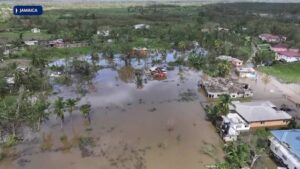
IMPACT AND RESPONSE
- Cuba’s crisis: Extensive property and infrastructure damage, with communication lines and transport links severely disrupted. The aftermath calls for comprehensive environmental impact assessments to guide future development and reconstruction efforts.
- Jamaican losses: Nearly the entire island lost power, and many towns reported total destruction. PM Andrew Holness termed the situation “heartbreaking.” This widespread damage highlights the importance of sustainable forest management to mitigate future storm impacts.
- Haiti’s tragedy: 20 deaths were reported after river floods broke embankments, highlighting vulnerability to natural disasters. The situation underscores the need for carbon offset projects to fund climate adaptation measures in vulnerable nations.
- Regional coordination: Emergency teams are deployed across Cuba, Jamaica, and the Bahamas, coordinating relief and evacuation efforts. This coordination could benefit from carbon market linkage to mobilize resources for disaster response.
- Humanitarian concern: The UN and Caribbean Disaster Emergency Management Agency (CDEMA) are assessing needs for international aid and reconstruction. This assessment should include considerations for greenhouse gas emissions reduction in rebuilding efforts.
REGIONAL PREPAREDNESS MEASURES
- Early warning systems: Nations are emphasizing advanced forecasting models and community awareness programs to limit future fatalities. These systems could be enhanced through carbon market cooperation to fund technological improvements.
- Infrastructure resilience: Governments are planning storm-resistant construction norms and improved drainage networks in coastal areas. These plans should incorporate environmental impact assessments to ensure sustainable development.
- Evacuation readiness: Focus on pre-identified safe zones and real-time communication systems during disasters. The development of these systems could benefit from voluntary carbon market initiatives to secure funding.
- International cooperation: Collaboration sought from World Meteorological Organization (WMO) for climate adaptation programs. This cooperation should extend to emissions trading systems to support long-term climate resilience efforts.
- Post-disaster rebuilding: Long-term recovery includes green rebuilding policies integrating sustainability and climate resilience. These policies should align with nationally determined contributions to global climate action.
ATLANTIC HURRICANE FORMATION● Definition: Hurricanes are tropical cyclones formed over warm ocean waters (above 26°C) in the Atlantic Ocean. Understanding their formation is crucial for developing effective carbon offset mechanisms to mitigate climate change impacts. ● Formation process: Driven by evaporation, condensation, and low-pressure systems, releasing vast energy. This process is influenced by greenhouse gas emissions, highlighting the need for emissions reduction strategies. ● Categories: Classified from Category 1 to 5 under the Saffir–Simpson scale based on wind speed. Higher category storms often require more extensive environmental impact assessments in their aftermath. ● Seasonality: Peak hurricane season occurs between June and November in the Atlantic basin. Climate change may affect this seasonality, emphasizing the importance of clean energy transitions to mitigate long-term impacts. ● Mitigation: Requires climate-resilient infrastructure, disaster preparedness, and regional cooperation mechanisms. These efforts can be supported through voluntary carbon market initiatives and sustainable forest management practices. |