 India's No.1 PU & Degree With Integrated IAS & IPS(UPSC/PSC) Training College.


Green Hydrogen Demand Driven by Fast Fashion Markets
Green Hydrogen Demand Driven by Fast Fashion Markets
Syllabus:
GS-2: Government Policies & Interventions
GS-3: Environmental Pollution & Degradation ,Growth & Development ,Conservation
Why in the News ?
The global green hydrogen sector is struggling as major Western projects stall, whereas China is rapidly expanding capacity and integrating hydrogen into its massive petrochemicals and plastics industry. With electric vehicles reducing fuel demand, rising plastics production may become the unexpected driver boosting global green hydrogen adoption.
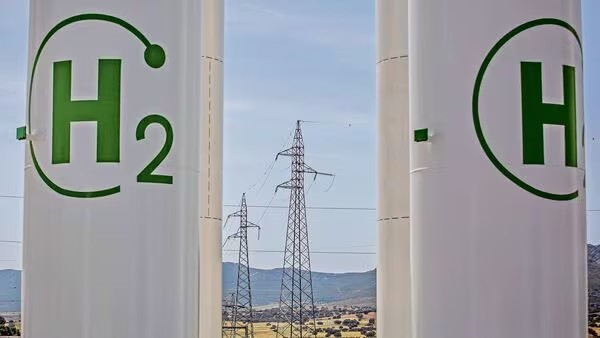
Global Hydrogen Landscape: Decline of Western Momentum :
- Stalled Projects – Several major companies like BP, Woodside Energy, and Fortescue pulled out of billion-dollar hydrogen projects in the U.S. and Australia, reflecting weak investor confidence.
- Falling Targets – Europe’s ambition to produce 10 million tonnes by 2030 has been cut drastically to 2 million tonnes, signalling a major slowdown.
- Cost Barriers – Green hydrogen remains far costlier than grey hydrogen, with projections showing price parity unlikely before 2050.
- Shift to Blue Hydrogen – Western companies increasingly favour blue hydrogen, produced from fossil gas with carbon capture, due to lower upfront costs.
- Impact on Climate Strategy – Sluggish Western progress undermines decarbonisation plans for steel, cement, aviation, and shipping, which depend on affordable green hydrogen.
Key Concepts and Technologies : Green Hydrogen● Hydrogen Colours – Grey (fossil fuel-based), Blue (fossil fuel + CCS), Green (electrolysis using renewables). ● Electrolysis Types – PEM, Alkaline, SOEC systems used for green hydrogen production. ● Hydrogen Demand Share – 43% used in refining and petrochemicals globally. ● BloombergNEF Forecast – Green hydrogen may not be cheaper than grey until 2050. ● China’s Five-Year Plan – Hydrogen designated as a strategic emerging industry. ● Hydrogen Storage Methods – Compression, liquefaction, metal hydrides, ammonia conversion. ● Hydrogen Safety Norms – Governed by ISO 14687 purity standards. ● Plastics Industry Link – Hydrogen used to crack hydrocarbons and remove impurities for polymer production. ● Major Global Hydrogen Players – China, EU, U.S., Japan, South Korea. ● India’s National Hydrogen Mission – Targets 5 MTPA green hydrogen production by 2030. |
China’s Rapid Rise as Global Hydrogen Hub :
- Dominant Producer – China accounts for over 50% of the world’s operating green hydrogen capacity, making it the largest global player.
- Future Projects Pipeline – About 45% of the 2.86 million tonnes of capacity under construction worldwide is located in China.
- Hydrogen Infrastructure Boom – China is developing specialised hydrogen pipelines, such as the 700 km link from Northwestern renewables to Tangshan.
- Massive State Support – Hydrogen is a priority sector for China’s 2026–2030 Five-Year Plan, ensuring long-term policy backing.
- Supply Chain Strength – China’s dominance mirrors its leadership in solar panels, wind turbines, EV batteries, and electric vehicles, giving it integrated industrial advantage.
Petrochemicals as the Real Driver of Hydrogen Demand :
- Hydrogen in Refining – Refineries use hydrogen to break longer hydrocarbons into shorter ones, essential for plastics production.
- Rise of EVs – With electric vehicles reducing petrol and diesel demand, refiners will increasingly shift to petrochemicals to avoid stranded assets.
- Expanding Plastics Consumption – Global plastic usage will continue to grow, fuelling long-term hydrogen demand despite declines in fuel use.
- Fast Fashion Impact – Platforms such as Shein and Temu rely heavily on cheap polymers, indirectly driving demand for hydrogen-based inputs.
- Refinery Transformation – As transport fuels decline, refining activities will focus on producing synthetic inputs and polymers, increasing hydrogen intensity.
The Grey, Blue and Green Hydrogen Dilemma :
- Grey Hydrogen Dominance – About 100 million tonnes of global hydrogen production is currently grey, derived from fossil fuels with very high emissions.
- Blue Hydrogen Limitations – While cheaper, blue hydrogen still relies on fossil gas and depends on effective carbon capture and storage (CCS)
- Green Hydrogen Struggles – Produced via electrolysis using renewable electricity, green hydrogen lacks cost competitiveness.
- High Production Costs – Renewable capacity, electrolyser costs, and storage requirements keep green hydrogen prices elevated.
- Long-term Forecast – According to BloombergNEF, green hydrogen will not outcompete grey hydrogen before 2050, making rapid scale-up difficult without demand acceleration.
China’s Industrial Strategy: Scaling Through Petrochemicals :
- Hydrogen-to-Plastics Pathway – China plans to channel green hydrogen into chemicals, polymers and synthetic materials, sectors with high and stable demand.
- Continuous Project Launches – More than 500 hydrogen-related projects have been commissioned in 2025 alone.
- Hydrogen for Impurity Removal – Hydrogen is heavily used for removing impurities in chemical processes, ensuring higher-quality plastics.
- Economics of Mass Market – Cheap consumer products, including $15 pantsuits and $10 trainers, may drive industrial-scale hydrogen demand.
- Deep Integration – China’s petrochemical plants integrate hydrogen with renewable-rich regions, creating economies of scale unmatched elsewhere.
Challenges for Scaling Green Hydrogen :
- High Cost of Production – Green hydrogen is significantly more expensive than grey hydrogen due to electrolyser costs, renewable energy variability, and water requirements.
- Lack of Global Demand – Industries such as steel and cement, the intended beneficiaries of green hydrogen, are slow to adopt due to cost pressures, limiting economies of scale.
- Infrastructure Gaps – Dedicated pipelines, storage solutions, transport systems, and refuelling networks are insufficient globally, especially outside China.
- Western Investment Withdrawal – The exit of major companies reduces technological innovation and financial backing for large-scale deployment.
- Competition from Blue Hydrogen – Blue hydrogen undermines green hydrogen demand because it is cheaper and technologically simpler in the short term.
- Domestic Policy Uncertainty – Frequent policy shifts and slow permitting processes reduce investor confidence.
- Water Scarcity Concerns – Electrolysis demands large volumes of freshwater, creating challenges in arid regions.
- Volatile Renewable Prices – Renewable power intermittency makes stable hydrogen production difficult without storage backing.
- Global Market Fragmentation – Lack of standardised pricing, certification, colour codes, and quality control increases uncertainty.
- Limited Technological Maturity – Electrolysers, hydrogen turbines, and fuel cells require further innovation to be competitive.
Way Forward for Scaling Green Hydrogen :
- Boost Industrial Demand – Governments must promote green hydrogen use in petrochemicals, ammonia, methanol, and other stable-demand sectors to build economies of scale.
- Strengthen Policy Incentives – Carbon pricing, tax credits, viability gap funding (VGF), and green mandates can bridge cost gaps.
- Scale Renewables Aggressively – Expanding solar and wind capacity dedicated to electrolysis will reduce energy costs—the largest cost component.
- Build Hydrogen Corridors – Creating hydrogen pipelines, clusters, and industrial hubs can reduce transport and storage bottlenecks.
- Invest in Water-efficient Electrolysis – Adoption of sea-water electrolysis or desalination integration can mitigate freshwater stress.
- Lower Electrolyser Costs – Scaling manufacturing of PEM, alkaline, and SOEC electrolysers will reduce capital costs.
- International Hydrogen Trade – Bilateral agreements between Europe, India, Japan and the Middle East can stabilise long-term demand.
- Public–Private Partnerships – Joint investments in pilot plants, R&D and demonstration projects can accelerate adoption.
- Promote Plastic Recycling – Reducing virgin plastic demand will reshape hydrogen consumption patterns sustainably.
- Adopt Certification Standards – Global norms for green hydrogen quality and emissions will create transparent markets.
Conclusion :
Green hydrogen faces a difficult global path, but China’s petrochemicals-driven demand may create the scale needed for cost reduction. Instead of heavy industries leading the clean hydrogen revolution, the fast-growing plastics and synthetic materials markets could unexpectedly catalyse the industry’s future growth.
Source : Mint
Mains Practice Question :
“Discuss how the rise of petrochemicals and fast-fashion industries may shape the future of the global green hydrogen market. Evaluate whether industrial demand from plastics production can compensate for the slowdown in Western hydrogen investments.”

