 India's No.1 PU & Degree With Integrated IAS & IPS(UPSC/PSC) Training College.


Global Clean Energy Push Needs Climate Finance
THIS CLEAN ENERGY RISE NEEDS CLIMATE FINANCE EXPANSION
Syllabus:
GS-3:
- Climate Change
- Energy Security and trasistion to clean energy
Why in the News?
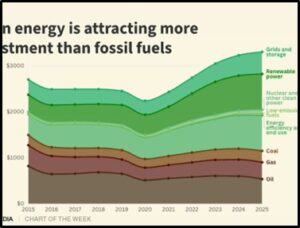
India’s clean energy transition has gained global recognition with record solar capacity additions and rising investments. However, experts warn that without a significant expansion of climate finance, India risks falling short of its climate goals. The 2025 UN Climate Report highlights both India’s achievements and its urgent financing gaps, making this a crucial policy debate.
INDIA’S CLEAN ENERGY MOMENTUM
- Solar expansion: India added 5 GW of solar capacity in 2024, emerging as the third-largest contributor globally after China and the U.S.
- Global recognition: The UN Climate Report (2025) names India a leader, alongside Brazil and China, in scaling renewable energy technologies.
- Employment generation: The renewable energy sector employed over one million people in 2023, contributing nearly 5% to GDP growth.
- Off-grid opportunities: Over 80,000 jobs in 2021 were created in off-grid solar, showcasing potential for inclusive development.
- International role: India spearheaded the International Solar Alliance (ISA), positioning itself as a global leader in green diplomacy.
THE FINANCING GAP CHALLENGE
- Huge requirement: Estimates suggest India needs $1.5–2.5 trillion by 2030 to stay aligned with a 5°C pathway.
- Current shortfall: Existing climate finance flows fall far below this requirement, threatening India’s ability to achieve its NDCs.
- Technology transition: Scaling battery storage, green hydrogen, decentralised grids, and sustainable transport demands massive upfront capital.
- Macroeconomic benefit: According to IRENA, following a 5°C pathway could boost India’s annual GDP growth to 2.8% through 2050.
- Dependence risk: Without adequate finance, India risks slower adoption of renewables, leaving reliance on coal and imported fuels
GREEN BONDS AND PRIVATE FINANCE
- Debt issuance: By December 2024, India’s GSS+ debt issuance touched $55.9 billion, a 186% rise since 2021.
- Dominance of bonds: Green bonds account for 83% of aligned issuance, becoming a key driver of private capital mobilisation.
- Rising trajectory: Green bond investments crossed $45 billion in 2025, showing strong investor appetite.
- Private sector role: The private sector contributed 84% of the total green bond issuance, highlighting corporate leadership.
- Access challenge: However, MSMEs and agri-tech innovators struggle to access green finance, requiring concessional credit and risk-sharing tools.
PUBLIC FINANCE AND POLICY SUPPORT
- Budget allocations: National and State budgets can catalyse private capital by offering tax incentives and fiscal guarantees.
- Blended finance: Combining concessional and commercial capital can reduce risks and attract private lenders.
- Credit enhancement: Instruments like partial guarantees and subordinated debt can improve project viability.
- Institutional capital: Pension funds, insurers, and sovereign wealth funds can unlock long-term domestic capital for green projects.
- Regulatory reforms: Stronger ESG guidelines and risk mitigation frameworks are needed to attract institutional investors.
CARBON MARKETS AND INNOVATION
- Trading scheme: India’s new Carbon Credit Trading Scheme can provide fresh finance streams if transparent and equitable.
- Adaptation finance: Equal focus is needed on adaptation, loss, and damage financing, not just renewable energy.
- Tech innovation: Blockchain-based tracking of climate finance can ensure transparency and accountability.
- AI risk tools: Artificial Intelligence-driven portfolio analysis can improve investor confidence in green assets.
- Tailored models: India-specific blended finance frameworks must reflect unique social, environmental, and economic contexts.
GLOBAL LESSONS FOR INDIA
- China’s scale: Leveraged manufacturing dominance and state-backed investment to absorb renewable risks.
- Brazil’s model: Used agri-linked green bonds to finance renewable energy and forest preservation.
- EU’s mechanism: Built robust carbon markets to fund low-carbon transitions.
- S. incentives: The Inflation Reduction Act boosted private green investment through subsidies and tax credits.
- Learning need: India must adapt these lessons while ensuring solutions remain inclusive and affordable for its diverse population.
SOCIAL AND ECONOMIC IMPACTS
- Job creation: Expansion of renewables could create millions of direct and indirect jobs in coming decades.
- Energy security: Clean energy reduces dependence on fossil fuel imports, strengthening strategic autonomy.
- MSME empowerment: Targeted finance access can empower local enterprises and innovators, ensuring inclusive growth.
- Health benefits: Transition away from coal reduces air pollution-related diseases, improving public health.
- Equity concerns: Finance expansion must ensure benefits reach rural and marginalised communities, not just corporates.
WAY FORWARD
- Finance expansion: Mobilise $2.5 trillion by 2030 through domestic, private, and international finance flows.
- Inclusive access: Prioritise MSMEs, rural innovators, and local infrastructure through concessional finance.
- Institutional reforms: Enable EPFO, LIC, and sovereign funds to allocate climate-aligned investments.
- Policy push: Strengthen carbon markets, ESG norms, and fiscal incentives for clean energy.
- Global leadership: Position India as a climate finance innovator, not just a clean energy leader.
CONCLUSION
India’s clean energy journey has captured global attention, but its success depends on bridging the massive finance gap. Green bonds, blended finance, and carbon markets provide promising avenues, but greater public-private collaboration and inclusive policies are essential. Climate finance is not just about numbers—it is about securing India’s energy future, economic resilience, and environmental sustainability. The time for bold financing innovation is now.
MAINS PRACTICE QUESTION
“India’s clean energy rise is constrained less by technology and more by finance.” Critically analyse the role of climate finance in India’s energy transition. (250 words)


