 India's No.1 PU & Degree With Integrated IAS & IPS(UPSC/PSC) Training College.


Fixing India’s Rare-Earth Magnet Gap
India’s Rare-Earth Magnet Gap Needs Strategic Overhaul
Syllabus:
GS-1:
Industrial Policy ,Industrial Growth ,Planning ;Mobilization of Resources , Geography ,Distribution of Key Natural Resources ,Mineral & Energy Resources
Why in the News ?
India recently achieved a breakthrough by starting domestic production of Nd-Pr rare-earth metals, essential for EV motors and wind turbines. However, leading EV manufacturers like Ather and Bajaj Auto continue sourcing sintered NdFeB magnets from China due to India’s lack of commercial-scale, automotive-grade magnet-making capacity, raising strategic and economic concerns.
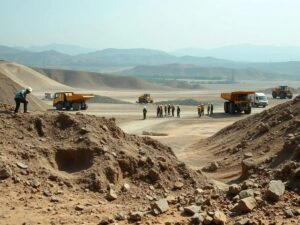
India’s Rare-Earth Breakthrough and Its Limitations :
- Domestic Milestone: A Pune-based firm launched India’s first Nd-Pr metal production plant, marking a significant move toward strategic mineral independence.
- Continued Import Dependence: Despite this, firms continue importing sintered NdFeB magnets from China due to lack of reliable Indian suppliers.
- Technology Gap: India historically produced only bonded magnets, used for sensors and small motors, not advanced EV requirements.
- Quality Constraints: EV applications demand automotive-grade reliability, long life, precision, and heat resistance, which Indian manufacturers currently cannot meet.
- Structural Dependence: The problem is systemic, shaped by decades of underinvestment in upstream rare-earth technologies.
Important Frameworks, Minerals and Magnet Technologies :● Rare Earth Permanent Magnet Mission: Proposed initiative to develop full-scale NdFeB magnet capabilities in India. ● Production Linked Incentive (PLI) Scheme: Incentivises high-value manufacturing, including components used in EVs and electronics. ● National Mineral Policy, 2019: Emphasises self-reliance in critical minerals. ● Atmanirbhar Bharat Initiative: Pushes for domestic manufacturing in strategic sectors. ● Strategic Mineral Security: Includes gallium, germanium, graphite—materials with Chinese export controls. ● CHIPS Act (USA): Subsidises semiconductors and clean-tech manufacturing. ● EU Critical Raw Materials Act (proposed): Aims to diversify supply sources. ● Rule-based Trading System (WTO principles): India advocates diversified trade while avoiding bloc-based geopolitics. ● NdFeB Magnets: Critical for EVs, wind turbines, robotics, and electronics. ● Bonded vs Sintered Magnets: India traditionally makes bonded magnets; EVs require sintered magnets of superior performance. |
Why Chinese Magnets Still Dominate India’s EV Sector :
- Global Scale Advantage: China leads the world in rare-earth mining, refining, and magnet manufacturing, backed by decades of subsidies and industrial planning.
- Environmental Tolerance: China accepted high ecological costs for rare-earth processing, enabling rapid scale—something democratic systems struggle to replicate quickly.
- Established Supply Chains: Chinese suppliers offer reliability, bulk scale, and competitive pricing India cannot yet match
- Switching Costs: Changing magnet suppliers requires product redesign, safety testing, re-homologation, and risk assessment—making firms hesitant.
- EV Volume Challenge: Indian companies like Sona Comstar, Uno Minda, and Mahindra are experimenting but have not achieved EV-scale production.
Geopolitical Risks of China-Centric Input Dependence :
- Export Controls: China has tightened restrictions on heavy rare-earth magnets, impacting global EV and electronics supply chains.
- Weaponised Interdependence: China controls crucial inputs such as gallium, germanium, and graphite—all vital for semiconductors, telecom, and EV batteries.
- Shockwaves Felt in India: When China imposed limits, Indian EV firms like Ather and Bajaj immediately felt disruptions.
- Entrenched Supply Chains: These networks have been built over decades and cannot be unwound quickly.
- Strategic Vulnerability: This dependence exposes India’s economic ambitions to geopolitical risks.
Why India’s Rare-Earth “Solution” Arrived Too Late :
- Partial Progress: India has built a metals plant, but no robust magnet-making ecosystem.
- Lack of Scale and Reliability: Without proven industrial-grade output, Indian firms will not risk switching suppliers.
- Delayed Investments: Policy inertia over decades created a technological lag.
- Fragmented Ecosystem: India lacks integrated supply chains — from mining to refining to magnet manufacturing.
- Missed Early Opportunities: Other countries built magnet industries when rare-earth demand began rising globally; India remained dependent on cheap imports.
Global Approaches to Rare-Earth and Strategic Materials :
- US CHIPS Act: Provides incentives for semiconductors, clean energy, and advanced materials production.
- EU Industrial Strategy: Supports batteries, hydrogen, and proposes the Critical Raw Materials Act to reduce single-country dependence.
- Japan–South Korea Models: Mix of subsidies, incentives, and alliances to attract giants like TSMC and secure supply chains.
- Not Full Decoupling: Major economies diversify without disengaging from China.
- Lesson for India: Build strategic symbiosis, avoid rigid blocs, and strengthen rule-based trade.
Challenges in Building an Indian Magnet Ecosystem :
- High Capital Intensity: Manufacturing EV-grade sintered magnets needs advanced furnaces, precision tools, and metallurgy expertise, which require heavy capital investments.
- Lack of Skilled Workforce: Limited availability of specialists in rare-earth chemistry, material sciences, and magnetics engineering affects scaling.
- Long Learning Curve: Achieving auto-grade yields takes years of trial, testing, and certification cycles.
- Technology Gap: India currently lacks indigenous IP for sintered NdFeB magnet manufacturing and relies on foreign collaborations.
- Demand Uncertainty: Without predictable large-volume demand, private players hesitate to commit to large-scale plants.
- Weak Upstream–Downstream Integration: Mining, refining, alloying, and magnet production must be tightly integrated for cost efficiency.
- Regulatory Bottlenecks: Unclear policies, slow approvals, and inconsistent government procurement practices hinder long-term planning.
- Global Competition: China’s tight grip on magnet pricing makes it hard for early-stage Indian producers to compete.
- Environmental Regulations: Rare-earth refining generates hazardous waste; India must ensure compliance without slowing industry growth.
- Geopolitical Risks: Any escalation between India and China can directly impact raw material supply chains, affecting domestic manufacturing plans.
Way Forward for India’s Rare-Earth and Magnet Security :
- Strategic Infrastructure Approach: Treat rare-earth inputs as national strategic assets, similar to semiconductors or petroleum.
- Targeted Fiscal Support: Provide capex subsidies, low-cost loans, and volume-linked incentives that reward output quality and reliability.
- Long-Term Contracts: Government demand aggregation for railways, DRDO, PSUs, and EV sectors can give suppliers assured markets.
- Sovereign Guarantees: Back private sector investment with government-backed first-loss guarantees to reduce risk.
- Technology Partnerships: Collaborate with Japan, South Korea, and the EU for magnet technology, R&D, and training.
- Integrated Value Chain: Build a full pipeline from mining → refining → alloys → sintered magnets → end-use industries.
- Environmental Balance: Use global best practices to manage refining waste while ensuring sustainable production.
- NITI Aayog’s Risk Mapping: Conduct long-term scenario mapping to anticipate vulnerabilities and plan buffers.
- Geopolitical Balancing: Maintain strategic symbiosis with China, but aggressively de-risk where chokepoints exist.
- Mission-Based Governance: Operationalise the Rare Earth Permanent Magnet Mission for coordinated action and full value capture.
Conclusion :
India’s progress in rare-earth metals is important but insufficient without building an integrated magnet ecosystem. Reducing reliance on China requires targeted incentives, technology partnerships, and long-term market assurances. A strategic, mission-driven approach can position India as a producer—not just consumer—of critical materials shaping the clean energy transition.
Source : Mint
Mains Practice Question :
India has begun domestic production of rare-earth metals, yet EV manufacturers continue relying on Chinese magnet imports. Discuss the structural, technological, and geopolitical factors behind this dependence. Suggest a comprehensive strategy for India to build a resilient rare-earth and magnet manufacturing ecosystem in the context of global supply chain shifts.

