 India's No.1 PU & Degree With Integrated IAS & IPS(UPSC/PSC) Training College.



Daily Current Affairs Digest | 12th Aug 2026
Daily Current Affairs Digest | 12th Aug 2026
1. Semicon 2.0: India Pushes for Technology Sovereignty
India’s semiconductor strategy is moving beyond chip assembly towards building a full-stack semiconductor ecosystem covering design, fabrication, equipment, materials, advanced packaging, research and skilled manpower.
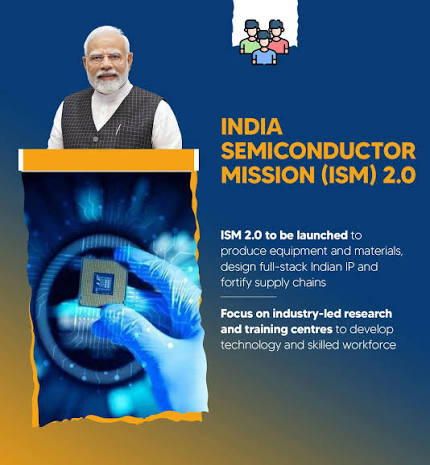 The Semicon 2.0 programme, approved with an outlay of ₹1,27,500 crore, seeks to strengthen domestic capabilities across six major pillars—design, machines and materials, fabrication units, ATMP/OSAT, research and development, and talent creation.
Why It Matters
Semiconductors are critical for AI, automobiles, telecom, defence systems, satellites, power infrastructure and digital technologies. Greater domestic capability can reduce strategic vulnerabilities and strengthen India’s position in trusted global supply chains.
However, semiconductor self-reliance cannot mean complete isolation from global markets. India will continue to depend on specialised equipment, materials and international technology partnerships.
UPSC Keywords:
Technology sovereignty | Design IP | Trusted interdependence | ATMP/OSAT | Green fabs | Supply-chain resilience
2. NIPU-2026: India Targets Urea Self-Reliance
The National Investment Policy for Urea-2026 (NIPU-2026) seeks to attract investment in new gas-based urea plants and reduce India’s dependence on imported fertilisers.
The policy envisages the establishment of around 8–9 new urea plants while improving the financial viability of domestic production.
 Why It Matters
 Why It Matters
Reliable fertiliser availability is closely connected with:
- Food security
- Agricultural productivity
- Farmer welfare
- Import dependence
- Fertiliser subsidy expenditure
However, greater domestic urea production alone does not guarantee complete self-reliance because gas-based plants may continue to depend on imported LNG.
The larger policy challenge is therefore to improve nutrient-use efficiency, correct excessive nitrogen use, promote soil-health-based fertilisation and gradually shift towards green ammonia and low-carbon fertiliser production.
UPSC Keywords:
Fertiliser security | Nitrogen-use efficiency | Gas dependence | Green ammonia | PM-PRANAM | Nutrient balance
3. Draft National Health Research Policy 2026
India’s proposed National Health Research Policy 2026 seeks to transform health research from a largely publication-oriented activity into a system linked directly with disease burden, public-health priorities and measurable health outcomes.
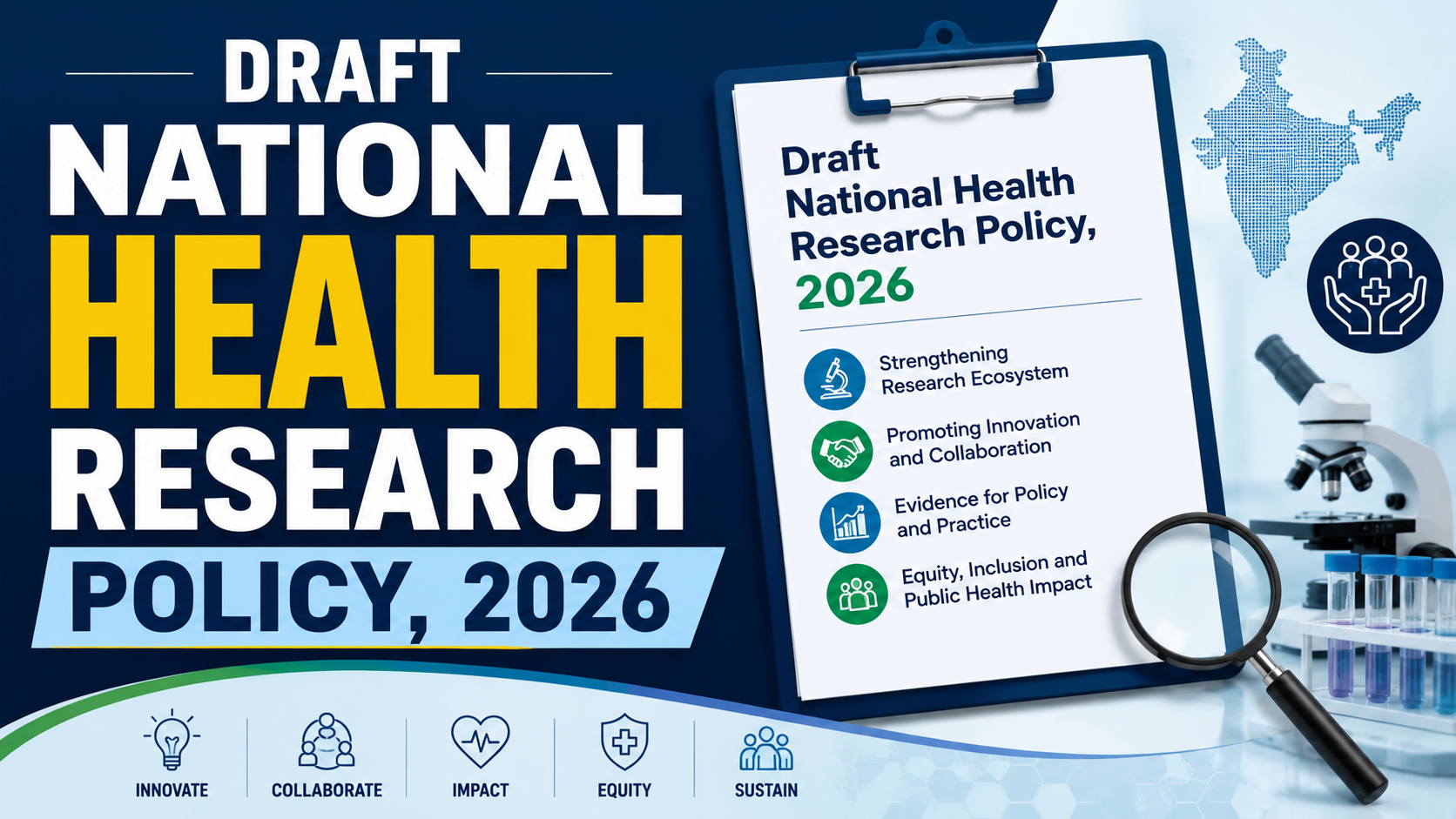 The draft proposes gradually increasing public expenditure on health research from around 0.024% of GDP to 0.15% by 2047.
Major areas of focus include:
- National health research priorities
- Stronger research ethics and integrity
- Artificial intelligence and digital health
- Health-data governance
- Indigenous medical innovation
- Greater participation of states
- Translation of research into public policy
Why It Matters
India faces a complex disease burden encompassing infectious diseases, non-communicable diseases, antimicrobial resistance, maternal and child health challenges and emerging zoonotic threats.
The policy therefore aims to bridge the gap between laboratory research and actual improvements in healthcare delivery.
A key challenge will be preventing research capacity from remaining concentrated in a few premier institutions while simultaneously ensuring privacy, ethical standards and responsible use of health data.
UPSC Keywords:
Disease-burden alignment | Research integrity | Implementation research | Health-data governance | HTA | Federal capacity
4. BIMSTEC Security Cooperation: Building a Resilient Bay of Bengal
The fifth meeting of BIMSTEC National Security Chiefs highlighted the growing interconnection between conventional security threats and economic resilience.
BIMSTEC brings together Bangladesh, Bhutan, India, Myanmar, Nepal, Sri Lanka and Thailand, connecting South Asia with Southeast Asia through the Bay of Bengal.
.png/:/cr=t:0%25,l:0%25,w:100%25,h:100%25/rs=w:1280) Its emerging security agenda covers:
Its emerging security agenda covers:
- Terrorism and radicalisation
- Transnational organised crime
- Cybersecurity
- Maritime security
- Supply-chain resilience
- Disaster response
Why It Matters for India
The Bay of Bengal is strategically important for India’s eastern coastline, North-East, Andaman and Nicobar Islands and connectivity with ASEAN.
BIMSTEC also complements India’s Neighbourhood First, Act East and Indo-Pacific strategies.
The next stage of regional cooperation will require stronger information sharing, maritime domain awareness, cyber-response mechanisms and faster implementation of connectivity projects.
The larger objective should be the creation of secure connectivity—where infrastructure promotes economic integration without creating new cyber, trafficking or strategic vulnerabilities.
UPSC Keywords:
Secure connectivity | Maritime domain awareness | Cyber resilience | HADR | Regional ownership | Supply-chain security
5. NASA–ISRO Moon Base Cooperation: India in the Emerging Lunar Order
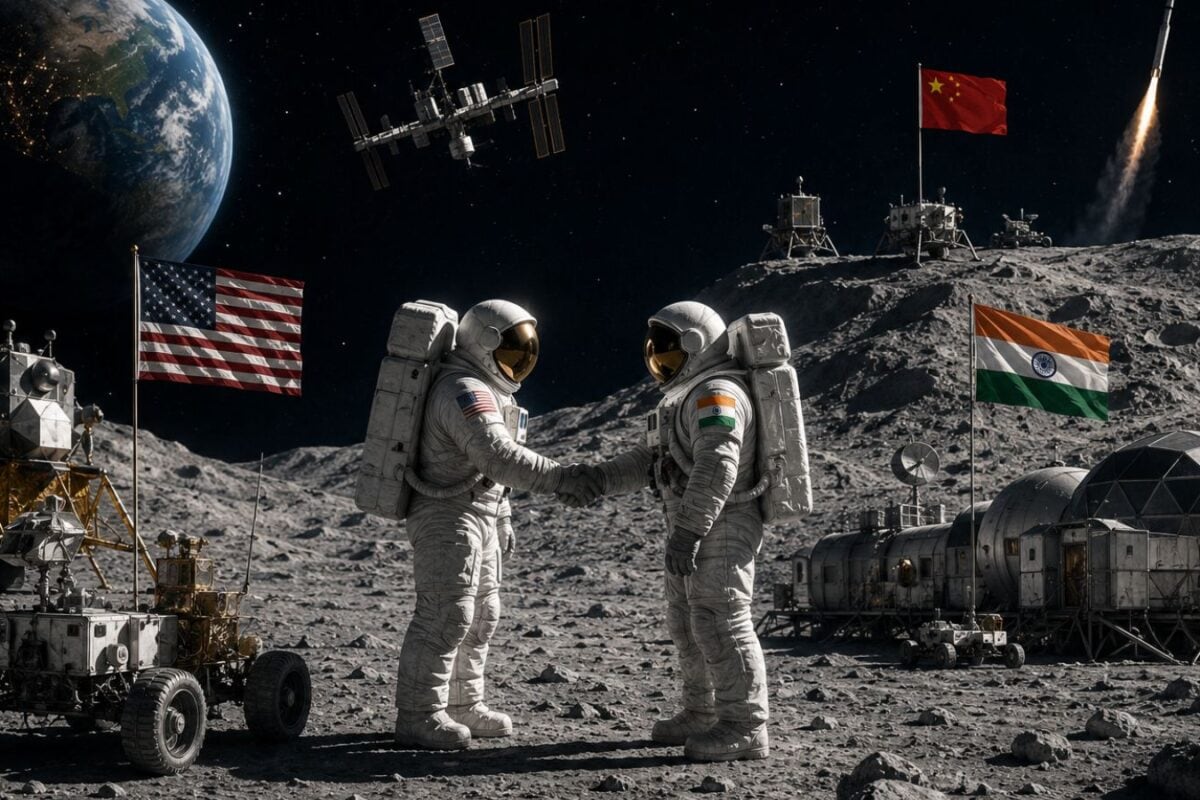
India–US space cooperation could enter a new phase following discussions on ISRO’s possible participation in a NASA-led Moon Base programme.
The development builds upon India’s participation in the Artemis Accords, which provide non-binding principles for peaceful civil exploration of outer space.
The emerging cooperation could involve areas such as:
- Lunar science
- Robotics
- Precision landing
- Communications and navigation
- Human spaceflight technologies
- Scientific data sharing
- In-situ resource utilisation
- Participation of India’s private space sector
 Why It Matters
 Why It Matters
The lunar south polar region has emerged as a strategically important area because permanently shadowed regions may contain water ice and other resources useful for long-duration lunar missions.
India’s experience through Chandrayaan-3 gives it a strong technological and scientific foundation for deeper participation in lunar exploration.
However, the issue goes beyond technology. Questions relating to space resources, safety zones, non-appropriation and governance of lunar activities remain contested under international space law.
India therefore has an opportunity to move from being merely a successful space-mission operator towards becoming a rule-shaper in the emerging lunar economy, while preserving strategic autonomy and supporting inclusive multilateral governance.
UPSC Keywords:
Artemis Accords | Outer Space Treaty | Space resources | Safety zones | Strategic autonomy | Rule-shaping




