India's No.1 PU & Degree With Integrated IAS & IPS(UPSC/PSC) Training College.


Kerala To Radio Collar Problem Wild Elephant
KERALA PLANS RADIO COLLAR FOR PROBLEMATIC WILD ELEPHANT
WHY IN THE NEWS ?
- Wildlife Management: The Kerala Forest Department has decided to tranquillise and fit a radio collar on a wild elephant named Chakkakompan in Chinnakkanal, Idukki district, to monitor its movements and reduce human-elephant conflict.
- Policy Change: The decision follows objections from NGOs to the earlier proposal of capturing and translocating the elephant to another forest.
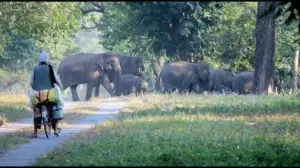
RADIO-COLLARING PLAN AND KEY DEVELOPMENTS:
- Forest Department Decision: The Chief Wildlife Warden has authorised the installation of a radio collar on Chakkakompan, which inhabits the Devikulam forest range near Munnar.
- Movement Tracking: The radio collar will enable forest officials to monitor the elephant’s location and movements throughout the day.
- Conditional Translocation: If the elephant continues to display problematic behaviour, the department may submit a fresh proposal for its capture and relocation.
- NGO Intervention: Earlier, the Forest Department planned to capture and translocate the elephant. However, some NGOs challenged the proposal and submitted a complaint to the Union Government, following which a report was sought.
- Kumki Elephants: Two trained captive elephants, Vikram and Bharat, will assist forest officials during the tranquillisation and collaring operation.
- Public Safety: Local residents of Chinnakkanal are demanding translocation, citing the elephant’s aggressive behaviour and threats to human settlements.
- Immediate Context: The earlier capture proposal followed protests by tribal communities after a 47-year-old man was killed in a wild elephant attack.
HUMAN-ELEPHANT CONFLICT: CHALLENGES AND WAY FORWARD
- Habitat Pressure: Habitat fragmentation, human encroachment and shrinking wildlife corridors increase interactions between elephants and people.
- Human Casualties: Crop destruction, property damage and fatal encounters create insecurity among forest-fringe communities.
- Scientific Monitoring: Radio collars can provide movement data, helping authorities identify high-risk areas and issue timely warnings.
- Community Participation: Local residents and tribal communities should participate in conflict-management decisions.
- Preventive Measures: Strengthen early-warning systems, elephant corridors, barriers where ecologically appropriate and rapid-response teams.
- Balanced Approach: Decisions regarding capture or translocation should be based on scientific assessment, animal welfare and public safety.
ABOUT ELEPHANT CONSERVATION IN INDIA:● Scientific Name: Asian elephant – Elephas maximus. ● Conservation Status: Endangered on the IUCN Red List. ● Legal Protection: Listed under Schedule I of the Wildlife (Protection) Act, 1972. ● CITES: Included in Appendix I, providing the highest level of international trade protection. ● Project Elephant: Launched in 1992 to protect elephants, their habitats and migration corridors. ● Kumki Elephants: Trained captive elephants used in operations such as rescuing, tracking and managing wild elephants. ● Ecological Importance: Elephants are keystone species and important seed dispersers, contributing to forest regeneration and ecosystem balance. |