India's No.1 PU & Degree With Integrated IAS & IPS(UPSC/PSC) Training College.


Green Transition: A Strategic Frontier
THE GREEN TRANSITION IS A STRATEGIC FRONTIER
SYLLABUS:
- GS-2: International relations, strategic partnerships, India’s foreign policy and global cooperation.
- GS-3: Indian economy, energy security, critical minerals, science and technology, industrial development and environmental conservation.
WHY IN THE NEWS ?
- Export Restrictions: India announced restrictions on exports of lithium-ion battery black mass to retain critical minerals for domestic processing.
- New Investment: The Union Cabinet approved a ₹2,814-crore scheme for four domestic lithium and nickel processing plants.
- Chinese Dominance: China controls major global capacities in solar manufacturing, battery production and critical-mineral processing.
- Strategic Concern: India needs to reduce dependence on Chinese clean-technology supply chains to strengthen energy security and strategic autonomy.
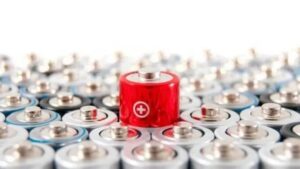
GREEN TRANSITION AS A NEW STRATEGIC FRONTIER
- Changing Power Dynamics: The global transition from fossil fuels to clean energy is creating new centres of economic, technological and geopolitical power.
- Critical Technologies: Solar panels, lithium-ion batteries, electric vehicles, energy-storage systems and green hydrogen are becoming strategically important.
- Industrial Competition: Countries controlling clean-energy manufacturing and critical-mineral processing can influence global markets and supply chains.
- China’s Dominance: China’s strong position in solar cells, wafers, batteries and mineral processing gives it significant influence over the global clean-energy ecosystem.
- Strategic Autonomy: India’s energy security increasingly depends on developing domestic technological capabilities rather than relying excessively on imported clean-energy components.
ABOUT CRITICAL MINERALS AND GREEN TECHNOLOGY:● Critical Minerals: Minerals essential for economic development and national security whose supply chains face significant risks, such as lithium, cobalt, nickel, graphite and rare earth elements. ● Lithium-Ion Battery: A rechargeable battery technology widely used in electric vehicles, portable electronics and energy-storage systems. ● Black Mass: A powder-like material recovered from recycling spent lithium-ion batteries, containing valuable minerals such as lithium, cobalt, nickel and manganese. ● National Critical Mineral Mission (2025): Aims to strengthen India’s critical-mineral supply chain through exploration, mining, processing, recycling and international cooperation. ● Strategic Autonomy: A country’s ability to make independent strategic and economic decisions by reducing excessive dependence on external powers and critical supply chains. |
CHINA’S DOMINANCE IN GLOBAL CLEAN-TECH SUPPLY CHAINS
- Solar Manufacturing: China accounts for approximately 82% of global solar-module manufacturing capacity, 91% of solar-cell capacity and 95% of wafer capacity, according to the article.
- Battery Industry: China controls around 80% of global lithium-ion battery manufacturing capacity.
- Mineral Processing: It accounts for more than 70% of global cobalt and lithium processing capacity.
- Technology Control: China’s proposed export restrictions on advanced photovoltaic technologies, including silicon-wafer manufacturing technologies, demonstrate how technological dominance can become an instrument of economic influence.
- Supply-Chain Vulnerability: India’s dependence on Chinese solar cells, battery components and processed minerals creates risks for its renewable energy and electric mobility sectors.
INDIA’S DEPENDENCE AND DOMESTIC MANUFACTURING CHALLENGES
- Solar Sector: India’s solar-module manufacturing capacity has expanded considerably, but domestic solar-cell and wafer production remains comparatively weaker.
- Battery Manufacturing: India’s electric-vehicle and battery industries continue to depend on imported cells, components and critical-mineral processing.
- Upstream Deficiency: Limited domestic capabilities in mineral refining, chemical processing and advanced materials restrict value addition.
- PLI Limitations: Production Linked Incentive schemes promote domestic manufacturing, but they have not fully addressed technological and upstream supply-chain gaps.
- Strategic Vulnerability: Excessive dependence on a single country can expose India to export restrictions, geopolitical tensions and disruptions in global supply chains.
INDIA’S POLICY INITIATIVES TO STRENGTHEN SELF-RELIANCE
- Production Linked Incentive (PLI): Promotes domestic manufacturing of high-efficiency solar modules and Advanced Chemistry Cell battery storage.
- National Critical Mineral Mission: Approved in 2025 to strengthen exploration, mining, processing, recycling and overseas acquisition of critical minerals.
- KABIL: Khanij Bidesh India Limited works towards securing overseas supplies of critical and strategic minerals for India’s requirements.
- Black Mass Restrictions: Restricting exports of lithium-ion battery black mass aims to retain valuable recovered minerals for domestic refining and recycling.
- Processing Incentive Scheme: The ₹2,814-crore scheme for four lithium and nickel processing plants seeks to strengthen domestic mineral-processing capabilities.
INTERNATIONAL COOPERATION AND CRITICAL MINERAL DIPLOMACY
- Global South Partnerships: India should establish long-term partnerships with mineral-rich developing countries to secure reliable supplies of critical minerals.
- Latin America: Argentina and Chile offer opportunities for lithium-related cooperation and investment.
- African Cooperation: The Democratic Republic of Congo, Zambia and Zimbabwe are important partners because of their mineral resources.
- Indonesia: Cooperation with Indonesia can strengthen India’s access to nickel resources and related processing opportunities.
- Value Addition: India should move beyond raw-material extraction and develop partnerships in mineral processing, refining and manufacturing in resource-rich countries.
TECHNOLOGICAL MULTI-ALIGNMENT AND FUTURE ENERGY SECURITY
- Technological Diversification: India should develop multiple clean-energy technologies rather than relying exclusively on lithium-based battery systems.
- Sodium-Ion Batteries: These offer an alternative to lithium-based batteries and can reduce dependence on lithium and other critical minerals in suitable applications.
- Green Hydrogen: It can support industrial decarbonisation, particularly in sectors such as steel, fertilisers and heavy transport.
- Solid-State Batteries: These emerging batteries offer potential improvements in energy density and safety, although commercialisation challenges remain.
- Research and Innovation: Industry-academia partnerships, skilled manpower, patient capital and public procurement are essential for converting research into commercial manufacturing.
CHALLENGES
- Import Dependence: India’s clean-energy manufacturing remains dependent on imported cells, components and processed critical minerals.
- Technological Gaps: Limited domestic expertise in advanced materials, battery chemistry and mineral refining restricts industrial competitiveness.
- High Investment Costs: Establishing mineral-processing facilities and advanced manufacturing infrastructure requires substantial long-term capital.
- Geopolitical Risks: Export restrictions, trade tensions and concentration of mineral processing in a few countries can disrupt supply chains.
- Global Competition: Countries with established manufacturing ecosystems, advanced technologies and economies of scale enjoy significant competitive advantages.
WAY FORWARD
- Upstream Manufacturing: Strengthen domestic capabilities in mineral refining, chemical processing, metallurgy and advanced materials.
- Supply Diversification: Build long-term partnerships with mineral-rich countries across Latin America, Africa and other regions.
- Technological Innovation: Invest in sodium-ion batteries, solid-state batteries, green hydrogen and other emerging technologies.
- Circular Economy: Expand recycling of batteries, solar panels and electronic waste to recover valuable minerals and reduce import dependence.
- Strategic Partnerships: Cooperate with technologically advanced countries on research, manufacturing, technology transfer and common standards while strengthening domestic capabilities.
CONCLUSION:
The green transition is no longer merely an environmental necessity; it is increasingly a question of economic competitiveness and national security. India must reduce excessive dependence on concentrated foreign supply chains through domestic manufacturing, technological innovation, mineral diplomacy and recycling. Strategic autonomy will depend on building resilient capabilities across the clean-energy value chain.
SOURCE: TH
MAINS PRACTICE QUESTION:
“The global green transition is reshaping geopolitical power and creating new strategic dependencies.” Examine China’s dominance in clean-energy supply chains and discuss how India can strengthen its strategic autonomy through critical-mineral diplomacy, domestic manufacturing and technological innovation.