India's No.1 PU & Degree With Integrated IAS & IPS(UPSC/PSC) Training College.


AMIT SHAH REVIEWS ROLLOUT OF BUREAU OF PORT SECURITY (BoPS)
AMIT SHAH REVIEWS ROLLOUT OF BUREAU OF PORT SECURITY (BoPS)
Why in the News?
- Coastal Security Review: Union Home Minister Amit Shah reviewed the progress of establishing the Bureau of Port Security (BoPS) and directed measures to strengthen India’s coastal and port security architecture, aligning with the country’s broader Indo-Pacific strategy.
- Key Directives: The government emphasised CISF-trained personnel, enhanced container scanning, cybersecurity, and improved security at fishing harbours and fish landing centres.
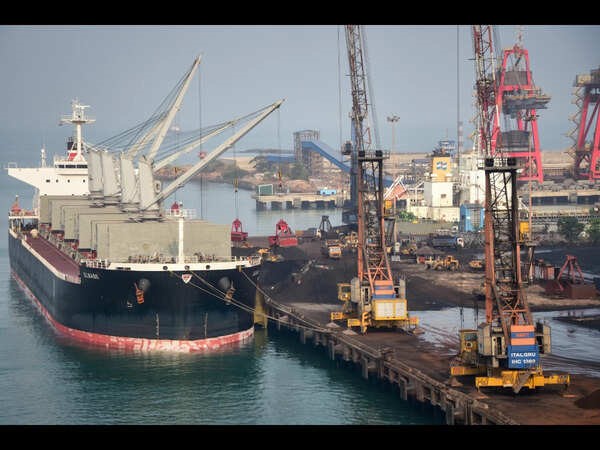
BUREAU OF PORT SECURITY (BoPS)
- Statutory Body: The Bureau of Port Security (BoPS) is being established as a statutory body under Section 13 of the Merchant Shipping Act, 2025, functioning under the Ministry of Ports, Shipping and Waterways.
- Primary Functions: It will regulate, inspect, and monitor the security of ships and port facilities, ensuring compliance with national and international maritime security standards as part of India’s regional engagement strategy.
- Cybersecurity Focus: BoPS will establish a dedicated division to protect port IT infrastructure, manage cyber threats, and facilitate timely collection, analysis, and sharing of security intelligence amid growing strategic competition in the maritime domain.
- Professional Security Framework: The government has directed that only licensed private security agencies be engaged, with personnel mandatorily trained by the Central Industrial Security Force (CISF).
- Operational Measures: Trial security arrangements will be conducted at Visakhapatnam Port, Jawaharlal Nehru Port (JNPA), and Mundra Port, while all BoPS-covered ports will be equipped with container-scanning facilities.
INDIA’S COASTAL SECURITY ARCHITECTURE
- Multi-Layered Security: India’s coastal security framework integrates the Indian Navy, Indian Coast Guard, Marine Police, CISF, intelligence agencies, Customs, and port authorities to safeguard the coastline and maritime assets through strategic partnerships and a cooperative security framework.
- Fishing Harbour Security: The government has directed enhanced security at fish landing centres, simplified fishermen registration, and deployment of permanent police personnel where necessary.
- Technology Integration: The ISRO-developed Nabhmitra application is being promoted to improve communication, safety, and emergency support for fishermen operating at sea.
- Maritime Domain Awareness: Strengthening container screening, surveillance systems, intelligence sharing, vessel tracking, and cybersecurity forms a key component of India’s maritime security strategy within the broader Indo-Pacific strategy framework.
- Strategic Importance: Robust coastal security is essential to prevent terrorism, smuggling, piracy, illegal fishing, infiltration, trafficking, and cyberattacks, while protecting India’s Blue Economy and maritime trade amid intensifying strategic competition in the Indo-Pacific region.
COASTAL SECURITY IN INDIA● Institutional Framework: India’s coastal security is coordinated through the Indian Coast Guard, Indian Navy, Marine Police, CISF, National Committee for Strengthening Maritime and Coastal Security (NCSMCS), and other central and state agencies, supported by defense cooperation agreements and regional security cooperation mechanisms. ● Coastal Security Scheme (CSS): Launched by the Ministry of Home Affairs, the scheme strengthens marine policing infrastructure, including coastal police stations, patrol boats, jetties, vehicles, and communication systems as part of India’s comprehensive regional security architecture. ● International Framework: India implements the International Ship and Port Facility Security (ISPS) Code, adopted under the International Maritime Organization (IMO) through multilateral engagement, to strengthen security at ports and ships while upholding the rules-based international order. ● Blue Economy Linkage: Secure ports and coastal infrastructure are critical for maritime trade, fisheries, offshore energy, logistics, tourism, and sustainable economic growth under India’s Blue Economy strategy, which aligns with the Indo-Pacific strategy and ASEAN centrality principles. ● UPSC Relevance: Important for GS Paper II (Governance & Internal Security), GS Paper III (Internal Security, Infrastructure, Maritime Security), and Prelims covering Indian Coast Guard, CISF, Merchant Shipping Act, ISPS Code, Blue Economy, Coastal Security Scheme, Nabhmitra, Indo-Pacific strategy, Quad partnership, and diplomatic engagement. |